Apple’s long-awaited foldable iPhone is moving closer to reality, but its biggest challenge may not be the hinge or the screen. The device could cost more than $2,000, putting it in a very different part of the smartphone market.
The foldable could arrive as soon as next week at Apple’s “Surprise and Shine” event, although another launch window points to later in the year. The 2026 iPhone event will take place on Wednesday 9 September at 6pm in the UK, giving Apple a clear stage for a major hardware announcement.
Apple has worked on a foldable smartphone for years. Bloomberg’s Mark Gurman reported in January 2021 that Apple had started early work on a foldable iPhone and was testing prototype foldable displays internally. Ming-Chi Kuo speculated in 2021 that the phone could arrive as early as 2024, then suggested last year that the launch would happen in 2026.
A launch timeline full of turns
The latest launch predictions have not followed a straight path. Gurman said in late 2025 that Apple would move toward a more spread-out launch window from September 2026, while Barclays analyst Tim Long claimed in March 2026 that the iPhone Fold would launch alongside the iPhone 18 Pro and 18 Pro Max in September but would not reach customers until December.
Nikkei Asia reported in early April that Apple faced setbacks during the engineering test phase, which could have pushed the phone into 2027. Gurman then said on April 7 that the iPhone Fold remained on track to launch in April 2026. A late July report said Foxconn faced mass manufacturing problems involving the folding screen’s durability and hinge.
That uncertainty eased on 2 August, when Weibo leaker Fixed Focus Digital reported that Apple had resolved its production-scaling issues and that the iPhone Ultra had not been delayed. Apple plans to make 8 million units at launch, according to Kuo, and increased its production estimate for 2026 from 8 million to 10 million units.
Those numbers suggest Apple expects strong interest, but they also show why the launch timing matters. A foldable phone needs a new screen, a complex hinge, and a manufacturing process that can deliver the same design at a large scale.
Ultra or Fold, and what the design may bring
The name remains unsettled. A report from Macworld on 27 April said the device may be called the iPhone Ultra, while other suggestions point to iPhone Fold. Gurman said, “Everyone at Apple called it the iPhone Ultra internally.” The device would be only the second to carry the Ultra branding, after the high-end Apple Watch Ultra.
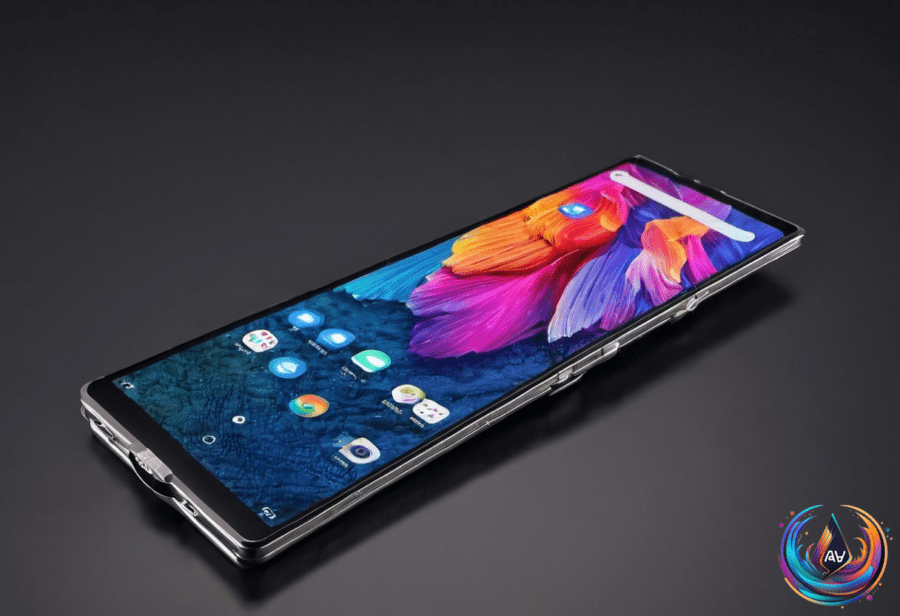
Apple has been considering a book-style design similar to Samsung Galaxy Z Fold. In March 2025, Kuo claimed the foldable iPhone would use a 7.8-inch crease-free inner display and a 5.5-inch outer display. Other leaked dimensions from December 2025 describe a 5.3-inch screen when folded that expands to 7.7 inches when unfolded, with a 2:3 aspect ratio that becomes 4:3.
The foldable is expected to have a crease-free design, a hinge made from stainless steel and titanium alloy, and a titanium alloy casing. Its thickness could measure between 9 and 9.5mm when folded, then shrink to between 4.5 and 4.8mm when unfolded.
Camera and security choices may also separate the device from current iPhones. It is expected to have two rear cameras and two front-facing cameras that work when the phone is folded or unfolded. There may be no room for Face ID, so Apple is expected to use a Touch ID side button instead.
Apple’s software plans offer another clue. Files hidden inside the first developer beta for iOS 27 included code that could determine whether a device was folded or unfolded. An updated Apple service utility mentions a secondary display, a second cover glass, and two additional light sensors.
Apple’s State of the Union developer keynote at WWDC also showed “app adaptability” for different screen sizes and aspect ratios. That feature would matter on a foldable, where apps must shift between a narrow outer display and a larger inner screen.
A luxury price for a first-generation design
The cost may decide whether Apple’s foldable becomes a mainstream success or remains a high-end showcase. Gurman said, “The iPhone Fold could cost more than $2,000 (£1,500).” Kuo speculated that the iPhone Ultra could cost between $2,000 and $2,500 (£1,850), while other estimates place the starting price around $2,300–$2,500.
The possible storage prices make the gap even clearer: 256GB could cost $2,320 (£1,720), 512GB could cost $2,610 (£1,940), and 1TB could reach $2,900 (£2,150).
That price would make Apple’s foldable a major purchase, even for people already comfortable with expensive phones. The design offers a larger screen in a smaller folded shape, but buyers would be paying for new hardware, complex construction, and Apple’s first foldable smartphone.
Apple’s rumoured foldable should make a strong debut if the company delivers the screen, hinge, software, and camera experience described in the leaks. The bigger question is whether a crease-free design and Ultra branding can convince consumers that a phone costing more than $2,000 is worth the leap.
Based on