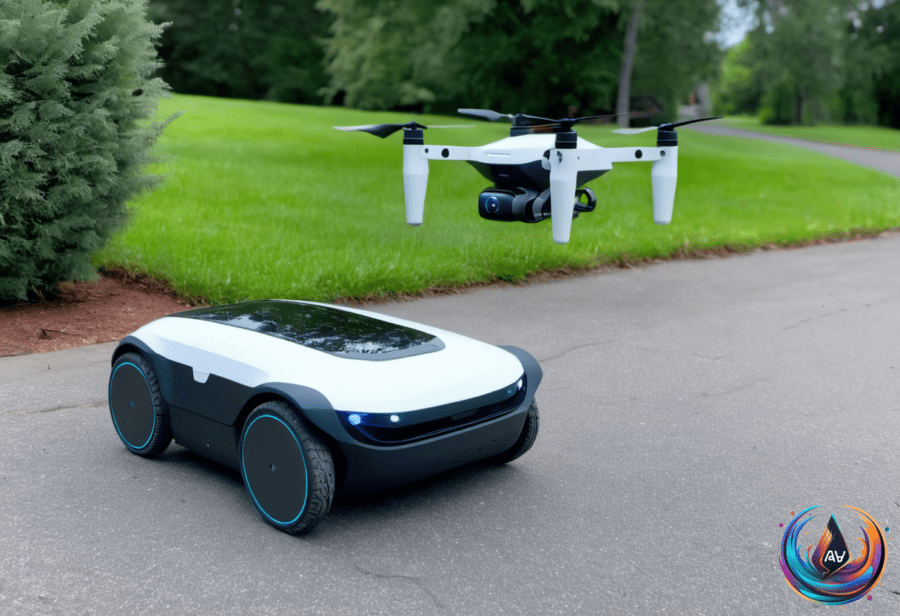
The machines are multiplying. Delivery robots and drone deliveries are moving from limited trials toward wider deployment, but the systems still face restrictions, safety questions, and permission hurdles. The promise is simple: automated machines carry goods to customers without a human driver making the trip.
The delivery robot concept began in Estonia in 2014, when Skype co-founders Ahti Heinla and Janus Friis started Starship Technologies. Starship now operates in over 80 cities across North America, Europe, and Asia, giving the company a footprint that extends well beyond its original market.
Starship is not alone. Serve Robotics, Coco Robotics, and Delivers.AI are also part of the delivery robot landscape, while DoorDash has launched its own in-house robots. The market is filling with recognizable names, which is usually what happens when an idea stops looking like a science project and starts attracting companies.
A study by Transforma Insights suggests that the world will have 559,000 automated urban delivery vehicles by 2035, compared with 28,000 in 2025. That forecast points to a large expansion, but it does not erase the practical question of where these machines can operate.
Growth Meets City Restrictions
Many major cities, including Chicago, San Francisco, and Toronto, have enacted restrictions or outright bans on delivery bots. The result is a market that can expand across multiple regions while still facing hard limits in individual cities.
That tension matters because delivery robots depend on access to urban environments. A forecast of 559,000 vehicles means little in places that restrict or ban the machines, while the existing network of over 80 cities shows that deployment can happen at scale under the right rules.
The facts leave no mystery about the central conflict. Companies are building fleets and cities are deciding how much room those fleets get — a familiar technology story, except this time the new arrival rolls down the pavement and expects everyone else to move around it.
Amazon Takes the Delivery Fight to the Air
Amazon is pursuing a different route with Prime Air. The company is seeking permission from the Civil Aviation Authority to extend its drone delivery service across the whole of Darlington, after launching a limited UK trial in County Durham in February.
That trial completed over 500 deliveries, with a best time of 39 minutes. Eligible Amazon Prime customers with a garden, yard, or driveway can receive items weighing under 5lb within two hours at no extra cost.
The offer combines a clear customer benefit with strict conditions. The delivery must involve an eligible location, the item must weigh under 5lb, and the service still depends on regulatory permission before Amazon can expand across Darlington.
David Carbon, vice-president of Prime Air, stated: “The ultimate goal is to roll out the rapid drone delivery service across the entire UK.” That goal goes far beyond the current County Durham trial and places the Civil Aviation Authority at the center of Amazon’s next move.
Amazon also defended its safety record after a minor incident in July. A drone landed safely after making contact with an object extending from a vehicle, and Amazon used the incident to support its safety record.
Delivery robots and drones now share the same basic challenge: expansion depends on more than working hardware. Starship’s presence in over 80 cities, the forecast of 559,000 automated urban delivery vehicles by 2035, and Amazon’s trial results show momentum; city restrictions and aviation approval show the boundaries.
The technology is no longer waiting for a first demonstration. It is waiting for cities, regulators, and customers to decide how much automated delivery they want moving through streets and airspace. The machines have already arrived. Permission remains the scarce resource.
Based on