Warehouses have a visibility problem. Oana Jinga, Co-Founder and Chief Commercial and Product Officer of Dexory, is building around it with robotics, computer vision, spatial AI, advanced analytics, and digital twin technology.
Dexory is a UK-based robotics and AI company focused on bringing real-time intelligence to warehouse and logistics operations. Its DexoryView platform combines autonomous robots with software designed to give operators a clearer view of physical activity, inventory, and available space.
“We saw that warehouses were becoming increasingly complex and automated, yet many operators still lacked an accurate, real-time view of what was physically happening on the warehouse floor,” Jinga said. More automation has not removed the basic problem: operators still need accurate information about what is happening among the racks.
From manual checks to continuous data
Inventory checks remained manual, time-consuming, and often disconnected from the operational systems making critical decisions. That gap leaves warehouse operators working with information that does not match the physical space they manage.
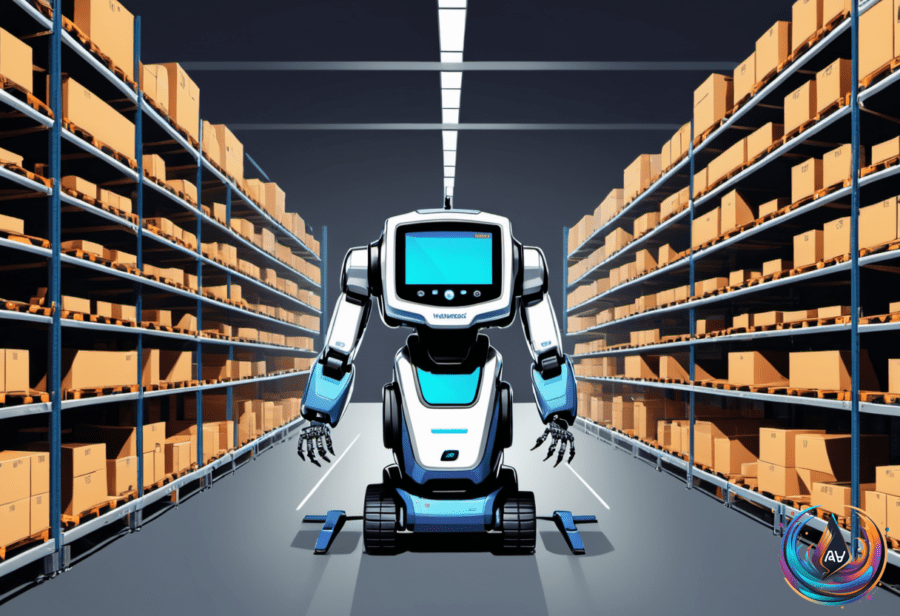
“We realised robotics could bridge that gap by continuously capturing physical-world data and turning it into actionable intelligence,” Jinga said. Dexory’s robots can scan more than 10,000 locations per hour, creating a stream of information that supports warehouse and logistics operations.
The technology helps operators identify misplaced or damaged stock, monitor space utilization, improve inventory accuracy, and uncover operational inefficiencies. The point is not robotics for its own sake—there is already enough expensive machinery wandering around technology presentations—but the data those machines capture from the warehouse floor.
DexoryView brings that data together through computer vision, spatial AI, advanced analytics, and digital twin technology. The platform is built to connect the physical warehouse with a digital representation of its layout and activity, giving operators a way to examine inventory and space through a single system.
A commercial and product background
Jinga co-founded the business originally known as BotsAndUs in 2015. She served as Chief Commercial Officer before taking on her current leadership role at Dexory, combining commercial and product responsibilities within the company.
Her background spans robotics, retail technology, strategic partnerships, and product development. Jinga spent more than six years at Google, where she led retail partnerships in the UK before overseeing strategic partnerships across the retail sector in EMEA.
She also held commercial, marketing, loyalty, and business development roles at O2 (Telefónica UK), and served as UK Co-Lead of Xoogler.co. That career path connects robotics with retail operations and partnerships—useful territory for a company selling technology into complex warehouse environments.
Dexory’s deployments are across Europe, Asia, and the United States, with customers that include major global logistics and industrial organizations. The company’s focus is on operations where inventory accuracy, space utilization, and visibility affect daily decisions.
Deployment is designed to be fast and minimally disruptive. “Deployment is designed to be fast and minimally disruptive – we’re talking 2-5 days with 1-2 of our team on sitemapping the site and building the digital twin so our autonomous robots can navigate the space and capture data without requiring major infrastructure changes,” Jinga said.
The deployment process takes 2-5 days, with 1-2 team members on site mapping the location and building the digital twin. Once that work is complete, the autonomous robots can navigate the space and capture data without requiring major infrastructure changes.
That approach addresses a practical barrier in warehouse automation: technology must work inside active operations, not demand that the operation stop and reorganize itself first. Dexory’s pitch is therefore built on speed, continuous scanning, and a digital view of the warehouse that operators can use to find errors and inefficiencies.
Jinga’s interview, published on August 24, 2026, presents Dexory’s strategy as a response to a simple mismatch. Warehouses became more complex and automated, but the information available to operators did not keep pace; Dexory is using robots and AI to close that gap.
Based on