NEURA and SECO are putting robot compute modules into European production. The companies announced their strategic partnership on September 7, 2026, with a plan to design, engineer, and manufacture electronic compute modules for NEURA’s cognitive robots. The work includes the humanoid 4NE1 and targets the industrialization and scaling of Physical AI from Europe.
SECO will handle the engineering and manufacturing role, while the modules will integrate Dragonwing processors from Qualcomm Technologies, Inc. Those processors support on-device AI performance, power efficiency, and low-latency control—three requirements that matter when a robot must sense and act without waiting for distant computing resources to make every decision.
The hardware will form part of NEURA’s broader distributed compute architecture. NEURA describes that architecture as Brain + Nervous System inside the machine, with sensing and compute spread throughout the robot under its Smart Limbs concept.
Compute moves into the robot
That distribution gives the machines edge responsiveness, allowing them to work safely alongside people. The approach places compute closer to the sensors and moving systems that need it, rather than treating the robot as a single central processing unit with every task routed through one location.
SECO’s job is to engineer and industrialize the compute modules for scalable production. The compute hardware for NEURA’s robots will be developed and produced in Europe, giving the partnership a defined manufacturing base instead of leaving the hardware plan at the level of a prototype announcement.
The choice of Qualcomm Dragonwing processors connects the modules to a platform built for robotic workloads. In this partnership, the processors support the on-device AI performance, power efficiency, and low-latency control needed by NEURA’s distributed design. The technical pitch is straightforward: put intelligence closer to the robot’s body, then build the hardware in quantities that can support production.
That last part is the less glamorous challenge—and usually the one that decides whether a robot escapes the demonstration stage. SECO’s role focuses on turning the compute design into scalable production, while NEURA supplies the cognitive robot platforms that will use it.
4NE1 anchors the partnership
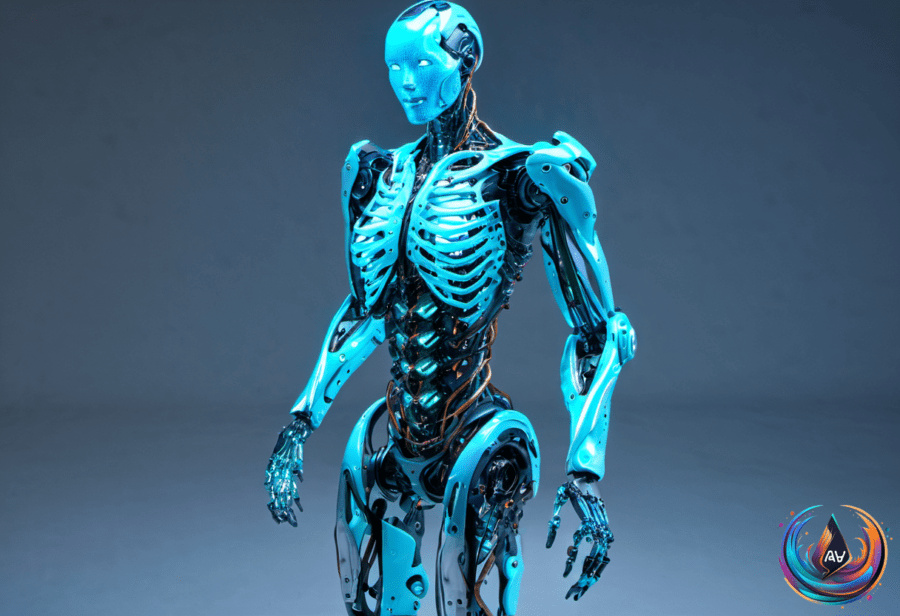
The 4NE1 humanoid gives the collaboration a concrete platform. It stands 180 centimeters tall, weighs 80 kilograms, reaches a top speed of 5 kilometers per hour, and handles payloads between 10 and 100 kilograms.
Its hardware includes full-body sensing and exchangeable forearms, along with versions on wheels for industrial floors. Those options place the platform across different operating conditions while keeping the partnership focused on compute, sensing, control, and production hardware rather than a single robot configuration.
NEURA and SECO also plan to use real-world production data to develop new Physical AI automation solutions for semiconductor manufacturing environments. The plan links deployed robotic systems with the next stage of development, using production data as part of the process for building automation solutions.
They also plan to establish a NEURA Gym in Italy, which would become NEURA’s first training hub in Southern Europe. The facility is part of the same effort to build Physical AI from Europe, adding a training location to the compute engineering and manufacturing work.
The partnership therefore covers more than a processor choice. It combines SECO’s role in engineering and industrializing electronic compute modules, Qualcomm Technologies, Inc.’s Dragonwing processors, and NEURA’s Brain + Nervous System architecture into one European production plan. Whether that plan delivers at scale will depend on the hardware making the difficult transition from carefully managed demonstrations to repeatable robot production—the part of robotics that tends to spoil the launch presentation.