Need more storage for a laptop? An external drive can add the space you need without forcing a change inside the machine, because swapping or adding internal laptop drives is not usually possible today. That leaves one major choice: should your external storage use a solid-state drive or a hard disk drive?
SSDs are newer and much faster, but that does not make them the right answer for every situation. HDDs can deliver more storage for the money, while SSDs bring speed, portability, and quieter operation. The best option depends on what you store, how often you access it, and whether the drive travels with you.
Why External SSDs Feel So Fast
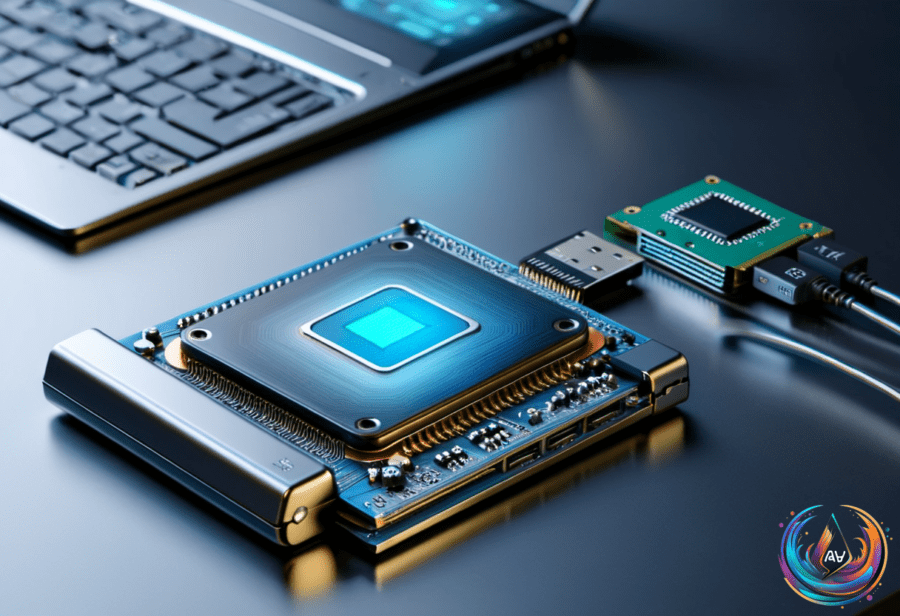
The primary advantage of an external SSD is speed. Every SSD uses flash storage, allowing random sections of data to load instantly instead of relying on mechanical components. As an internal drive, an SSD helps a system boot quickly and lets apps open fast; as an external drive, its biggest gains appear when you transfer or open files.
That speed matters most when the drive handles demanding file work. Moving gigabytes of files each day can make an SSD feel far more useful than an HDD, and editing photos and videos directly from external storage makes the faster drive a stronger choice. If the drive holds an archive that you create and rarely touch, the extra speed has less value.
External SSDs also suit people who carry their storage around. They have no moving parts, making them less susceptible to bumps and drops than HDDs. They are lighter and smaller, do not make noise, and require less power to run than traditional hard drives.
Those advantages come with one clear drawback: cost per gigabyte. The best external SSDs provide less space for the money than HDDs, so a fast drive can become expensive when you need a large archive.
Where HDDs Still Win
HDDs offer more storage for the money, and external models are available in large sizes at more reasonable costs. That capacity makes them useful when the goal is storing more data at the same price, especially when regular access is not needed.
The price difference becomes easy to see with two examples. Amazon has the Samsung T9 Portable SSD 1TB for around $232, while Amazon has the Seagate 2TB Portable Hard Drive for $130. The HDD offers twice the listed capacity for a lower price, even though it gives up the SSD’s speed and compact design.
HDDs are much slower than SSDs, hovering around 100MB/s when reading and writing. External SSDs can easily hit 500MB/s or above, creating a wide gap when you move large collections or open files stored on the drive.
Still, HDD speeds are serviceable for many tasks. They are slower than modern laptop or desktop storage, but that difference matters less when the drive acts as a place to keep files rather than a workspace for frequent editing and transfers.
Mechanical components create other tradeoffs. HDDs can make noise and are sensitive to drops and extreme temperatures, and either problem can cause the drive to malfunction. That makes careful handling important when an HDD moves between locations.
Choosing the Drive for the Job
Think about the drive’s role before focusing on its specifications. An SSD fits a mobile workflow where speed, low weight, small size, quiet operation, and resistance to bumps matter. It also makes sense for photo and video editing or for moving gigabytes of files each day.
An HDD fits a different pattern. If you are creating an archive and rarely opening it, the SSD’s speed boost becomes less important. An HDD also makes more sense for backup purposes when it stays permanently attached to a desktop, where its larger capacity can protect more data at the same price.
- Choose an SSD when transferring large files, opening files often, editing photos and videos, or carrying the drive around.
- Choose an HDD when you need large storage at a lower cost and regular access is not required.
- Consider both when you want fast working storage and a larger archive, if the cost fits your budget.
Getting one of each sounds smart: an SSD for active files and an HDD for larger storage. High storage and RAM prices can make that combination infeasible, though, so many users must choose the drive that matches their most important task.
The decision is not about choosing the newest technology every time. It is about matching speed and mobility against capacity and price. Pick an SSD when the drive needs to keep up with your work, or choose an HDD when the biggest win is fitting more data into the budget.