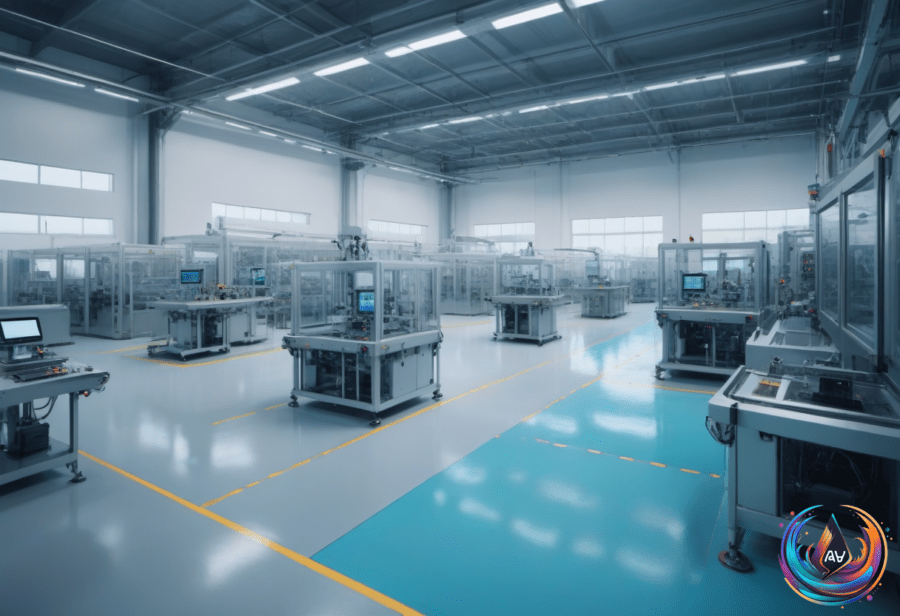
Factories can now see far more of what is happening on the floor. Cameras can spot defects as they happen, sensors can detect early signs of equipment failure, and digital twins can show when a production line starts drifting out of tolerance. AI tools can also summarize what happened across an entire shift.
That sounds like a direct path from better information to faster action. But many manufacturers are finding a gap between seeing a problem and deciding what to do about it. More signals do not create faster decisions when those signals remain separated inside different systems.
The factory can see the problem, but the business may not
A defect alert stays in a quality tool. A failure risk stays in a maintenance application. A production constraint stays in a planning system. Each system understands its own function, but it lacks awareness of the broader business context.
That separation creates a practical problem. A quality system may know that a product has a defect, while a maintenance application knows that a machine is showing signs of trouble. A planning system may know that production is constrained, but none of those tools alone can connect the full situation and coordinate a response.
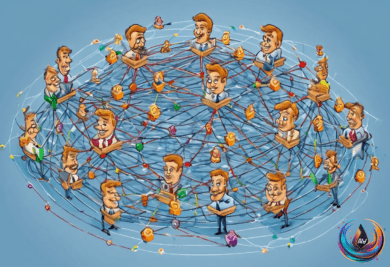
The result is a factory with more visibility but no shared view of priorities. Information exists inside machines, quality systems, maintenance applications, planning tools, and operator notes, yet these systems often operate and reason independently.
This is why manufacturers do not need more point solutions. They need a sovereign institutional intelligence layer that lets physical and digital operations act as one system.
From detection to a coordinated decision
Physical AI expands what manufacturers can detect, but connecting those signals to governed, coordinated decisions depends on whether the right layer exists underneath them. The goal is not to replace every existing system or model. It is to give them a shared foundation.
An enterprise-controlled institutional intelligence layer operates across existing technologies. It does not replace systems or models, but makes them think as one. That creates a path from detection to decision without removing the tools manufacturers already use.
If a production issue is detected, the response should not stop with an alert. The signal should connect to maintenance, inventory, production planning, and customer commitments, allowing the business to coordinate its response around shared priorities and policies.
Consider a machine anomaly. Instead of simply identifying a problem, the intelligence layer can connect the anomaly to a maintenance recommendation, verify whether a spare part is available, assess the impact on production, and suggest schedule adjustments. Those actions depend on a shared understanding of enterprise priorities and policies.
This approach changes the role of AI in the factory. The system is not only asked to recognize a defect or predict equipment trouble. It also helps connect that information to the decisions that follow, across the wider operation.
Why the pieces are already in place
Physical AI is not a future technology waiting for factories to become ready. In many plants, the pieces are already in place: sensors, cameras, digital twins, automation systems, enterprise platforms, and AI tools.
The challenge is bringing those pieces together. Manufacturers have useful information, but the value of that information depends on how well it moves between systems and how clearly it connects to business decisions.
Manufacturers need to start with the decision, not the model. That means asking what action the business needs to take when a machine shows an anomaly, a product fails inspection, or a production line drifts out of tolerance. The model matters, but the decision gives the model a purpose.
This focus also separates industrial AI from consumer AI. “Consumer AI and industrial AI operate in fundamentally different environments.” Consumer AI reached 100 million users within the first two months of ChatGPT’s launch, but industrial AI must work across machines, production lines, maintenance needs, inventory, schedules, and customer commitments.
For manufacturers, the central question is not whether AI can generate another alert. The question is whether the organization can turn that alert into a coordinated response.
Factories are gaining a clearer view of the floor, and that is an important step. But visibility alone does not close the distance between a signal and an action. The next step is a shared intelligence layer that connects what the factory detects with what the business decides to do.
Based on
- Physical AI Can See More Than Ever. Why Are Manufacturers Still Making Slow Decisions? — unite.ai
- Industrial AI Will Create Better Decision-Makers — forbes.com
- Building A Modern Factory: How AI Can Enhance Manufacturers — forbes.com
- From Process Control To Industrial AI: What Actually Changes — forbes.com