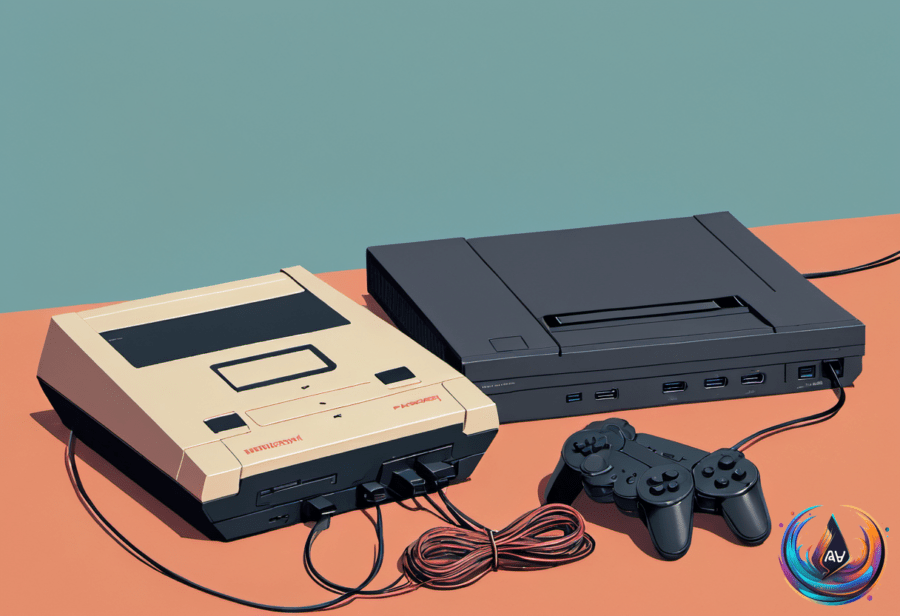
The PlayStation 2 and GameCube arrived close enough together to invite comparison, but they took different paths. Sony released the PlayStation 2 in North America in October 2000, while Nintendo released the GameCube in November 2001.
On paper, the GameCube had the stronger core hardware in several important areas. The PlayStation 2 had a 295 MHz Emotion Engine CPU, while the GameCube used a 485 MHz Gekko CPU. The GameCube also had 40MB of MoSys RAM, compared with 32MB in the PlayStation 2.
Those numbers do not tell the entire story, but they help explain why the two consoles can feel so different in technical comparisons. The GameCube used an IBM PowerPC CPU and an ATI Flipper GPU, an architecture that was less complicated than the PlayStation 2’s design.
GameCube’s hardware advantage
Julian Eggebrecht, former president of developer Factor 5, offered a direct comparison between the two systems. “Based on our calculations, GameCube’s CPU has all the power PS2’s CPU and VU0 have combined and then some,” he stated.
Eggebrecht also pointed to the way each console handled visual details. “The area that GameCube is similar to PS2 but just plain kills it is in textures and hardware lights. There is simply no comparison.” His comments focus on two areas where the GameCube had a clear technical advantage: textures and hardware lighting.
The GameCube’s graphics processor was called Flipper, and its 40MB of RAM gave it more memory than the PlayStation 2’s 32MB. The GameCube’s disc size was 1.5GB, however, while competitors had a minimum DVD capacity of 4.7GB. That smaller disc capacity gave the PlayStation 2 more room for games, even though the GameCube had stronger hardware in several areas.
This creates an important split in the comparison. The GameCube offered a less complicated architecture, a faster CPU by clock speed, more RAM, and strengths in textures and hardware lights. The PlayStation 2 offered a larger disc format and a design that supported a much bigger game library.
Sales and game libraries tell another story
The PlayStation 2 became the clear commercial leader. It sold 160 million units between its release and discontinuation in 2013. The GameCube sold 21.7 million units between 2001 and 2007.
The difference in sales also shaped the number of games available on each system. The PlayStation 2 has an almost 4,500-title library, giving it a much wider selection than the GameCube. That range matters to anyone choosing a console for its original games rather than its technical specifications.
The GameCube’s smaller library does not erase its hardware strengths. Instead, it shows why “more powerful” and “more successful” are different questions. The GameCube could offer stronger performance in specific areas, while the PlayStation 2 reached more players and supported a far larger collection of titles.
What emulation reveals about both consoles
Modern emulation provides another way to compare the systems. Dolphin, the GameCube emulator, became available in 2003 and became an open-source project in 2008. PCSX2, the PlayStation 2 emulator, was released in 2002.
As of 2023, Dolphin could emulate 97 percent of GameCube games, while PCSX2 could emulate 99 percent of PlayStation 2 titles. Those figures put both projects in a strong position, but PCSX2 reached a slightly higher percentage of its console’s titles.
The two emulators also support different operating systems. Dolphin can emulate GameCube games on Windows, macOS, Linux, and Android. PCSX2 can emulate PlayStation 2 games on Windows, macOS, and Linux.
The hardware needed to run those emulators adds another layer to the old console debate. Dolphin does not require as powerful a GPU as PCSX2. It can run games at 4K/60 FPS with a graphics card like the RTX 2060 or AMD Radeon RX 5600 XT, while PCSX2 has more demanding hardware requirements and needs a graphics card like the RTX 3060.
That difference fits the broader picture. The GameCube’s architecture is less complicated than the PlayStation 2’s, which helps Dolphin deliver strong results without the same level of GPU power. PCSX2’s higher hardware demands reflect the challenge of emulating the PlayStation 2, even though it can emulate 99 percent of PS2 titles as of 2023.
So which console was more powerful?
The GameCube has the stronger case for raw technical power. Its 485 MHz Gekko CPU, 40MB of RAM, IBM PowerPC design, and ATI Flipper GPU gave it clear advantages in several hardware comparisons. Eggebrecht’s comments also place the GameCube ahead in combined CPU power, textures, and hardware lights.
The PlayStation 2 still had major advantages of its own. Its 4.7GB minimum DVD capacity gave competitors more disc space than the GameCube’s 1.5GB discs, and its almost 4,500-title library dwarfed the GameCube’s reach. Its 160 million sales also show how far ahead it stood as a platform.
For emulation, Dolphin is easier to run and supports Android in addition to Windows, macOS, and Linux. PCSX2 supports fewer operating systems and needs stronger graphics hardware, but it reaches 99 percent of PS2 titles compared with Dolphin’s 97 percent of GameCube games.
One final point matters before using either emulator: emulators are not illegal, but downloading ROMs without owning the original game is illegal. The hardware comparison may favor the GameCube, yet the best choice still depends on whether the priority is technical strength, game selection, emulation demands, or access to a particular library.
Based on