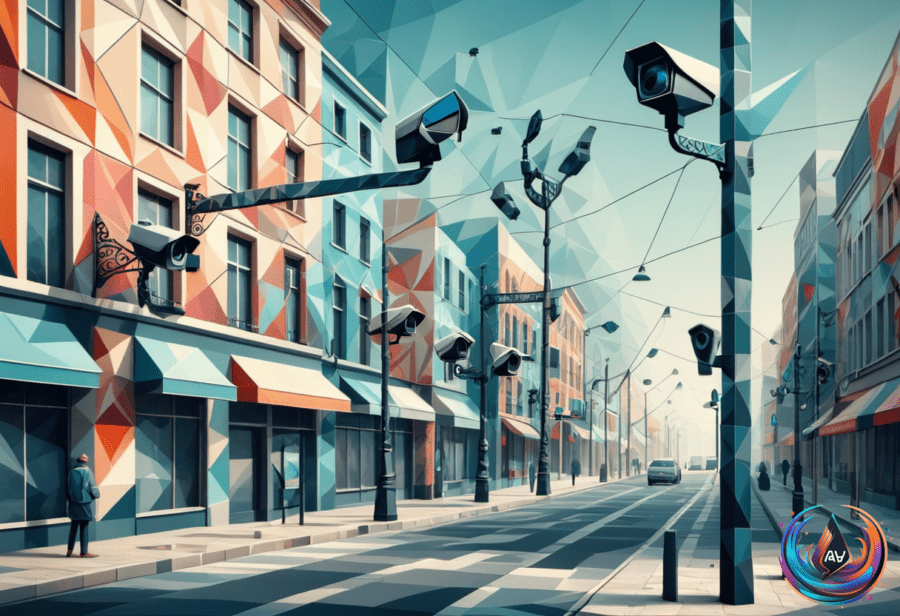
Surveillance is everywhere now. Cameras watch us on streets, in stores, even around neighborhoods. Some people push back with new ideas. One stands out: clothing that confuses facial recognition software.
These clothes use special patterns and cuts to trick cameras. Designers say their garments protect privacy and make a bold fashion statement. Nick Tidball, co-founder of Vollebak, believes this kind of clothing could soon go mainstream. He said anti-surveillance feelings are so strong that if one celebrity wore these clothes to a big event, the trend would explode.
The clothes aren’t just about style. Daniel Preuß, who co-founded Urban Privacy, creates designs with large prints and asymmetrical cuts. They look cool but also help hide faces from scanners. Advances in computing make it easier to add these patterns to clothes you can actually buy.
Experts warn the clothes don’t always work. Their success depends on the camera system and the setting. Still, they send a clear message about privacy and spark public debate.
Smart Glasses Stir Privacy Concerns
Meta, the tech giant, sold over 7 million pairs of co-branded smart glasses in 2025. These glasses can record audio and video, raising alarms. Meta plans to make future models record audio constantly without warning lights. This caused backlash. A software update now disables cameras if someone tampers with the recording lights.
Some users with Meta glasses see benefits. Videographer Christian Eisenbarth and freelance producer Will Kujawa are exploring their uses. But others like Jeremy, a professional photographer, say, “Facebook hasn’t done a lot of good in the world. I totally understand the backlash.”
Facial Recognition in Stores and Neighborhoods
Facial recognition isn’t just on phones or glasses. Stores in the Bay Area use software called SAFR to scan shoppers. This comes as shoplifting in California has jumped nearly 50% since before the pandemic. Some customers, like former store manager June Guerrero, support the tech to prevent theft. Others worry it violates privacy by scanning everyone, guilty or not.
Outside stores, police use cameras from companies like Flock Safety. These cameras catch license plates, bumper stickers, and dents. They store data for 30 days and can be accessed by law enforcement nationwide without a warrant. That raises privacy alarms for many people.
Josh Thomas from Flock Safety said, “They’re helping solve between 800,000 to a million crimes every calendar year.” That’s about 20 to 25 percent of all reported crimes in America. Aurora Police Chief Todd Chamberlain shared a story where Flock’s tech helped find a stolen car with a 14-month-old child inside. “Without that Flock technology, we might not have found that for two or three days later,” he said.
But not everyone trusts these systems. Some cities canceled Flock contracts after public backlash. People worry about constant surveillance and misuse. Denver resident Chrisanna Elser was falsely accused of theft using surveillance footage. She cleared her name by showing video from her truck and a map of her location. “It’s giving fascism, not fashion,” she said, criticizing the surveillance.
Supporters say these cameras save lives and solve crimes. Critics say they invade privacy and treat everyone like suspects. The debate over surveillance and privacy is only growing. New tech like adversarial clothing might help people push back while making fashion statements.
Based on
- ‘Adversarial clothing’: are garments designed to confuse facial recognition systems about to go mainstream? — theguardian.com
- Activist Group Takes Over London Bus Stops With Fake Meta Glasses Ads — engadget.com
- The Meta Glasses Backlash Is Changing How (Or If) People Use Them — engadget.com
- Grocery Outlet’s facial recognition rollout divides Bay Area shoppers – CBS San Francisco — cbsnews.com
- Police say Flock cameras help solve crimes, but critics call them an invasion of privacy | PBS News — pbs.org