AI data centers are expanding fast across North America, but they are also stirring up opposition. Communities are wrestling with whether the economic benefits justify the costs. These massive facilities promise jobs and investment, but many worry about environmental impact and local strain.
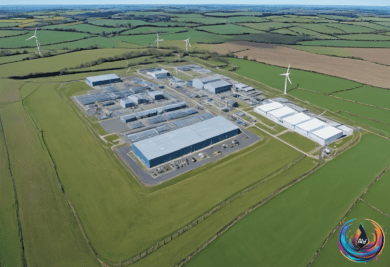
Meta recently broke ground on a huge new data center in Alberta, Canada. This will be its 33rd center worldwide. The company is investing $9 billion there, plus about CAD $60 million for local infrastructure. At its peak, the project will employ over 3,000 construction workers. Once operational, it will provide more than 300 permanent jobs. The facility will use a closed-loop, liquid-cooled system designed for energy efficiency.
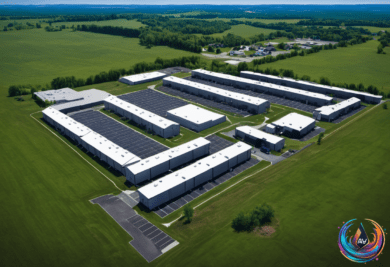
Meta’s plans don’t stop there. In Louisiana, it is building what could become its largest data center campus. This site will cover 4 million square feet and deliver more than 2 gigawatts of compute capacity. Meta says the Alberta center will be “optimized for our AI workloads, helping bring to life the technologies that billions around the world use.” The mayor of Sturgeon County, Alanna Hnatiw, expressed enthusiasm, saying, “We’re excited to work with our new neighbours as we continue to make that vision a reality.”
But not all communities welcome these projects. Local opposition campaigns have gained broad appeal. People see fighting data centers as a way to voice concerns about AI’s growth. One source said, “For some, data center opposition may feel like the only tangible mechanism for registering their concern, disapproval, or even anger about AI.”
Still, opposition’s success varies. It works best against early-stage proposals unlikely to move forward. More advanced and well-funded projects often overcome local resistance. An example is a new data center in Saline Township, Michigan. OpenAI and Oracle back it. Local officials voted to reject it, but developers sued and the project broke ground anyway.
Federal Support and AI Model Advances
The Trump administration has shown it will push AI infrastructure development. It has overridden state objections and used federal lands to advance data center projects. This federal backing signals that AI growth is a national priority, despite local concerns.
Meanwhile, AI companies are racing to launch more powerful models. OpenAI plans to release GPT-5.6 Sol, its most advanced AI yet. The rollout was delayed due to national security concerns but approved after additional testing and meetings with government officials. “The broad release of GPT-5.6 was approved after additional testing and meetings between OpenAI and government officials,” one source confirmed.
Experts warn that advanced AI models could accelerate cyberattacks. Anthropic, another AI company, recently disabled two models—Mythos 5 and Fable 5—after a US export control order. The order was lifted once safeguards were implemented. These steps reflect how governments are trying to balance innovation with security risks.
Why Data Centers Matter in the AI Future
AI companies aim to capture value from entire industries. They have already transformed customer service and consumer sales. Next up are bigger fields like enterprise software, creative design, management, and legal services. Some even envision AI replacing teachers and doctors.
All this means demand for AI compute power will keep growing. Data centers are the backbone of this AI revolution. The US alone will spend three-quarters of one trillion dollars on data center infrastructure this year. This massive investment shows how critical these facilities are for AI’s future.
Communities will have to weigh these economic benefits against the costs. Jobs and infrastructure improvements come with trade-offs. Opposition to data centers is just one front in the larger debate about AI’s role in society. For now, the battle over data centers is only just beginning.
Based on
- The fight against AI data centers is important – but it’s just a starting point | Bruce Schneier and Nathan E Sanders — theguardian.com
- Canada’s getting its first Meta data center, and it’s built for AI | Business Insider Africa — africa.businessinsider.com
- This week in the big AI data center buildout. | The Verge — theverge.com
- OpenAI to launch GPT-5.6 amid US national security concerns | The Independent — independent.co.uk
- Chasing that 2008 high. | The Verge — theverge.com