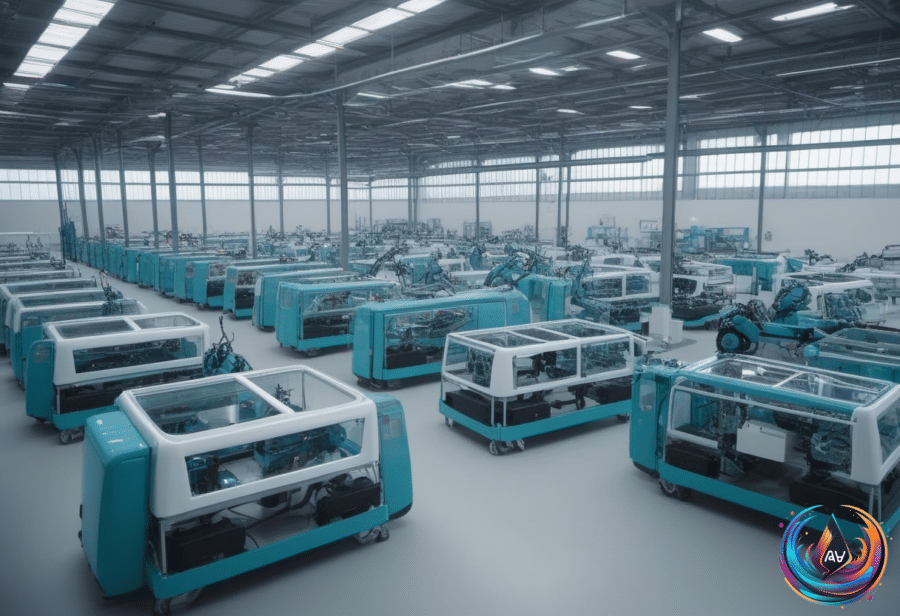
India wants more than imported robots. It wants the intelligence layer that lets machines work together, understand complex industrial systems, and keep physical infrastructure running better.
That ambition is taking shape through Avathon’s Physical AI Centre of Excellence in Bengaluru and a new research partnership with IIT Roorkee. The collaboration points toward a major shift: physical AI will not depend only on building individual intelligent machines, but on coordinating entire factories, mines, and industrial sites.
Building the Control System for Physical Machines
Avathon, a US-based company that has operated since 2013, develops AI systems that control and coordinate physical machines and industrial assets. Around 150 employees now work for the company in India, where its Bengaluru centre is helping advance this work.
Pervinder Johar, Avathon’s CEO, describes the opportunity as an intelligence layer for physical infrastructure. “Our focus has been on applying AI to make that infrastructure run better,” Johar states.
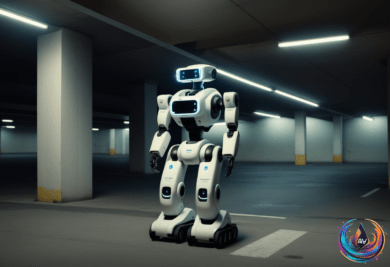
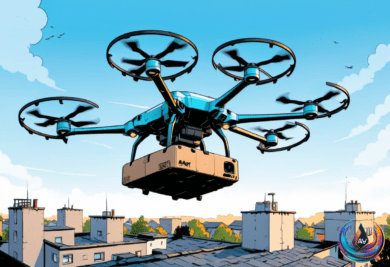
The challenge extends beyond giving one robot the ability to perform one task. A factory, mine, or industrial site could eventually contain autonomous trucks, robots, humanoids, and drones operating at the same time. Each machine may have its own intelligence, but the larger system needs a control layer that coordinates all of them.
“There’s an intelligence within each robot, but then you need intelligence which is going to be almost like an operating system or a control system for all the robots or all the humanoids which are doing a set of tasks,” Johar states.
This approach puts software and research at the centre of India’s physical AI ambitions, even as the country remains heavily tied to imported robotics hardware. Avathon has more than 150 patents, along with around 30 additional patent applications related to physical AI.
IIT Roorkee Partnership Backs Long-Term Research
Avathon is partnering with IIT Roorkee on a physical AI research lab focused on problems that require long-term research. The company plans to initially sponsor around five PhDs in the first year, while Johar says it could eventually support 30–40 PhDs each year.
“The purpose of the collaboration with IIT Roorkee is to work on problems that require long-term research,” Johar states. “You have to actually invest for a long, long time to find answers to some of the hardest-to-solve problems.”
The research will reach beyond a single product. Avathon sees physical AI as a field of models and methods for understanding complex physical systems, where an experiment can produce useful knowledge even when it does not create a commercial product.
“We don’t expect every single research project to be successful. If half the things fail, it’s okay. It’s okay. The other half, as long as they succeed, you’re doing very well,” Johar states.
He adds, “As much of research is that something works, it’s also research when you can prove out that something doesn’t work.” That mindset gives the IIT Roorkee collaboration room to explore difficult questions instead of forcing every project toward an immediate product.
One potential application involves predicting equipment or infrastructure failures before they happen and prescribing maintenance. With between $100 trillion and $200 trillion worth of physical infrastructure ageing globally, systems that can understand failure risks could address a huge industrial need.
Robotics Funding Surges as Integration Remains Difficult
The global robotics and physical AI market is expanding at a striking pace. Silicon Valley’s robotics and physical AI companies raised $33.4 billion globally in the first half of 2026, compared with less than $5 billion across all of 2020.
That funding reflects the size of the opportunity. Robotics can address a large market because industries need physical labor, while physical AI could reshape businesses that manufacture, move, inspect, maintain, build, serve, or provide direct care.
Yet the technology is not equally ready everywhere. Robotics already operates at scale in some structured environments, but it remains expensive, brittle, or difficult to integrate in others. Coordinating many types of machines across changing industrial settings adds another layer of complexity.
That is why India’s direction may matter as much as its talent pool. Johar states that every economy that needs to be successful must combine manufacturing and computer science, while Rya Jetha describes the national challenge in direct terms: “It is a question of focus and direction.”
India’s physical AI push now connects academic research, industrial software, robotics hardware, and long-term talent development. The next stage will not be defined only by how many robots enter factories, mines, or other work sites. It will be defined by whether intelligent systems can make those machines operate as one coordinated physical network.
Based on