Something huge just landed in the PC world. Nvidia, the titan of graphics and AI, just flipped the script. They launched RTX Spark—a beastly Arm-based superchip designed to bring AI power straight to Windows PCs. This changes everything. Ready to see what’s next?
The Rise of a New PC Powerhouse
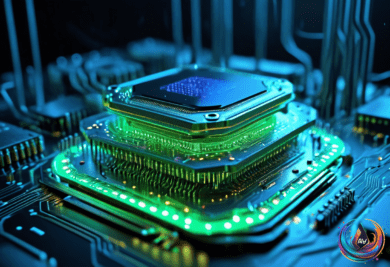
Nvidia’s RTX Spark isn’t just another chip. It’s a fusion of a 20-core Arm CPU paired with a massive Blackwell GPU packing 6,144 cores. That’s desktop-grade power squeezed into laptops and compact desktops. Think of it as the AI brain and graphics muscle in one sleek package.
Built in collaboration with MediaTek and Microsoft, this chip supports up to 128GB of unified LPDDR5X memory. Unified memory means the CPU and GPU can share the same huge pool of RAM. No bottlenecks, no compromises. This unlocks new possibilities for AI, gaming, and creative work all in one device.
The RTX Spark is set to arrive this fall in machines from Asus, Dell, HP, Lenovo, Microsoft Surface, MSI, Acer, and Gigabyte. Expect slim laptops with all-day battery life and powerful mini desktops to hit the market. Nvidia is doubling down on Windows on Arm, a battlefield that Intel and AMD have long dominated with x86.
Why This Matters for AI and Gaming
AI just got personal. Nvidia’s chip can run massive AI models locally—up to 120 billion parameters with context windows reaching one million tokens. That means no cloud delays, better privacy, and lightning-fast AI assistant responses right on your laptop.
Gaming is getting a boost too. The Blackwell GPU in RTX Spark rivals desktop RTX 5070 cards, but inside power-efficient devices capped at 80 watts. That’s a big leap for Windows on Arm, which has struggled with game compatibility and performance.
- Microsoft and Nvidia are working with Riot Games to support League of Legends and Valorant on Arm PCs.
- Efforts with Krafton aim to bring PUBG to the platform.
- Support for anti-cheat systems like Easy Anti-Cheat, BattlEye, and Denuvo is in progress.
This means serious gaming on Arm is no longer a pipe dream. It’s a fast-approaching reality.
Arm-Based Architecture: The Future of PCs?
Nvidia’s move to Arm architecture signals a seismic shift. Arm chips are known for power efficiency and battery life. They’ve dominated smartphones but struggled on Windows PCs due to software gaps. That’s changing fast.
Windows 11’s Arm version has matured. Microsoft improved its x86-to-Arm translation layer “Prism,” boosting app compatibility and performance. Major apps are shipping native Arm versions. The platform now feels indistinguishable from Intel or AMD PCs for everyday use.
The RTX Spark’s 20-core Grace CPU mixes high-performance Cortex-X925 cores with Cortex-A725 cores, mirroring Apple’s M5 Pro approach but laser-focused on high-end AI and graphics. Nvidia’s Blackwell GPU adds AI acceleration with fifth-gen Tensor cores delivering up to 1 petaflop of FP4 AI compute power.
This combination could disrupt the dominance of x86 chips. Intel and AMD face a new challenger that blends CPU, GPU, and AI acceleration on one chip.
Beyond PCs: Nvidia’s AI Ecosystem Expands
Nvidia isn’t stopping at laptops and desktops. They unveiled the Vera CPU for data centers and introduced the Isaac GR00T humanoid robot platform at Computex. The robot features advanced dexterous robotic hands from Singapore’s Sharpa and AI brains powered by Nvidia’s Jetson Thor.
This robot project highlights Nvidia’s broader vision—physical AI that works in the real world, from factories to hospitals. The RTX Spark chip fits neatly into this vision, powering AI locally on devices of all kinds.
What to Expect Next
The first RTX Spark machines will hit shelves this fall. Pricing is still under wraps, but expect premium tags given the cutting-edge tech inside. Early adopters will be creators, AI developers, and gamers craving local AI power combined with strong graphics performance.
Developers will need to optimize for Arm and Nvidia’s CUDA and TensorRT frameworks. But the payoff is huge—real-time AI apps, seamless productivity, and new gaming experiences without cloud lag.
Will Intel and AMD respond with their own AI-optimized chips? Absolutely. But Nvidia has staked a bold claim. The PC is evolving from a simple tool into an AI-powered partner. RTX Spark is the first step in this revolution.
Get ready for computing that’s faster, smarter, and more personal. Nvidia is lighting the spark. The future of PCs has arrived.
Based on
- Nvidia RTX Spark comes to Windows PCs with Arm CPU, RTX GPU, and unified memory — arstechnica.com
- Nvidia enters the PC processor market with Arm architecture | MarketScreener — marketscreener.com
- Singapore robotic hands firm Sharpa joins Nvidia and Unitree on humanoid robot project | The Star — thestar.com.my
- Nvidia’s AI Chip Revolution: How Arm-Based Tech Is Redefining PCs – Archynewsy — archynewsy.com
- ARM-based NVIDIA RTX Spark superchip announced with up to 1 petaflop AI, combines 20-core Grace CPU and Blackwell RTX GPU for a Windows system | TechNave — technave.com
- Nvidia’s N1X and N1 Arm CPUs Leak Ahead of Official Reveal | LavX News | LavX News — news.lavx.hu