Biology has an AI data problem. OpenAI is putting money behind the idea that better medical models will need far more biological evidence, including data locked inside biotech companies and proprietary protein archives.
The effort, called Data for Public Health, aims to help AI make breakthroughs in medicine. Morgan Levine, former vice president for computation at Altos Labs, described the central obstacle plainly: “Everyone is recognizing that data is the biggest bottleneck in successfully applying AI to biology.”
The OpenAI Foundation announced $40 million for a program at the University of North Carolina, Chapel Hill, to collect data about novel cancer vaccines. It will also support OpenAdmet, a group that runs competitions to predict drug effects, because apparently the next great medical breakthrough may begin with a better leaderboard.
Ruxandra Teslo, a clinical trial policy analyst, received $500,000 for an idea to build a biotech archive. 1Day Sooner, an advocacy group led by president and co-founder Josh Morrison, will pursue the project.
The Foundation hopes to give away $1 billion by the end of the year and holds a 26% equity stake in OpenAI. Its largest single gift so far was $100 million, awarded in August to the Common Health Coalition.
The public data pool has important gaps
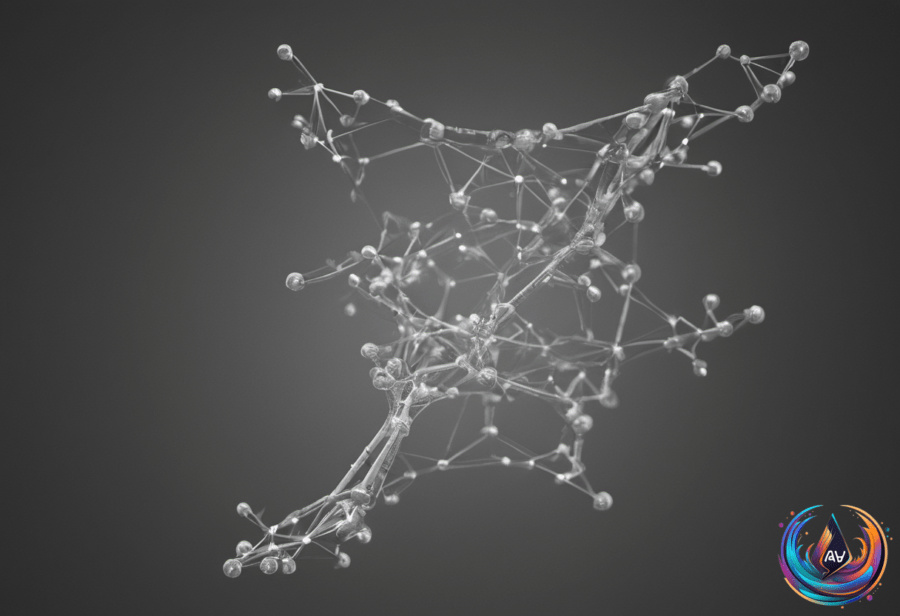
AI already benefits from major biological datasets. The Protein Data Bank, or PDB, contains more than 200,000 experimentally determined protein structures and enabled AlphaFold 2 to predict protein structures with startling accuracy.
AlphaFold 3 expanded that task by predicting how proteins interact with other molecules, including potential drugs. The catch is that the PDB contains relatively few examples of proteins interacting with drug-like molecules—maybe just 10,000.
Many structures produced during drug discovery never reach public databases because companies treat them as proprietary. The total size of those private protein vaults is unknown, but they could contain more data than the PDB. Public science built the foundation; private science may hold the missing floors.
A consortium of pharmaceutical companies reports that proprietary data improves AI model performance. In one example, a new model trained on more than 20,000 proprietary protein structures outperformed models trained only on public data.
Mohammed AlQuraishi, a computational biologist at Columbia University, summarized the result this way: “You add all this data, and you get a pretty big bump in performance.” John Karanicolas, head of computational drug discovery at AbbVie, offered the sharper explanation: “The data that’s missing from the PDB is exactly the data that’s present in our internal data.”
That protein study has not been peer-reviewed, and the model is not publicly available. The result still points to a structural problem: AI researchers can build stronger systems only when companies are willing to share the evidence those systems need.
Funding biology while debating AI’s speed
OpenAI’s biology push arrives alongside a broader argument about the risks and pace of AI development. AI company insiders say the chance of human extinction from AI is 10% or more within the next decade, while Sam Altman and Elon Musk endorsed a call last week to slow the pace of AI model improvements.
That tension is hard to miss. The same ecosystem is discussing whether model progress should slow down while financing new datasets intended to make models more capable in medicine.
Dario Amodei, Anthropic CEO, and Jacob Trefethen, an OpenAI executive, are among the figures connected to the wider AI debate named around these efforts. The funding also sits beside other attempts to expand biological data, including OpenBind, which has up to £8 million, or US$10.8 million, in UK government funding.
The OpenAI Foundation says, “We expect many remaining breakthroughs in preventing and curing disease to come from pairing the intelligence of new models with more observations of the world—in other words, more data.” That is a less glamorous vision than a machine that magically discovers cures, but it is probably closer to how the work will happen.
Models do not escape the limits of their evidence. If proprietary protein structures and biotech archives contain the observations missing from public datasets, then collecting, funding, and governing access to that material may matter as much as designing the next model.
Based on