The quantum computing race is no longer just about qubits. It’s about the infrastructure beneath them.
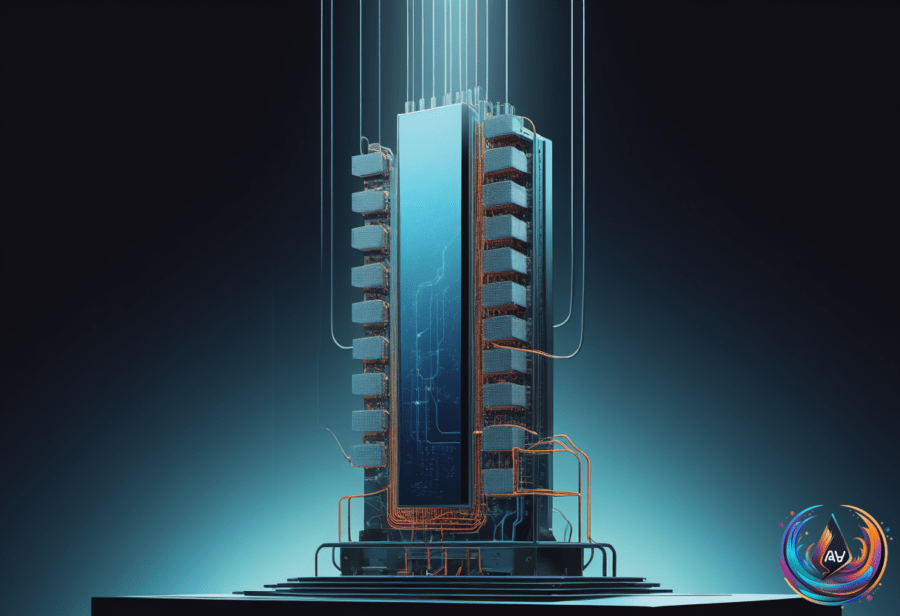
QTREX Quantum is tackling the overlooked but critical bottleneck in quantum hardware: the interconnect problem. Their solution? Replace the tangled mess of cables and connectors inside cryostats with a single additively manufactured electronic structure. This 3D-printed, multi-material platform packs dense control lines with micron precision, dramatically cutting heat and noise that kill qubit performance.
Traditional wiring won’t scale past a few hundred qubits. QTREX’s approach could unlock the million-qubit fault-tolerant future, a holy grail in quantum. The company is already in joint testing with a top-five global quantum hardware firm, and they’ve secured a $10 million private placement from a new institutional investor. Their stock has surged, reflecting growing confidence in their tech solving a problem the industry mostly ignored.
Meanwhile, Quantinuum is making waves with its IPO target of $1.6 billion, pushing quantum’s financial narrative. Despite posting losses north of $190 million in 2025, the company’s revenue climbed to $30.9 million. The IPO is oversubscribed, signaling strong investor appetite. Quantinuum’s strength lies in its trapped-ion tech and government partnerships aimed at fault-tolerant architectures. Its Nasdaq debut will be a key barometer for quantum’s market potential.
Not all quantum bets are superconducting. QuiX Quantum unveiled PACU, a photonic assembly control system designed to scale photonic quantum processors. This 3U rack-mount device controls thousands of phase shifters with millisecond response times, enabling room-temperature operation. Photonic quantum tech avoids cryogenic complexity, offering a more data-center-friendly path. QuiX’s modular design and strategic European partnerships position it as a leader in photonic scaling challenges.
D-Wave’s Roadmap to Fault Tolerance
D-Wave Quantum is charting a detailed course to 100 logical qubits by 2032, focusing on error correction and fault tolerance. Their dual-rail superconducting qubit design detects errors at the hardware level, slashing error rates and reducing the physical qubit overhead. This contrasts with many competitors who rely on brute force qubit counts without embedded error detection.
The plan includes incremental milestones — a 17-qubit system in 2026, scaling to 181 qubits by 2028, and a 100-logical-qubit machine capable of over one million operations by 2032. This progress aims to turn quantum from experimental novelty into commercial tool. D-Wave’s superconducting approach runs error correction cycles much faster than trapped-ion or neutral atom competitors, potentially speeding up the path to reliable quantum advantage.
Quantum computing’s future hinges on solving these hardware scaling puzzles. QTREX is re-engineering the interconnects. Quantinuum is monetizing trapped-ion tech with investor backing. QuiX pushes photonic scaling at room temperature. D-Wave bets on error-corrected superconducting qubits.
Each player attacks a different layer of the stack. The race is no longer just about raw qubit counts. It’s about making quantum hardware scalable, reliable, and commercially viable.
Investors, engineers, and researchers should watch these infrastructure battles closely. The winners will define how and when quantum computing finally escapes the lab.
Based on
- QTREX is betting on the layer beneath quantum computing — thenextweb.com
- Quantum Computing’s Biggest IPO Yet? Quantinuum Eyes $1.6 Billion Nasdaq Listing – CoinCentral — coincentral.com
- D-Wave sets 2032 roadmap to 100 logical qubits | QBTS Stock News — stocktitan.net
- Why Is QTREX Quantum Stock Surging On Thursday? – QTREX Quantum (NASDAQ:QTEX) – Benzinga — benzinga.com
- QuiX Quantum PACU: Scaling Photonic Quantum Control Layers – Quantum Computing News — quantum-computing.news
- QTREX Announces Pricing of a $10 Million Private Placement of Ordinary Shares with a New Fundamental Institutional Investor | MarketScreener Australia — au.marketscreener.com