RAM and ROM sound like opposites, but the line between them has blurred for decades. RAM handles the work happening right now, while ROM preserves the instructions a device needs to start up, yet modern hardware has made “read-only” an increasingly outdated label.
That distinction matters even more as AI data centers consume memory supplies and push prices higher. The technology behind a phone, laptop, graphics card, or motherboard now connects an old memory debate to one of the biggest hardware shifts in the industry.
RAM Works Now, ROM Starts Things Up
RAM holds whatever the processor is working on. When the power is cut, all of that data disappears, making RAM a temporary workspace rather than a permanent store. Higher RAM capacity lets a device run more apps, open more tabs, and play more powerful games.
DRAM is the most dominant type of RAM. It stores each bit as a charge inside a tiny capacitor, and that charge needs refreshing thousands of times per second. Remove power, and the stored data vanishes.
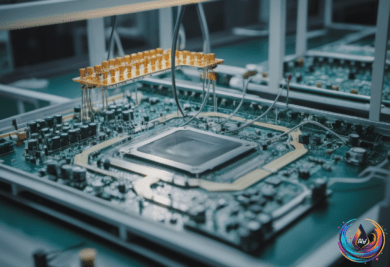
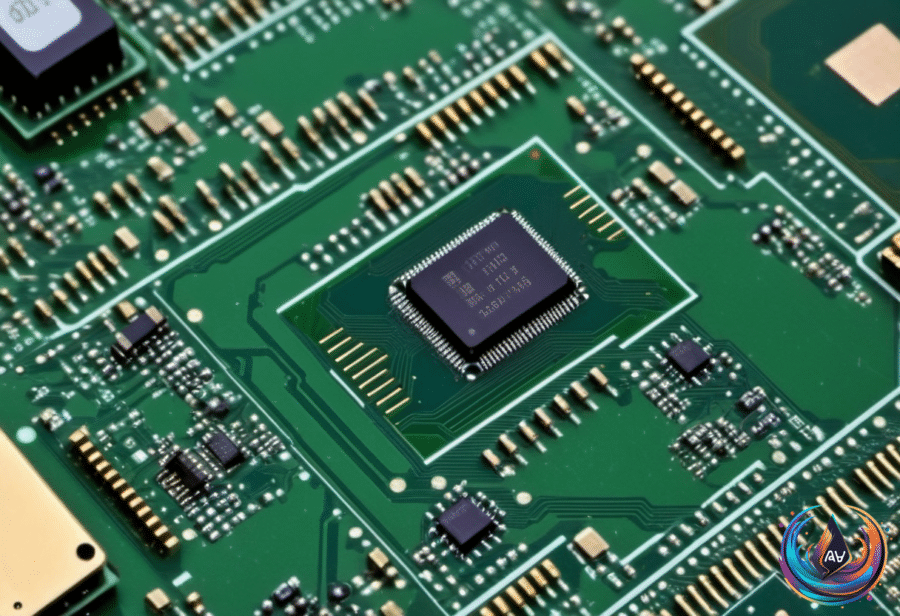
Different devices use different forms of this memory. Phones and thin laptops rely on LPDDR RAM soldered to the board, while graphics cards cluster GDDR chips around the GPU. These designs help devices access the working data they need, but they also make memory a central part of a product’s hardware structure.
ROM has a different job. It stores the permanent instructions a device needs to start up and retains them regardless of the power state. The earliest ROM chips had data physically built into their circuitry, so the information could not be changed after production.
That changed with PROM, invented in 1956 by Wen Tsing Chow. PROM allowed programmable read-only memory, but its data was permanently written by blowing microscopic fuses. EPROM followed in 1971, developed by Intel engineer Dov Frohman, and could be erased with ultraviolet light for reprogramming.
EEPROM replaced ultraviolet erasure with electrical erasure. Then Fujio Masuoka, a Toshiba engineer, developed flash memory, introduced as NOR flash in 1984 and NAND flash in 1987. Flash now appears in SSDs, smartphones, memory cards, and USB drives.
Why “ROM” No Longer Means Read-Only
“ROM stopped being truly ‘read-only’ decades ago,” Luke James wrote. That shift explains why hardly anything in a modern device is truly read-only anymore, even though the old name remains embedded in product specifications.
The firmware chip on a PC motherboard offers a clear example. It is a small flash chip that gets rewritten with firmware updates, so the instructions are stored in nonvolatile memory but are not permanently locked in place.
Phones use the same language in a different way. The ROM listed for the Redmi 13 is regular UFS or eMMC flash, with system partitions locked to read-only. The storage can hold system instructions and other data, but the underlying memory technology remains rewritable flash.
Firmware chips in PCs and the “ROM” listed on phone specification sheets are therefore examples of memory still called ROM. Files ripped from old plastic game cartridges are also called ROMs, even though the term describes the software image rather than a modern, permanently fixed memory chip.
Proper factory-set ROM still exists, mainly in cheap electronics and microcontrollers running unchangeable code. Outside those uses, flash memory has taken over many jobs once associated with ROM.
AI Data Centers Put Memory Under Pressure
The RAM story now extends far beyond phones and laptops. Conventional DRAM contract prices rose by 90 to 95 percent quarter-over-quarter at the beginning of the year, as AI data centers absorbed virtually all the supply of DRAM.
That demand connects memory prices to massive AI infrastructure plans. NVIDIA plans to invest up to $100 billion in OpenAI to build 10 gigawatts of AI data centers, creating another powerful force behind demand for processors, memory, and related hardware.
Micron announced it would kill its Crucial consumer brand to focus on high-margin AI data center demand, ceasing operations in February. That decision shows how the market is shifting toward large computing facilities, even as consumers still depend on memory for everyday devices.
Memory shortages have affected consumers before. Huawei faced a memory shortage in 2017, showing how supply pressure can reach companies and products outside the data center market.
The result is a new meaning for the old RAM-versus-ROM question. RAM remains the temporary workspace that disappears without power, while ROM now often means flash memory or protected system storage that can still be rewritten. As AI data centers pull more DRAM into large-scale computing, the memory inside everyday devices becomes part of a much bigger hardware race.