AlpSemi just secured €17 million to scale its solid-state circuit breaker chips worldwide. The Grenoble, France startup targets buildings and AI data centers with a fresh take on power protection.
Traditional mechanical breakers are slow and clunky. AlpSemi replaces those parts with semiconductors, making power switches faster and remotely controllable. Their first product, the AS800, fits miniature circuit breakers at 110V and 230V. It packs high power density and supports distributed energy sources, aiming to disrupt electricity management in buildings.
The funding round was led by Yotta Capital. SE Ventures, Navitas Semiconductor, and Cycle Group also invested. SE Ventures explained their stake by emphasizing the crucial role of solid-state circuit breakers (SSCBs) in fully digitizing electrical distribution.
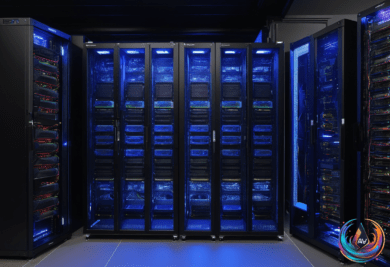
AlpSemi focuses on 800V DC architectures, especially for AI data centers. Navitas Semiconductor, another investor, develops GaN and SiC solutions for the same 800V DC standard, targeting AI server infrastructure. This signals a clear push for high-voltage DC power systems in next-gen data centers.
Frédéric Dupont put it bluntly: “This financing positions AlpSemi to emerge as a leading global industrial player in power electronics.” He added, “Our ambition is clear: accelerate the semiconductor roadmap required to enable the large-scale deployment of solid-state circuit breakers.”
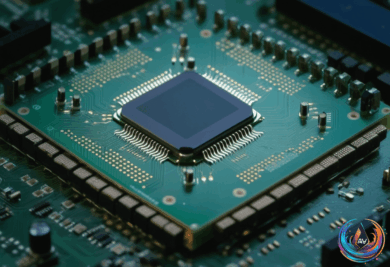
Meanwhile, Magnachip Semiconductor Corporation unveiled two 6th-generation 600V Super Junction MOSFETs. These devices suit AI servers, industrial power supplies, telecom infrastructure, and EV chargers. Featuring low RDS(ON) values of 36mΩ and 37mΩ, smaller chip sizes, integrated Zener diodes for ESD protection, and a Kelvin Source configuration, these MOSFETs aim for efficient, high-performance power systems.
Magnachip’s MMTB60R037G6FZVRH model includes a Fast Recovery Body Diode and comes in a TOLL package, underscoring the focus on efficiency and durability in AI server power supplies and EV charging.
On a related note, Sophia Space raised $7 million in a SAFE round, pushing its total funding to $22 million. The startup builds compact satellite hardware that processes data in orbit instead of sending it to Earth. Founder Rob DeMillo said, “As initiatives like Golden Dome and proliferated satellite constellations reshape the space landscape, demand for autonomous, on-orbit computing is growing rapidly.”
The global space economy hit a record $613 billion in 2024 and could surpass $1 trillion by 2032. Starcloud made headlines in November 2025 by sending a commercial NVIDIA H100 processor into orbit to train an AI model in space for the first time.
Based on
- AlpSemi Lands €17M for Next-Gen Circuit Breaker Chips — justainews.com
- AlpSemi Raises €17 Million to Scale Next-Generation Solid-State Circuit Breaker Power Switches for Buildings and … – Worldnews.com — article.wn.com
- AlpSemi raises 17 million for data center power switches – Techzine Global — techzine.eu
- Financial News | myMotherLode.com – Magnachip Launches New 6th-Generation 600V SJ MOSFETs for AI Servers and EV Charging Applications — money.mymotherlode.com
- Sophia Space Raises $7M for Satellite AI Computing — technews180.com