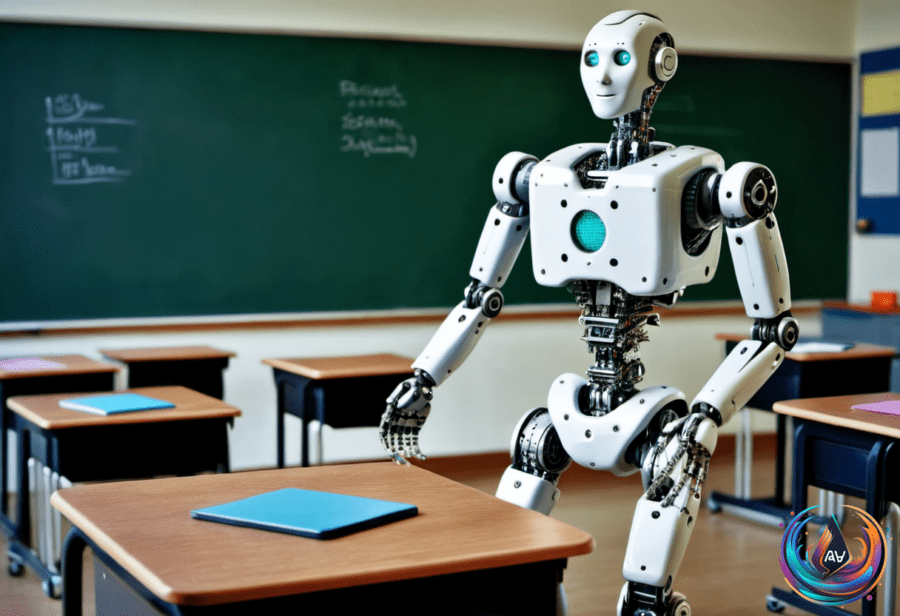
The Salamanca City Central School District shelved its plan to deploy a humanoid robot named Sally in a high school classroom this autumn. The district had invested $57,590 for Sally and an AI teacher’s assistant to work with roughly 1,300 students, about a third of whom identify as American Indian or Alaska Native.
Sally operates on a closed network with no internet access, collects no recordings, and carries no facial recognition technology. The robot is made by Realbotix, formerly Tokens.com, which acquired Simulcra—the parent company of RealDoll—in 2024.
New York State Education Commissioner Betty Rosa issued a letter expressing concern about the robot’s impact on students. Rosa stated, “The Department remains concerned about the effect that a humanoid robot may have within a high-school classroom.”
Public pushback was swift. Melinda Person, a critic, called the robot’s presence “built by a company associated with sex dolls” and declared it had “no business in our classrooms.” Meanwhile, Superintendent Mark Beehler noted that many schools are simply banning such robots instead of confronting the issues.
Salamanca’s curriculum developer Steve Wozniak was involved in course planning, but the pause signals broader unease about AI’s role in education. The debate highlights tensions between innovation and caution, especially when AI companies have complicated backgrounds.
Global Moves on Emotional and Companion AI
China rolled out new regulations in 2026 targeting AI systems designed for sustained, human-like emotional interaction. The rules exclude standard customer-service bots and productivity assistants but cover AI companions meant for emotional support.
Companies must now inform users when they’re interacting with AI, encourage regular breaks, and monitor for signs of dependence or crises. Age checks are mandatory—users under 18 are banned from virtual-partner services. For those under 14, parental consent is required for emotional support AI.
Despite reports of an outright ban, specialist AI companion services remain available, though some platforms have cut companion features. The UK set a minimum age of 18 for romantic chatbot users, while California demands bots identify themselves and support users showing self-harm or suicidal behavior. The European Union has yet to enact specific laws on AI companions.
Robots and Labor: Hyundai’s Automation Plans Face Union Scrutiny
Hyundai Motor Company plans to deploy the Atlas humanoid robot at Metaplant America near Savannah, Georgia, by 2028. Atlas, developed by Boston Dynamics—a Hyundai subsidiary—has been publicly known since its unveiling at CES in January.
Reports that union demands relate to robot deployment are false. Hyundai insists current negotiations with striking South Korean autoworkers focus on compensation, not automation. An internal union letter warned, “Remember that without labor-management agreement, not a single robot using new technology will be allowed to enter the workplace.”
South Korea’s new labor law, effective March 2026, expanded subcontracted workers’ rights and limited employers’ ability to sue unions for strike-related damages. It also requires collective bargaining on management decisions affecting working conditions. This could delay automation efforts involving robots.
The Korean Confederation of Trade Unions formed a joint consultative body with the government in February 2026 to discuss labor issues including AI-driven automation. Meanwhile, the 400,000 autoworkers in South Korea and the United Auto Workers in the U.S. watch closely. UAW has warned against mass automation and humanoid robotics at Hyundai’s Georgia Metaplant, where workers remain non-unionized but face organizing efforts.
Based on
- New York school pauses humanoid robot ‘Sally’ after state and union pushback — thenextweb.com
- China is trying to regulate relationships with AI – can it work? | New Scientist — newscientist.com
- Anthropic to pay US$1.5B over pirated books used to train Claude — ctvnews.ca
- Hyundai claims humanoid robot plan is not part of talks with striking workers – Ars Technica — arstechnica.com
- Bill takes aim at Chinese AI companies accused of U.S. tech — nbcnews.com