Robotics is breaking through a massive roadblock: data. Machines that move, grasp, and interact need oceans of physical training data. Yet, collecting this data is tough, costly, and messy. Now, startups and research labs are stepping up with bold new solutions that promise to power the next generation of smarter robots.
Dirty Work Meets High-Tech Solutions
Teaching robots how to handle real-world tasks means capturing countless examples of physical interaction. This is no glamorous AI lab experiment. It’s hands-on, tedious, and requires specialized hardware plus human operators. Some companies have realized the best move is to build entire data ecosystems dedicated to this work.
One trailblazer is a startup that emerged from university robotics research. They created a teleoperation system that lets humans control robot arms remotely, generating high-quality training data. This approach tackles a classic catch-22: robots need data to learn, but you can’t collect data without trained robots. Their system became a foundation for a data pipeline serving top AI labs racing into robotics.
But this is just the start. The company is expanding beyond raw data collection. They clean, annotate, and build tooling to turn noisy streams into reliable, scalable datasets. They even plan to train a global workforce of teleoperators and wearable-sensor users to amass diverse, high-fidelity datasets from real environments. This is data at industrial scale, built to push physical AI forward.
Human Demonstrations Meet Robot-Free Data
Imagine capturing robot training data without needing an actual robot for every example. A new system does exactly that. It combines VR headsets, wrist cameras, and special grippers worn by humans. These devices record detailed hand-object interactions and environmental context while a person performs tasks.
This “robot-free” data collection cuts costs and speeds up training. Experiments show you can reduce the need for real robot data by 20 times. Merging a handful of real robot runs with many human demonstrations yields equally strong results. This innovation bridges the gap between human movements and robot control, creating a versatile dataset ready to train various robot models.
Quality matters here. The system uses multi-layer checks to ensure visual data aligns perfectly with motion trajectories. It filters out impossible movements and validates training data by replaying it on real robots. This closed-loop governance means AI models train on trustworthy data, avoiding the pitfalls of messy datasets that degrade robot performance.
Building Safety and Scale on Real Job Sites
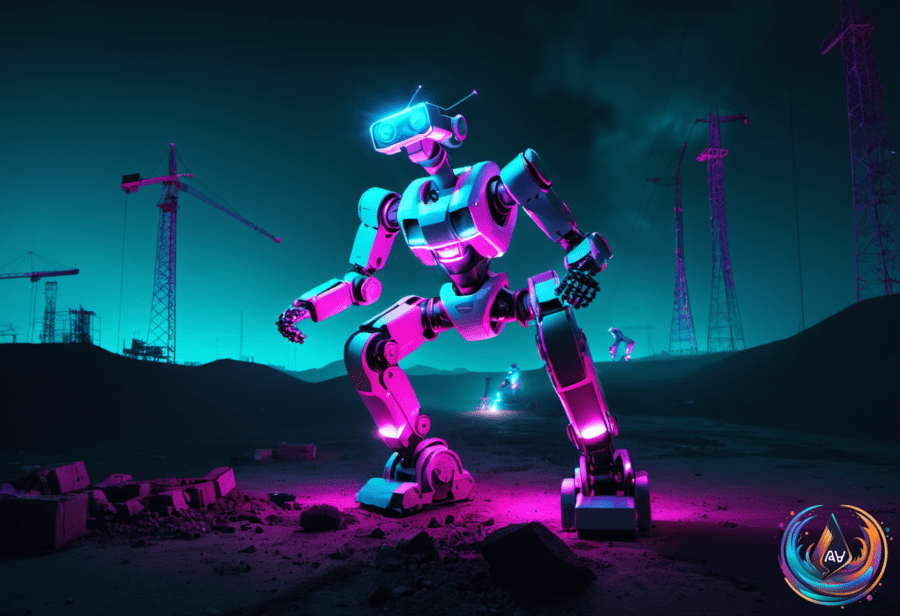
Robotics isn’t just about labs. Construction sites are becoming living testbeds for physical AI. A partnership between a robotics company and a leading university lab is turning busy job sites into data goldmines. Their robots, equipped with sensors, scan environments and monitor personnel. This feeds AI models designed to detect humans in unusual positions, poor lighting, or cluttered scenes.
Why does this matter? Construction is one of the toughest environments for robots due to unpredictability and safety risks. By collecting diverse, real-world data, researchers can build AI systems with “superhuman” perception. These models spot hidden dangers and unusual behaviors that even experienced humans might miss.
Safety is the centerpiece of this effort. The collaboration aims to set new industry standards for how physical AI operates and validates itself in the field. The goal: robots that can work alongside humans safely, reliably, and efficiently, transforming how construction and infrastructure projects are done.
The Bigger Picture: Data as the New Robot Fuel
Robotics is entering a phase where collecting and curating data is as important as building robots or developing algorithms. The old model of relying solely on real robots to gather training data is giving way to hybrid, scalable pipelines involving human demonstrations, wearable sensors, and edge AI validation.
These advances are attracting serious investment and talent. AI labs are racing to build “world models” that simulate physics and cause-effect in realistic 3D environments. Cloud providers and chip makers are competing to power these compute-heavy workloads. The AI robotics race is heating up, and data is the secret weapon.
What comes next? Expect more open datasets, new hardware designed for data collection, and partnerships spanning academia, startups, and industry. As robots learn from more and better data, they’ll become stronger collaborators, safer coworkers, and more capable helpers. The future of physical AI is here — and it’s fueled by a data revolution.
Based on
- Collecting robot training data is dirty, unglamorous work. Some AI labs are already paying XDOF to do it. — techcrunch.com
- XRZero-G0 Opens 2,000-Hour Robotics Dataset | Developments Today — developmentstoday.com
- Built Robotics, Penn xLAB to develop physical AI for construction — therobotreport.com
- XRZero-G0: Revolutionizing Robotics Data Collection | Machine Brief — machinebrief.com
- Odyssey AI raises $310M, bets on Amazon over Nvidia — thenextweb.com