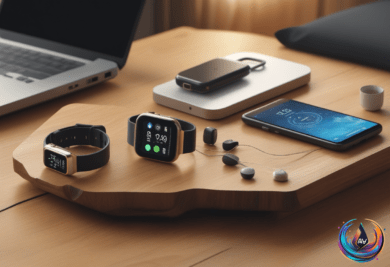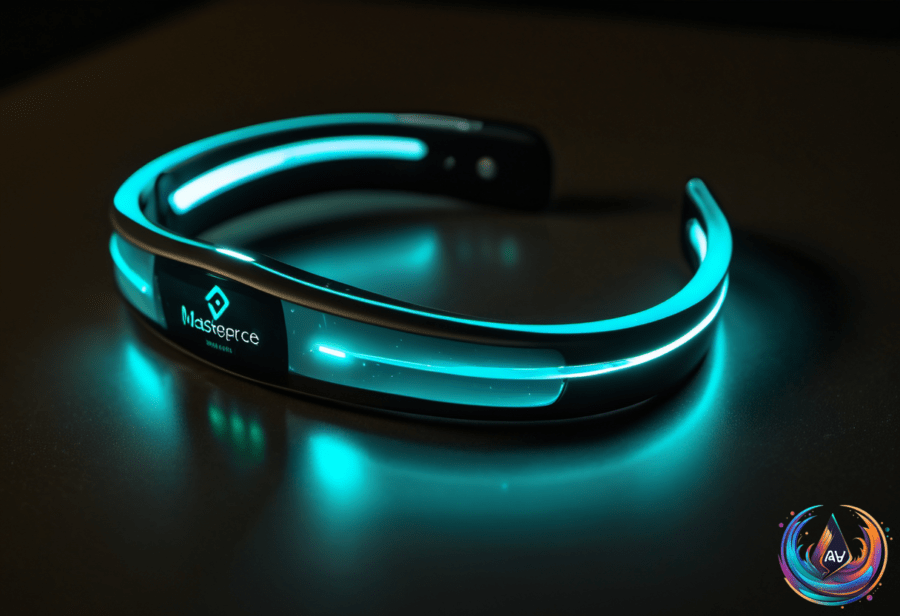
The newest wearables want your attention elsewhere. A new crop of minimalist devices promises to collect health data without demanding attention, replacing the constant presence of a screen with quieter tracking. The pitch is simple: learn more about your body while giving you fewer reasons to stare at your wrist.
Today’s lineup includes the Garmin Cirqa, Google Fitbit Air, Polar Loop, Amazfit Helio Strap, and the Whoop series. Apple is considering its own version of the concept, adding another major company to a category built around removing one of the most familiar parts of a fitness tracker.
The display is the feature being deleted
These wearables are largely a case of design subtraction, excising the display from traditional fitness trackers. The result is a device focused on collecting health data rather than presenting every heartbeat, sleep score, or stress reading the moment it happens.
Whoop has made screen-free wearables since its first proper release in 2015. Back then, the company described its product as a “performance optimization system exclusively designed for elite athletes and teams.” Today, a Whoop band is made for just about anyone with the spare cash to pay for its $199 annual subscription.
That change in audience reflects a broader shift in what wearable technology promises to do. Devices have moved from basic fitness tracking toward insights into human physiology and cognitive function, monitoring biometrics such as sleep, heart rate, and stress while using AI to establish personal baselines and identify health trends.
Whoop now presents its band as a system to “help you improve how you sleep, train, and feel—starting day one.” The language is less about recording activity and more about turning a stream of measurements into guidance for daily life. A wrist device has become a continuous interpreter of the body, because apparently counting steps was not enough homework.
Health data still comes with a business model
The quieter hardware does not mean the technology has become simpler. Wearables are treated as conduits between biology and the digital world, providing continuous, intelligent feedback through sensors, apps, personal baselines, and health trends.
AI sits at the center of that feedback loop, but it also sits inside the sales strategy. “AI is a way for these wearable companies to upsell and make money,” one description says, while also connecting AI to the reason many people want low-distraction technology in the first place.
Without a subscription, some wearable apps provide only basic stats and charts. Google’s Fitbit app offers chatty explainers of health data through Google Health Premium at $10 a month, turning numbers and graph lines into paragraphs about specific quirks or events of the day.
That approach changes the role of the app. Instead of leaving users with raw measurements, it translates those measurements into a running explanation of sleep, stress, heart rate, and other signals. The benefit is easier interpretation; the cost is another monthly payment for the part that makes the data feel useful.
The tension is clear. Screen-free devices promise less distraction, but their services aim to hold users inside an ongoing system of tracking, interpretation, and paid features. The hardware disappears from view while the subscription remains very much present.
Smart glasses push the same idea outward
Apple’s leadership transition favors a hardware-focused executive, signaling an aggressive push into wearable technology, especially smart glasses. Meta and Google have launched AI-powered smart glasses, extending the same interest in continuous sensing beyond the wrist.
Smart glasses offer advanced sensor integration to monitor brain activity, eye movement, and vital signs, with applications in healthcare. That places them closer to a platform for observing human biology than a conventional accessory, even as the broader wearable trend moves toward devices that ask users to look at them less.
The direction is consistent across these products: gather more information, interpret it with AI, and reduce the visible friction between the person and the device. The display may vanish, but the data pipeline becomes more ambitious.
Wearables are not becoming invisible because technology has run out of ideas. They are becoming invisible because the industry wants health tracking to operate in the background—quietly collecting, analyzing, and selling insight without interrupting the day.
Based on