The next wave of wearable technology wants your data, not your attention. A new crop of minimalist devices promises to collect health stats day and night without placing another glowing screen in front of you.
These wearables have been exploding of late and are set to grab more attention in the coming months. Garmin Cirqa, Google Fitbit Air, Polar Loop, Amazfit Helio Strap, and the Whoop series now represent a growing push toward devices that work in the background, tracking the body while users get on with their day.
The Wearable Gets Out of the Way
The central idea is simple: design subtraction. Wearable companies are excising the display from normal fitness trackers, creating devices that collect information without constantly asking users to check, swipe, or respond.
That change reshapes the relationship between people and their health data. Instead of turning every measurement into an alert or a dashboard, screen-free wearables focus on gathering information across the day and night. The device becomes less noticeable, but the data it collects can support a more detailed picture of sleep, heart rate, stress, and other biometrics.
Whoop has made screen-free wearables since its first proper release in 2015. In that year, the company described itself as a performance optimization system for elite athletes and teams, built around the promise of helping users improve how they sleep, train, and feel from day one.
That system comes with a clear price: a Whoop band is made for anyone with the spare cash to pay for its $199 annual subscription. The model shows how the screen-free category is tied to services as much as hardware, with the wearable acting as the collection point for insights and recommendations.
AI Turns Biometrics Into Personal Guidance
Wearable technology has evolved from basic fitness tracking to insights into human physiology and cognitive function. Devices now monitor biometrics such as sleep, heart rate, and stress, then use AI to establish personal baselines and identify health trends.
That shift matters because raw numbers rarely explain what a person should do next. AI can help transform a stream of measurements into a clearer view of personal patterns, connecting changes in sleep, training, stress, and feeling. Wearables are becoming conduits between our biology and the digital world, offering continuous, intelligent feedback.
The business model is changing along with the technology. Wearable companies are using AI to upsell services and provide more detailed insights, making subscription features part of the experience rather than an optional extra.
Fitbit shows how that structure can work. Without a subscription, Fitbit’s app is fairly spare, while more detailed explanations are available through Google Health Premium at $10 a month. The hardware gathers the information, but the paid software layer supplies more of the interpretation.
Apple is considering its own version of the screen-free wearable concept, adding another major company to a category that is already expanding across fitness and health tracking. Its involvement would bring fresh attention to the idea that the most useful wearable may be the one users barely notice.
Smart Glasses Push Wearables Toward Human Augmentation
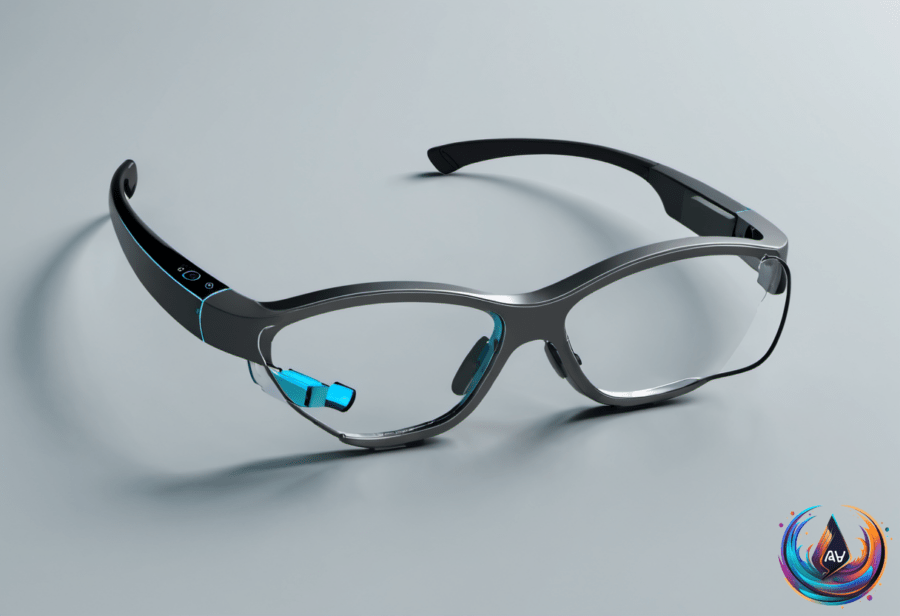
The future of wearable technology does not stop at bands and straps. Smart glasses are opening a path toward advanced sensor integration, AI-powered assistance, and new ways to connect the body with digital systems.
Meta and Google have launched AI-powered smart glasses, while Apple’s leadership transition favors a hardware-focused executive and signals an aggressive push into wearable technology, especially smart glasses. Together, these moves point to a wider race over devices that sit closer to the senses and gather richer forms of information.
Smart glasses offer a unique advantage because they are positioned on the face. Their placement supports advanced sensor integration to continuously monitor brain activity, eye movement, and vital signs, with applications in healthcare.
That vision expands the role of wearables beyond counting steps or recording workouts. A band can gather health data without a display, while smart glasses can connect sensing, AI, and the user’s view of the world. Both approaches reduce the distance between biology and computing, but they do it in different ways.
The screen-free movement is gaining momentum because it answers a clear problem: people want useful health information without giving every moment to another device. As Garmin Cirqa, Google Fitbit Air, Polar Loop, Amazfit Helio Strap, Whoop, Apple, Meta, and Google push wearable technology forward, the category is moving toward less distraction, stronger health insight, and more ambitious forms of human augmentation.
The most important wearable may no longer be the one demanding attention. It may be the one quietly building a better understanding of how the body works.
Based on