Elon Musk is on a mission to supercharge AI data centers and expand Starlink’s reach. The Federal Trade Commission just gave the green light for SpaceX to acquire Mesh Optical Technologies. This startup, founded by former SpaceX engineers, makes optical transceivers that push data at blistering speeds. The goal? Build the backbone that next-gen AI demands and launch Starlink mobile services for millions of U.S. users.
Mesh Optical Technologies: The Next Leap in Data Speed
Mesh Optical Technologies is young but mighty. Founded last year by three engineers who crafted the laser links connecting Starlink satellites, they bring deep expertise to the table. In February 2024, they raised $50 million from Thrive Capital to fuel their breakthrough tech.
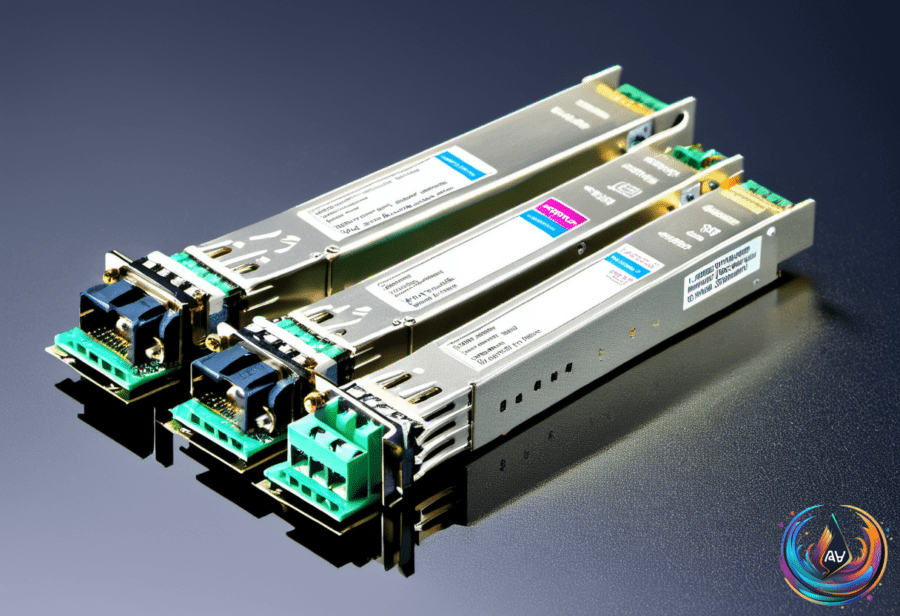
Their flagship product, the Alpha C1, can transmit data beyond one terabit per second. That’s a speed game-changer for AI workloads. Travis Brashears, Mesh’s CEO and co-founder, explained the scale of demand: “When you hear about a million GPU cluster, the number of transceivers needed is four to five times that.” The world has focused on radio frequencies for decades, but Mesh aims to lead the move from RF to photonics. Brashears said, “We want to interconnect everything, not just computers, and we’re starting with data centers.”
SpaceX’s AI and Connectivity Ambitions Soar
SpaceX isn’t just acquiring a startup. It’s building an AI infrastructure empire. The company has signed compute agreements worth over $80 billion through 2029 with AI giants like Anthropic, Google, and Reflection AI. These deals rely on massive data centers that need ultra-high-speed connections to run AI models efficiently. Mesh Optical’s transceivers will play a critical role.
Beyond data centers, SpaceX plans to extend Starlink’s reach with a new mobile service for U.S. consumers. They already offer direct-to-cell connectivity by partnering with T-Mobile. This is just the beginning. SpaceX snapped up wireless spectrum licenses from EchoStar last September and November, spending around $20 billion total. These licenses will power Starlink’s mobile network rollout and support a growing base of over 10 million subscribers.
Big Bets on AI and Starlink’s Future
SpaceX is also making waves in AI tools. The company is acquiring Cursor, an AI coding assistant startup valued at $60 billion. This deal is expected to close in the third quarter of 2026. Cursor will become a wholly owned SpaceX subsidiary, with shareholders receiving SpaceX Class A common stock in the merger. This move aligns SpaceX’s hardware and software ambitions under one roof.
Philip Clark, a SpaceX executive, warned about the stakes: “If AI is indeed the most important technology of our generation (as we believe), having critical parts of AI data center infrastructure controlled by misaligned or competitive countries is a significant concern.” This acquisition spree and infrastructure buildout shows SpaceX’s strategy to secure control over key AI components.
What’s Next?
SpaceX is stacking its deck for 2027 and 2028, aiming to deliver thousands of optical units daily. The integration of Mesh Optical’s tech will accelerate AI compute power and help Starlink expand its footprint. The company’s ambitious plans could reshape how data centers operate and how consumers connect to the internet.
We’re witnessing a bold push to dominate AI infrastructure and wireless connectivity. With the FTC’s approval, SpaceX is ready to light the path for faster AI data links and a new era of mobile internet powered by Starlink. The future is coming fast, and SpaceX is steering the rocket.
Based on
- FTC clears Musk to acquire SpaceX alumni startup Mesh, the optical hardware company his data centers need — thenextweb.com
- SpaceX Vets Launch Mesh Optical: Revolutionizing Data Center Links with $50M Funding (2026) — catdevelours.com
- SpaceX Acquires Cursor to Accelerate Starlink AI Software | VoIP Review — voip.review
- Musk’s SpaceX targets US consumers with Starlink mobile service push, FT reports | COOL FM | WQXC & WFAT | Battle Creek & Kalamazoo, MI — wqxc.com
- Musk’s SpaceX targets US consumers with Starlink mobile service push, FT reports – The Daily Guardian — thedailyguardian.com