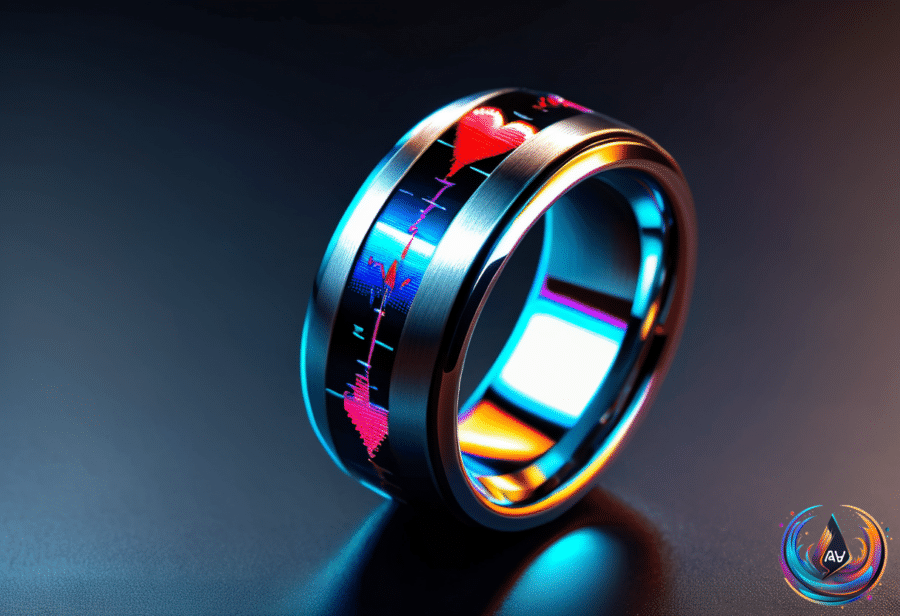
Ultrahuman is giving smart ring users a new way to check their heart rhythm whenever something feels off. The company has teamed up with FibriCheck to launch Heart Scan, a feature that lets Ring Air and Ring Pro users run a dedicated rhythm check on demand.
Ultrahuman announced the feature on October 7, 2026, at 7:00 am EST. The launch adds a focused heart rhythm scan to a wearable platform already built around sleep, movement, and daily readiness data, creating a new reason to open the Ultrahuman app when users want a closer look at their current readings.
A 60-Second Check Inside the Ultrahuman App
Heart Scan is designed around a simple action: users sit still for 60 seconds while the Ultrahuman app runs the test. The scan data then goes through FibriCheck’s algorithm, which analyzes the recorded heart rhythm.
That process gives users a dedicated result rather than asking them to interpret a stream of daily wearable measurements on their own. The scan results are collated in a PDF, and users can share that document with a healthcare professional.
The feature is available only in supported markets across the UK, Europe, the Middle East, and Asia-Pacific. That regional limit matters because Ring Air and Ring Pro ownership alone does not guarantee access to Heart Scan; the feature must also be supported in the user’s market.
FibriCheck’s role centers on the heart rhythm analysis, while Ultrahuman brings the scan into its app and connects it with compatible rings. The message for users is direct: if “something feels off,” a 60-second check can create a report that is ready to share with a healthcare professional.
Prime Day Puts Ring Air in the Spotlight
The new heart rhythm feature arrives as the Ultrahuman ring air receives a 25 per cent Prime Day price cut. During Prime Day, the titanium subscription-free wearable costs £247 from Amazon.co.uk, giving the Heart Scan launch a major hardware angle alongside its software update.
Ring Air tracks heart rate, blood oxygen, steps, and sleep, then turns sleep and movement data into a readiness score. Because it does not require a subscription, the ring presents a different ownership model from devices that add a monthly fee after an initial trial.
That contrast is especially clear beside the Oura ring 4. Oura’s ring reaches a 50 per cent Prime Day discount and costs £189 from Amazon.co.uk, but an Oura membership costs £5.99 a month after a free trial. The Oura ring 4 also offers six days of battery life.
Alex Lee, a tech editor reporting on smart ring deals, places these products in a busy Prime Day comparison. Beyoncé’s line, “if you like it then you should put a ring on it,” also sits in the conversation around smart rings, but the buying decision now turns on price, battery life, tracking features, and membership costs.
Three Rings, Three Different Trade-Offs
Ring Air is not the only discounted smart ring competing for attention. The RingConn gen 2 air costs £134 from Amazon.co.uk and is made from stainless steel, while its battery can last up to 10 days.
- Ultrahuman ring air: £247 from Amazon.co.uk during Prime Day, with a 25 per cent discount, titanium construction, and no subscription.
- Oura ring 4: £189 from Amazon.co.uk during Prime Day, with a 50 per cent discount, six days of battery life, and an Oura membership priced at £5.99 a month after a free trial.
- RingConn gen 2 air: £134 from Amazon.co.uk, stainless steel construction, and up to 10 days of battery life.
RingConn gen 2 air also tracks sleep, stress, heart rate, blood oxygen, skin temperature, and activity. That gives it the broadest listed set of tracked categories in this comparison, while its battery figure reaches beyond both the Oura ring 4 and the Ultrahuman ring air.
The choice therefore depends on what matters most to each buyer. Ring Air combines subscription-free ownership with a readiness score and access to Heart Scan in supported markets. Oura offers the deepest Prime Day discount but adds a monthly membership after its free trial, while RingConn pairs a lower listed price with up to 10 days of battery life and a wide range of tracking options.
Ultrahuman’s move pushes smart rings into a more active role in personal health tracking. A 60-second scan, FibriCheck analysis, and a shareable PDF give Ring Air and Ring Pro users a new feature to explore, while the Prime Day price makes Ring Air part of a sharper three-way hardware contest. As supported markets gain access, the next step for smart rings may be less about collecting data in the background and more about giving users a clear way to check in when they need it.
Based on