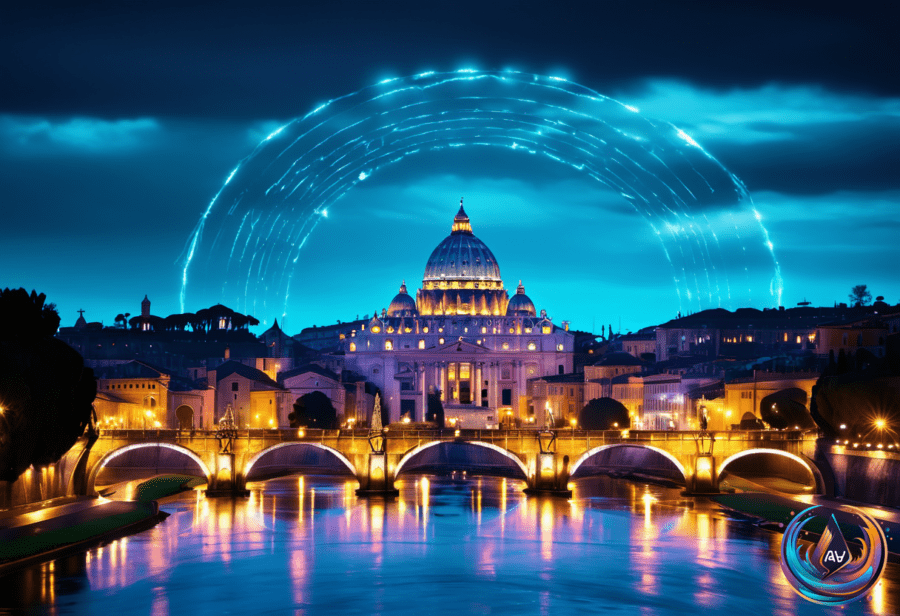
The Vatican just flipped the script on AI debates worldwide. Pope Leo XIV is stepping into the tech arena with a powerful message. His first encyclical, Magnifica Humanitas, is not just a letter. It’s a call to rethink how AI fits into human dignity, work, and even war.
AI Meets Morality: A New Chapter Begins
On May 25, Pope Leo XIV personally unveiled this historic document in the Vatican’s Synod Hall. This isn’t the usual behind-the-scenes release. The pope took center stage, signaling that AI is no longer just a tech issue. It’s a moral question demanding urgent attention.
The encyclical boldly challenges the idea that technological power automatically grants authority. Instead, it demands that humans reclaim their primacy over algorithms and machines. The pope’s words are clear: AI should serve humanity, not dominate it.
The timing is symbolic. Pope Leo XIV signed the encyclical on May 15, the 135th anniversary of Pope Leo XIII’s Rerum Novarum, a landmark document that shaped labor rights during the Industrial Revolution. Now, the Vatican positions AI as the defining “industrial revolution” of our age, with equally profound social consequences.
Key Themes: Disarmament, Human Dignity, and Fairness
Disarming AI: The pope calls for AI disarmament to prevent its use in warfare. He denounces algorithm-driven conflict as immoral and warns that AI only makes war faster and more impersonal. This outright rejects the use of autonomous weapons and AI decision-making in lethal contexts.
Breaking Monopolies: The letter targets the concentration of AI power in a handful of companies. Pope Leo XIV urges making AI “more human-friendly” and freeing it from monopolistic control. This is a direct challenge to tech giants dominating AI development today.
Protecting Workers and Justice: Echoing the spirit of Rerum Novarum, the encyclical addresses AI’s impact on labor and social justice. It demands fair treatment for workers facing automation and calls for shared social standards that uphold human dignity.
Bridging Faith and Technology: Voices from Vatican and Silicon Valley
The Vatican brought together a remarkable lineup to present the encyclical. Alongside Pope Leo XIV were senior Catholic leaders and leading AI experts, including Christopher Olah, co-founder of Anthropic, a company focused on AI safety and interpretability.
Olah’s presence signals the Vatican’s serious engagement with the technical side of AI ethics. Interpretability research, which seeks to make AI’s decisions understandable, is a critical frontier. The church is not just issuing spiritual guidance but joining the global conversation on AI governance.
Tech leaders and theologians alike see this as a turning point. The Vatican is no longer a distant observer but a key moral voice shaping the future of AI. Experts urge that AI development must include diverse voices—religious, academic, governmental—to ensure technology respects humanity.
A Call to Global Cooperation and Ethical Leadership
Pope Leo XIV frames AI as an anthropological challenge, not just a technical one. The encyclical urges global cooperation to steer AI toward positive outcomes. It warns against a “race dynamic” where countries and companies rush to dominate AI at any cost.
The Vatican’s approach is about affirming human dignity against the tide of unchecked technology. It demands that AI policies prioritize justice, truth, and the common good. This moral framework could influence governments, corporations, and civil society worldwide.
What’s next? The encyclical sets a foundation for future Church teachings and policy discussions. It may inspire new international dialogues, ethical standards, and even regulation. The pope’s message is clear: humanity must lead AI, not the other way around.
The Future of AI and Humanity Intertwined
The release of Magnifica Humanitas marks the Vatican’s bold entry into AI ethics. Pope Leo XIV is asking everyone to rethink what it means to be human in a world shaped by algorithms. This is not fear of technology. It’s a call to magnify humanity’s true grandeur.
Will this spark global change? The Vatican has positioned itself as a moral compass in turbulent technological times. Governments and tech companies now face a challenge: balance innovation with the sacred value of human life. The pope has set the stage. The world is watching.
Based on
- Pope Leo XIV tells the Vatican to disarm AI, in the first encyclical of his pontificate — thenextweb.com
- Pope Leo XIV to Release First Encyclical on AI and Human Dignity – Daily AI Brief — dailyaibrief.com
- Silicon Valley turns to Rome as Pope Leo XIV prepares AI encyclical — religionnews.com
- Pope Leo XIV to Present Major Vatican Encyclical on AI | Developments Today — developmentstoday.com
- Pope Leo will take on AI alongside an Anthropic co-founder – NBC Los Angeles — nbclosangeles.com
- Pope Leo XIV to release first encyclical on AI Monday — capitalfm.co.ke