Public records are not always accessible records. Habeas Dockets is changing that for immigration court filings that normally remain offline, publishing habeas corpus petitions online so anyone can read them.
Across the country, nearly 50,000 habeas corpus petitions filed in recent immigration cases are public records only in theory. A 2007 court rule, Federal Rule of Civil Procedure 5.2(c), makes these petitions impossible to access online like most other federal court records.
That restriction creates a practical barrier with real consequences. “The effect is it takes much longer to get access to these records in a particular case and it makes it basically impossible to get records in a lot of these cases at once,” said Renee Griffin, a staff attorney at the Reporters Committee for Freedom of the Press.
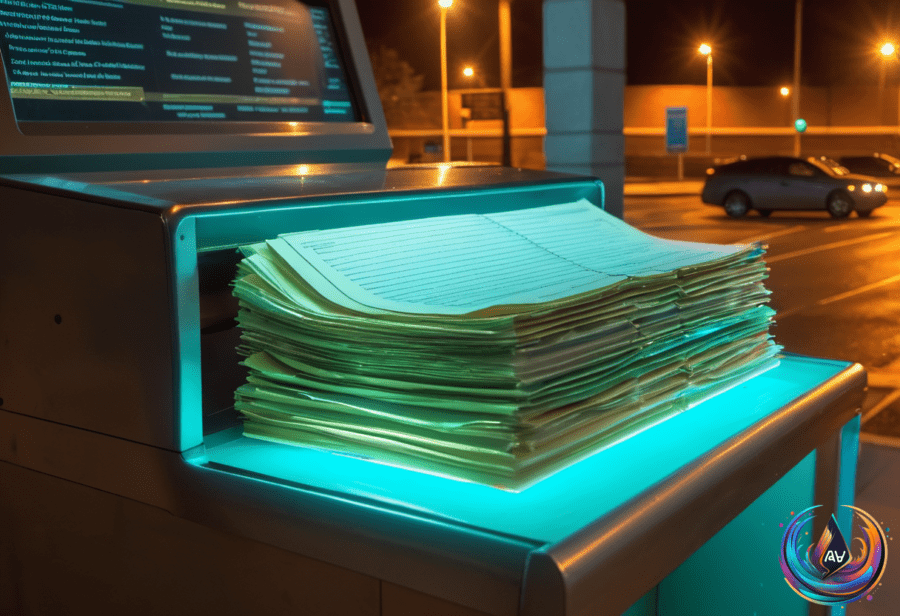
A courthouse kiosk instead of an online record
John Kyle Cronan, a software developer from Chicago and the founder of Habeas Dockets, first saw the rule’s effect in April 2025. He was trying to access court documents about a group of people the federal government was trying to send to CECOT, a maximum security prison in El Salvador.
When Cronan tried to open the documents, the system displayed a blunt message: “You do not have permission to view this document.” A court clerk explained that he could view the public records in person at a courthouse kiosk in northern Texas.
That answer solved access for one person with the time and ability to travel. It did little for everyone else. Cronan organized a volunteer effort to make the records accessible online, and the project has since become his full-time job.
Habeas Dockets now has contributions from 400 people across the country. The site publishes habeas corpus filings online, turning records that exist in public law but remain difficult to obtain into documents available for anyone to read.
Access meets the risk of exposure
The project faces a problem that cannot be fixed by scanning more documents. Cronan relies on law students, paralegals, and volunteer attorneys to review each filing for sensitive information that should be redacted before publication.
Immigration matters are usually handled in immigration court, where the public cannot access filings. In some cases, a person seeking asylum or another protected status can take those claims to a federal judge, making the filings public records instead.
Those federal filings could contain highly sensitive information about trafficking or domestic violence victims. Making that information easy to find online could put vulnerable clients in danger, a concern that turns transparency into a careful balancing act rather than a simple publishing task.
Daniella Prieshoff, senior managing attorney at the Tahirih Justice Center, described the danger in direct terms: “It’s not just ICE, but it’s persecutors, abusers, traffickers.” Public access can expose the people a legal filing is meant to protect. Progress, in other words, needs redaction.
Why habeas filings matter now
The flood of habeas corpus petitions filed under the second Trump administration differs from typical immigration cases filed in normal times. Habeas corpus petitions have become an important way to challenge the legality of an immigrant’s detention as ICE holds more people in facilities often ill-equipped to handle them.
These petitions are often filed in the hours or days after a person has been arrested, leaving lawyers and volunteers to work with records created under pressure. When those filings remain locked behind courthouse access, people seeking to understand a particular case face delays, while efforts to examine many cases at once become nearly impossible.
Cronan’s experience also exposes the odd mechanics of the system: a document can be public, yet unavailable through the online tools used for most federal court records. When he was confronted with that contradiction, Cronan answered, “You’ve got me there.”
Habeas Dockets is not removing the legal restriction. It is building a volunteer process around it, combining public records, online publication, and human review for sensitive details.
That makes the project useful beyond one collection of filings. It shows how a rule designed around court records can leave public information functionally hidden—and how much labor it takes to make “public” mean accessible.
Based on