AI keeps surprising us. While large language models (LLMs) like GPT can write text and create images, they often struggle with structured data. That’s where new players come in.
Fundamental, an AI startup, built an AI model called NEXUS that works specifically with tabular data. This kind of data is organized into rows and columns, like spreadsheets or databases. It’s a different challenge than the free-flowing text or images LLMs handle.
On 5 February 2026, Fundamental stepped out of stealth mode with $275 million in funding. Their CEO, Jeremy Fraenkel, along with Chief Science Officer Marta Garnelo and co-founder Gabriel Suissa, aim to tackle tasks that large language models find difficult. Amazon Web Services has already adopted NEXUS, showing early industry trust.
Meta’s Massive AI Data Centers
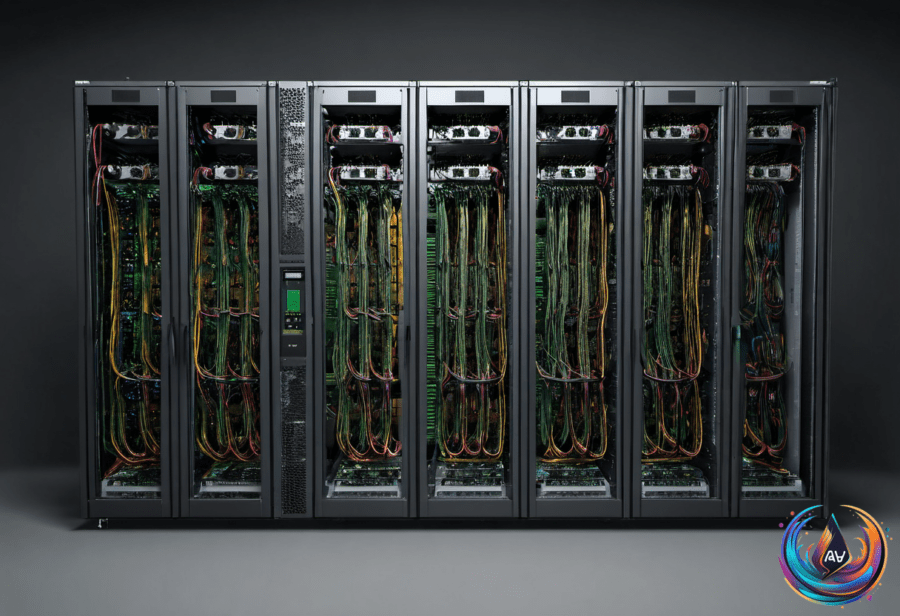
Meta is betting big on AI infrastructure. On 9 July 2026, they announced the start of construction on their first Canadian AI data center in Alberta. This facility will have a 1 gigawatt capacity and cost over CAD $13 billion, which is about $9 billion.
The Alberta data center is Meta’s 33rd worldwide. It will use a closed-loop, liquid-cooled system with dry cooling to manage heat efficiently. More than 3,000 construction workers were employed at the peak of the project, and the site will create over 300 operational jobs once complete.
Meta also has a Louisiana data center, set to be the company’s largest. It will cover 4 million square feet and hold more than 2 gigawatts of compute power. These investments reflect how much energy and resources AI needs behind the scenes.
Meta said, “This data center will be optimized for our AI workloads, helping bring to life the technologies that billions around the world use.” Sturgeon County’s mayor, Alanna Hnatiw, added, “We’re excited to work with our new neighbours as we continue to make that vision a reality.”
Government Crackdowns and Open-Source AI
AI regulation is tightening. In July 2026, the US government restricted access to AI models from Anthropic and OpenAI. Anthropic had to block non-Americans from using its Mythos 5 and Fable 5 models and eventually pulled them offline.
OpenAI agreed to let the government approve every customer for its latest model, GPT-5.6. These moves shook up the AI model market. Between January and June 2026, usage of Google, Anthropic, and OpenAI models via OpenRouter dropped from 55 percent to 33 percent.
This drop opened space for open-source AI models, especially from China. Zhipu AI released GLM-5.2, a free model that performs almost as well as top models from Anthropic and OpenAI. It’s available for download, fine-tuning, and running on enterprise servers without restrictions.
AI analyst Andrew Curran said, “GLM-5.2 is free to download, fine-tune, and run on an enterprise’s own servers, putting pricing pressure on frontier labs at the same time that access looks shaky.” This means companies can avoid expensive licenses and control their own data.
Early fears about Chinese AI models as security threats are fading. Once an open model is downloaded and run on local hardware, the creator company can’t access user data or control how it’s used. This makes open-source models more attractive to businesses worldwide.
Haitham Mengad, co-founder of Stems Labs, said about Fable 5, “Fable has been a game-changing model for me. Honestly, when they took it off, it was the first time that I realized… it’s almost like a drug.” This shows how users rely on open models for innovation and daily work.
Oren Michels, CEO of Barndoor AI, noted, “You want to be as flexible as you can be. Maybe a year and a half ago some large company might say we bought Anthropic or we bought OpenAI, and now no one, no one buys only one.” This points to a growing trend of mixing AI models for better results.
What It All Means
The AI world is shifting. Big language models excel at creative tasks but hit limits with structured data. New models like NEXUS fill that gap. Meanwhile, huge data centers like Meta’s show the scale of AI’s energy and infrastructure needs.
Regulatory crackdowns in the US are reshaping who controls AI models. Open-source models from companies like Zhipu AI are gaining ground because they offer freedom and control. This trend may lead to more innovation and competition.
In short, the AI landscape is expanding. It’s no longer just about chatbots and image generators. It’s about handling all types of data, building massive infrastructure, and navigating new rules. That makes this an exciting time to watch AI evolve.
Based on
- Large Tabular Models Excel Where LLMs Fail — spectrum.ieee.org
- How Data Centers Grid Instability Threatens Reliability – IEEE Spectrum — spectrum.ieee.org
- Canada’s getting its first Meta data center, and it’s built for AI | Business Insider Africa — africa.businessinsider.com
- EmTech AI 2026: The Rise of the AI Platform | MIT Technology Review — technologyreview.com
- US crackdown on top AI fuels open-source surge — france24.com