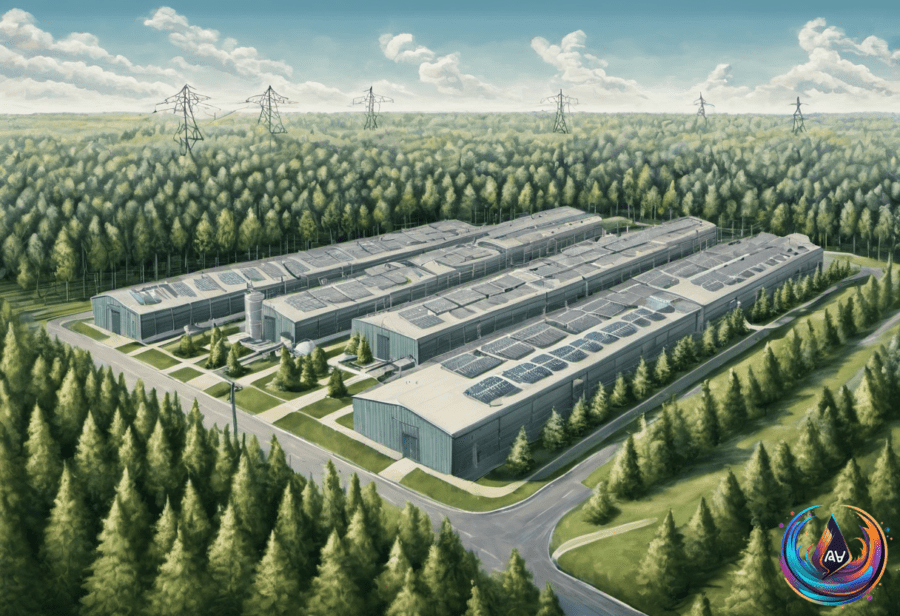
Across the United States, protests against AI and data centers are gaining momentum. People from different walks of life are joining these efforts. In New Port Richey, Florida, a protest took place outside Peace Hall where participants held signs opposing AI data center expansion.
One local group, No Data Centers Hernando County, is actively campaigning against new data centers. Carol, a 71-year-old woman, was manning a table with flyers and petitions. The group planned to present their concerns to local government officials. They are part of a bigger movement called Humans First, a conservative social group organizing nearly 150 protests nationwide.
Florida has become a hotspot for this resistance. Over 20 counties and cities have discussed or passed moratoria on data center construction. This shows strong local opposition. A Gallup poll found that 70% of Americans oppose data centers being built near them. That number rises to nearly three-quarters in some cases. Both Republicans and Democrats share this concern, with 63% of Republicans and 75% of Democrats surveyed saying they object to these projects.
The resistance is not just about buildings. It’s about technology and its impact on society. A Pew Research Center survey found that 40% of Americans expect AI to have a negative impact on society. Only 16% believe AI will have a positive effect. This skepticism touches on many areas of life, from privacy to job security.
Voices from the Protests
At protests, signs and chants express frustration. Some defenders of the movement call themselves “Luddite gnomes.” They shout phrases like “Fuck, fuck, fuck AI” and “Google knows next to nothing / My mom knows everything!” These slogans capture a deep distrust of tech giants.
Young people have also joined the fight. One protester shared, “I used AI to write one of my essays and got in trouble. Now I’m starting a war on AI.” Others emphasize creativity and intelligence, pushing back against the idea that AI makes people less capable. A witness told the crowd, “These companies want you to think that you’re dumb, but that is a lie. Everyone here is smart. Everyone here is creative.”
Local residents worry about their communities. Johnny, a homeowner, said, “You have to go through all the trouble to buy a home in today’s world, and two years from now, there could be a data center next to your house.” The fear is that these centers will lower property values and change neighborhoods for the worse.
Big Tech’s Response and Public Doubts
Tech companies are trying to shape public opinion. Meta recently released an ad filled with rainbows, butterflies, and smiling children. The narrator says, “The future is for everyone” and “Trust us because we’re Facebook.” But many see this as empty corporate talk. Joonas Virtanen called it “a little bit of corporate bullshit.”
Another AI company, Anthropic, ran a much darker ad during the World Cup. It showed images of facial recognition tracking, a cemetery, and a burning house. The ad asked, “Can AI be trusted?” This question reflects real fears about AI’s risks.
Meta’s recent layoffs—8,000 workers let go—also add to the unease. It shows that even big tech firms face challenges, despite their public optimism. People like Gabrielle, a protest attendee, say, “I’m not against AI in terms of medical breakthroughs,” but many remain wary of other uses.
In politics, opinions vary. Florida’s governor Ron DeSantis is known as an AI skeptic. Some Republicans like Byron Donalds openly support data center growth. Industry lobbyists like Dan Diorio with the Data Center Coalition argue these projects bring jobs and economic benefits. But local resistance and national skepticism remain strong.
This wave of protests reveals the growing divide over AI and data centers. People want to protect their homes and communities. They want a voice in how technology shapes their future. The debate is far from over. But one thing is clear: many Americans are ready to push back hard against the spread of AI infrastructure in their neighborhoods.
Based on
- Being a Luddite Is Fun Again — 404media.co
- Librarians are hosting viral ‘Avoiding AI’ workshops for people who are fed up with Big Tech | TechCrunch — techcrunch.com
- The right-wing boomers protesting data centers have a lot in common with the left | The Verge — theverge.com
- AI Is Good for Everyone, We Swear! Trust Us! – Business Insider — businessinsider.com
- AI is good, we swear! Trust us! | Business Insider Africa — africa.businessinsider.com