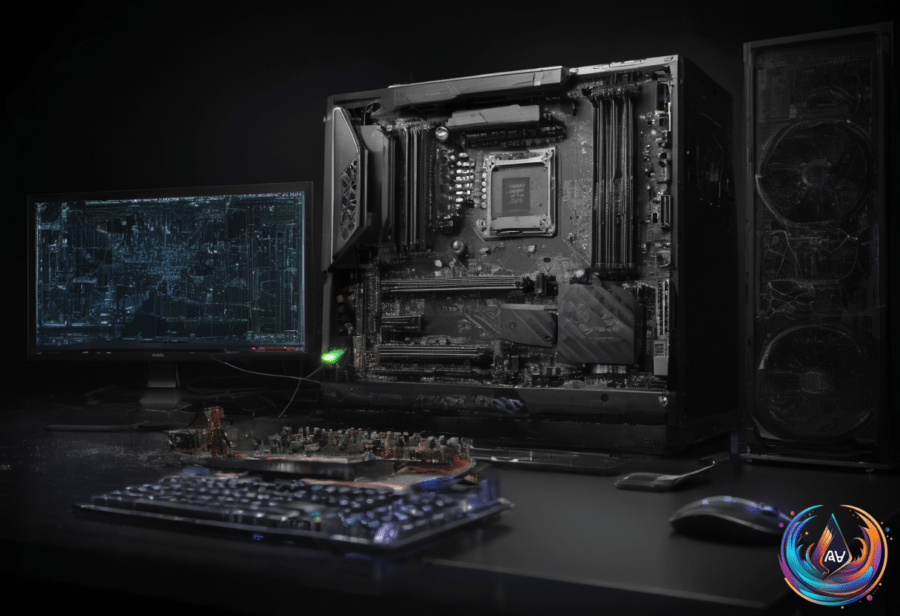
Acer has built a small desktop for local AI agents. On September 2, 2026, the company introduced the Acer SFF RTX Spark at IFA 2026, with a design built around NVIDIA’s RTX Spark superchip. The goal is clear: run agentic AI workloads on the computer instead of sending every task elsewhere.
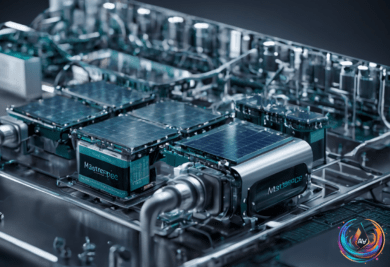
The system combines a 6,144-core Blackwell RTX GPU with up to a 20-core NVIDIA Grace CPU, reaching up to a petaflop of AI compute and supporting up to 128 GB of high-speed unified memory. That is a substantial amount of hardware packed into a space-saving footprint—because apparently the future of computing still needs to fit under a desk.
Local processing gives the SFF RTX Spark two selling points at once: compute capacity and on-device data privacy. Acer’s design targets users who want agentic AI running on their own computer, with the hardware available for demanding AI and graphics workloads without making the system physically large.
A superchip built for AI, graphics, and demanding workloads
The RTX Spark Superchip brings NVIDIA’s AI and graphics technologies together in one platform. Its stack includes CUDA, RTX, DLSS, FP4, TensorRT, OptiX, Reflex, and G-SYNC, linking software capabilities that cover model execution, rendering, image quality, and gaming.
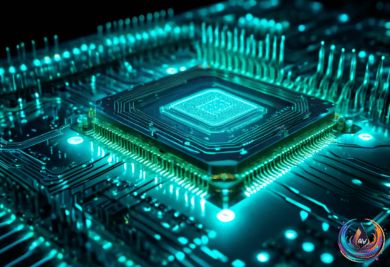
At the hardware level, the superchip integrates a Blackwell RTX GPU with 6,144 CUDA cores and fifth-generation Tensor Cores that support FP4 precision. NVIDIA’s NVLink-C2C chip-to-chip interconnect connects that GPU to the 20-core Grace CPU, creating a unified system rather than a desktop assembled around separate, loosely connected components.
MediaTek collaborated with NVIDIA on the custom Arm-based CPU design. The platform reaches up to 1 petaflop of AI compute and up to 128 GB of unified memory, giving the compact system a specification sheet that extends well beyond ordinary desktop tasks.
NVIDIA says the platform can render 90 GB 3D scenes with OptiX and DLSS, edit 12K 4:2:2 video with the Blackwell decoder, and run 120-billion-parameter large language models with up to 1 million tokens of context. It can also play AAA games at 1440p resolution above 100 frames per second with ray tracing, DLSS, and Reflex.
Windows agents get controls instead of blind permission
The more interesting part of the announcement may be the software layer built with Microsoft for Windows Agents and Creative Software. The work includes new Windows security primitives and the NVIDIA OpenShell runtime, aimed at giving agents defined boundaries instead of treating every automated action as equally acceptable.
The security primitives provide identity, containment, policy, and end-to-end security capabilities. OpenShell lets users define what agents can and cannot do, route queries to local models based on privacy policies, and obscure personal information in queries sent to cloud models.
That approach puts the local-versus-cloud decision inside the agent workflow. A user can keep a query with a local model when privacy rules require it, while sending other queries to cloud models with personal information obscured. The agent does not get unlimited authority by default—a modest improvement over hoping software behaves itself.
Agent developers including OpenClaw and Hermes Agent are adopting the security layer in new Windows apps. Their adoption connects the SFF RTX Spark’s hardware story to a broader software model in which local compute, agent permissions, and privacy policies work together.
Jensen Huang, NVIDIA’s CEO, framed the shift in blunt terms: “The PC is being reinvented.” He added, “For forty years, you launched apps. Click. Type. With RTX Spark and Microsoft Windows, you ask, and the PC does the work.”
The Acer SFF RTX Spark turns that claim into a compact hardware design with enough compute for local agents, large language models, video, 3D scenes, and games. Its real test will be whether the software controls make agentic computing useful without making privacy another checkbox buried in a settings menu.
Based on