AI infrastructure is moving from capacity to control. Sharon AI has signed a five-year agreement with Rafay Systems, while Compu Dynamics Modular has launched a wider portfolio for AI training, inference, and high-performance computing.
Sharon AI, an Australian neocloud company, will use the Rafay platform as a centralised orchestration layer across its AI Factory environments. The architecture can support the orchestration of up to 150,000 graphics processing units over the five-year term — a number large enough to make “just add GPUs” sound like a plan.
Announced on September 7, 2026, the agreement gives Sharon AI a standardised platform for orchestrating and managing AI infrastructure across its expanding footprint. James Manning, Sharon AI’s CEO, said, “Our agreement with Rafay gives us a standardised platform for orchestrating and managing AI infrastructure across our expanding footprint.”
The Rafay arrangement sits alongside Sharon AI’s five-year cloud computing service agreement with a global AI Lab, valued at $1.32bn. That agreement covers deployment across data centre infrastructure in New Zealand, with revenue expected to start across the first and second quarters of 2027; Sharon AI also expects revenue from a five-year cloud computing service agreement with a global AI platform to begin during the first quarter of 2027.
The contract values listed for Sharon AI’s agreements are $373m and $1.32bn. The financial scale matters, but the infrastructure layer underneath those commitments is the more practical issue: operating AI capacity requires systems that can coordinate hardware, services, and production workloads without turning every deployment into a custom project.
Orchestration becomes part of the AI product
Haseeb Budhani, CEO of Rafay Systems, framed the challenge in operational terms: “Operating AI infrastructure at scale requires more than access to GPU capacity. Providers also need the orchestration, automation and governance capabilities required to transform that infrastructure into secure, reliable and production-ready AI services.”
That distinction separates raw computing capacity from an AI service that customers can actually use. Sharon AI’s agreement with Rafay establishes one platform for its AI Factory environments, giving the company a common layer as its infrastructure footprint expands.
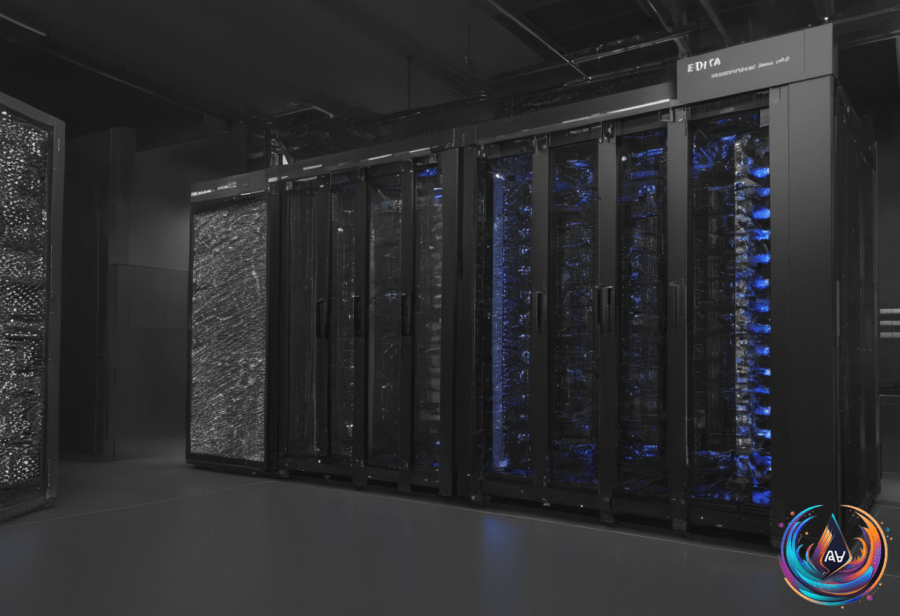
Compu Dynamics Modular, meanwhile, is attacking the physical side of the same problem. Its expanded modular infrastructure portfolio, launched on September 1, 2026, spans configurations from a 750 kW All-In-One Module to a 5 MW to 6 MW Turnkey AI Factory.
Modular systems scale power and cooling
The 750 kW All-In-One Module targets AI edge inference, sovereign edge computing, and deployments where available space is limited. The 1.5 MW Base Module combines high-density IT white space with a dedicated 2 MW critical power module and hybrid cooling.
Two connected 1.5 MW base modules form the 3 MW AI Modular Solution, supported by two 2 MW power modules. At the upper end, the 5 MW Turnkey AI Factory supports configurations of up to 64 high-density IT and network racks, with a 4-to-make-3 electrical architecture and 8 MW of installed UPS capacity.
CDM’s portfolio supports hybrid air cooling and direct-to-chip liquid cooling, along with resilient electrical topologies and vendor-neutral integration. Its solutions are engineered around application workload and the power, cooling, and resiliency requirements attached to that workload.
Steve Altizer, President and CEO of Compu Dynamics and CDM, said, “AI is forcing the industry to rethink not only what data center infrastructure looks like, but how quickly and predictably it can be brought online.” Ron Mann, Vice President of CDM, added, “These aren’t simply prefabricated data halls. Every solution is engineered around the application workload and the power, cooling, and resiliency requirements that come with it.”
Together, the announcements show two sides of AI infrastructure’s next phase. Sharon AI is standardising how large GPU environments are managed, while CDM is packaging the power, cooling, and physical resilience needed to deploy them — because the cloud still needs somewhere to stand.
Based on