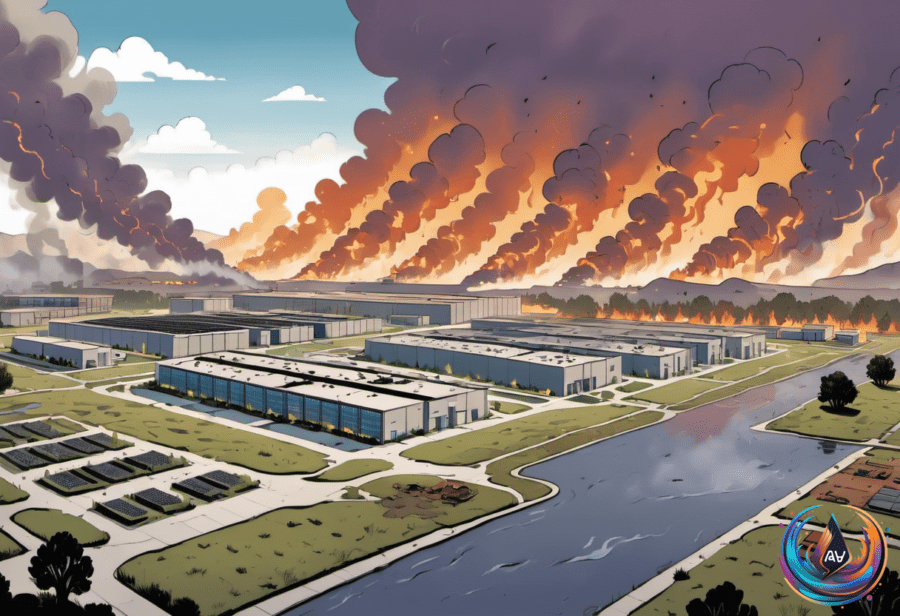
Nearly 80% of the world’s data center capacity faces serious climate threats. Floods, wildfires, extreme winds — these hazards are not distant risks. They are knocking on the doors of critical infrastructure right now. The data centers that power our digital lives stand exposed across every continent.
Climate Risks Are Everywhere — But Some Regions Face More Danger
The Americas lead the charge with 86% of their data center capacity in high-risk zones. Floods, wildfires, and brutal winds put these facilities on the frontline of climate disasters. The US alone has about half of its data centers vulnerable to these threats. And it’s not just existing centers — two-thirds of planned new data centers in the US will be built in drought-stricken areas. That’s a recipe for real trouble.
Across the Pacific, 60% of data centers face climate hazards. But the risk grows sharper when you look at capacity — 89% of Asia-Pacific’s data center capacity is at risk. Meanwhile, Europe, the Middle East, and Africa (EMEA) see about 25% of their data centers in elevated-risk markets, with 46% vulnerable overall.
Chronic Climate Stress Adds a New Layer of Danger
It’s not just sudden disasters. Over half of all data centers sit in markets hit by chronic climate stress like extreme heat and drought. Globally, 54% of data center markets feel this pressure. These ongoing conditions sap resilience and raise costs over time.
Fast-growing data center hotspots are some of the most exposed. Northern Virginia, Johor in Malaysia, and Marseille in France all rank high on the climate risk scale. Building in these areas may fuel growth now but invites long-term headaches.
Why Climate Risks Are Hard to Predict and Manage
Data centers often rely on old models for risk assessment. Most underwriting for real assets still uses historical data to predict climate hazards. But the climate is changing fast. Historical patterns no longer hold. This means companies may underestimate the real danger their infrastructure faces.
“Where you build a data center determines a large share of what it will cost to run for the next 20 or 30 years,” says Jeremy Porter, chief economist at a leading climate risk analytics firm. Location is everything.
Matthew Eby, the firm’s CEO, explains, “Most underwriting for real assets still uses historical data, but the climate is no longer behaving the way the historical record would predict.” The mismatch between old data and new realities creates blind spots that can sink investments.
What’s Next for Data Center Resilience?
With nearly 80% of global data center capacity vulnerable to short-term shocks, the industry must act fast. Moving forward, firms need to rethink where they build and how they design these critical hubs.
Climate risk analytics must replace outdated models. Resilient infrastructure planning can help data centers survive floods, fires, and drought. The stakes are sky-high. Our digital economy depends on these centers staying online no matter what.
The future calls for smarter, climate-aware strategies. Data centers must evolve or face costly disruptions. The clock is ticking — will the industry rise to the challenge?
Based on
- Majority of datacenters are vulnerable to climate threats like floods and fires, study finds — theguardian.com
- Data Centers at Risk: Climate Hazards Threaten Global Operations (2026) — precisionhydrojet.com
- 🔥 Almost 80% of data centers constructed in natural disaster zones – data centers are fueling and succumbing to climate risks – Times42 — times42.com
- Study: Climate Risk to Data Centers Much Higher Than Thought — biztoc.com
- Data Center Climate Crisis: 80% at Risk from Floods, Fires, and More (2026) — jumpmantours.com