Robots are stepping up like never before. Alibaba’s Amap just dropped a massive upgrade to its ABot embodied AI system. This isn’t just an improvement. It’s a full-stack overhaul that blends navigation, manipulation, reasoning, memory, and motion control into one powerhouse platform.
The upgrade rolled out on July 24, 2026, introducing five key models: ABot-N1, ABot-M0.5, ABot-ER, ABot-AgentOS, and ABot-C0. Each plays a unique role, but together they create a seamless, self-evolving robot brain and body. What does that mean? Robots that think smarter, move smoother, and handle tasks like never before.
City-Scale Navigation Without Fancy Maps
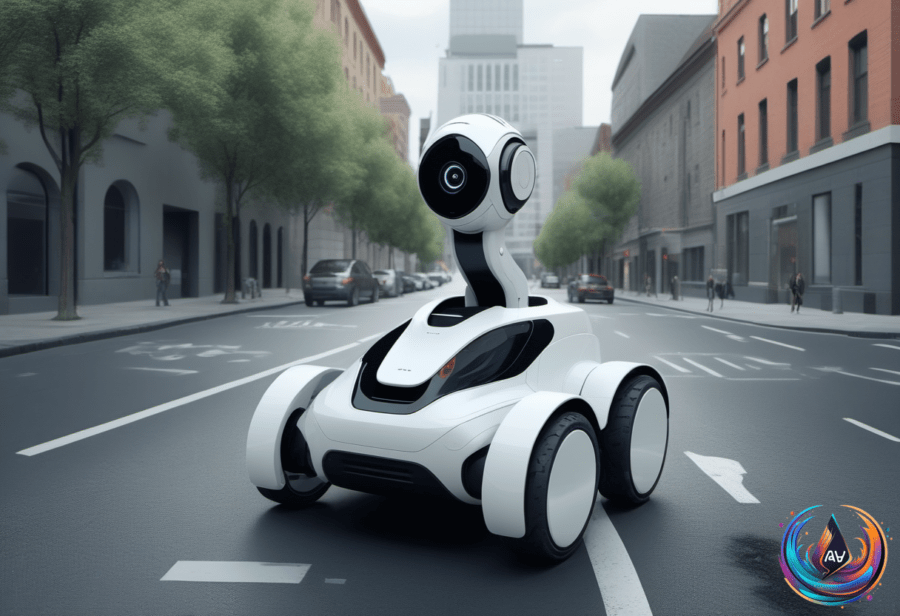
ABot-N1 leads the pack as a general navigation foundation model. It’s a game-changer because it completes city-scale autonomous navigation with a stunning 92.9% success rate. And it does this using only standard cameras and basic road networks. That’s right—no need for expensive high-definition maps. This breakthrough slashes costs and complexity for real-world deployment.
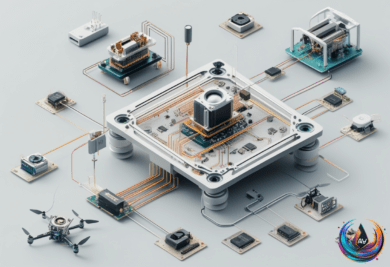
Amap describes the ABot framework as uniting a robot’s feet, hands, brain, central nerves, and motor nerves into one system. This integration lets robots move and think as one unit instead of disjointed parts. The navigation model is just one piece of this puzzle.
Hands and Feet Working Together
Meet ABot-M0.5, the general manipulation foundation model. It’s a beast at handling objects and tasks. Tests on RoboCasa-365 show ABot-M0.5 outperformed previous bests by 20.4% on complex tasks and 10.6% on basic tasks. That’s a leap forward in robot dexterity.
This model allows robots to use hands and feet simultaneously. It separates movement from manipulation tasks, giving robots more fluid and natural actions. Imagine a robot that can walk while picking up items or interacting with the environment without missing a beat.
Reasoning, Decision-Making, and Multimodal Memory
ABot-ER powers the decision-making engine, linking perception to action. It grabbed state-of-the-art results on three key benchmarks and topped the Embodied Arena 2D-EQA leaderboard. That’s proof it thinks on its feet—processing sensory data to make smart moves fast.
On the software side, ABot-AgentOS turns plans into real-world actions. It supports multiple robot types and adds multimodal lifelong memory. This memory helps robots learn from past experiences and adapt over time. The system creates a continuous feedback loop, making robots smarter with every task.
Meanwhile, ABot-C0 translates decisions into physical actions. It works with quadruped robots, expanding the ABot system’s reach beyond humanoid forms. This flexibility means the framework can power a wide range of robotic platforms.
Why Does This Matter for Robotics?
The robot industry often focuses on single-model breakthroughs. Better navigation. Smarter manipulation. Stronger reasoning. But these models usually work alone. They don’t share data or learn from each other. Amap highlights this gap, saying, “The industry has long focused on breakthroughs in single models – better navigation models, more powerful operation models and smarter reasoning models – but these models operate independently without shared data and experience.”
ABot’s full-stack framework solves this by linking the robot’s “feet, hands, brains, central nerves and motor nerves” into a single self-evolving system. This unified approach can unlock new robotics scenarios and scale them effectively.
Challenges and Competition in China’s Robotics Scene
Chinese robotics companies face hurdles. Industry insiders at WAIC point out they “lack both sufficient data and a good ‘brain’ to improve the interaction of their products with the physical world.” This limits progress in making robots that truly understand and navigate their environments.
On July 22, 2026, ACE Robotics announced its Kairos World Model topped four major global embodied AI benchmarks: RoboTwin 2.0, LIBERO-Plus, WorldModelBench Robot, and DreamGen. That’s stiff competition pushing Chinese robotics forward. Wang Xiaogang, SenseTime co-founder and Ace Robotics chairman, stressed, “The key question is how to unlock these scenarios and replicate them at scale.”
Alibaba’s ABot upgrade sets a new bar. It shows how combining multiple AI models into one system can deliver breakthroughs in navigation, manipulation, and decision-making all at once. This integrated approach tackles the industry’s biggest pain points and opens doors for smarter, more capable robots.
What’s Next for Embodied AI Robots?
The future is clear: robots need to evolve beyond single-task AI. They must think and act as unified beings. ABot’s five-model framework points the way. With city-scale navigation, multi-limb coordination, real-time reasoning, lifelong memory, and wide robot compatibility, the possibilities are huge.
As data grows and these systems learn from experience, robots will become more autonomous and versatile. They’ll do more than follow commands. They’ll understand context, adapt on the fly, and take on complex real-world jobs.
Alibaba’s ABot upgrade isn’t just an update. It’s a leap toward truly embodied AI robots that move, think, and grow together. The AI robotics revolution is happening now. Are you ready to see what comes next?
Based on
- Alibaba’s Amap Launches Full-Stack ABot Upgrade for Embodied AI Robots — ai-techpark.com
- Alibaba unit says 5-in-1 AI gives robots unified brain, body and limbs | South China Morning Post — scmp.com
- Robotics | Chinese robot co-workers on the rise. Say hello to AI cobots | South China Morning Post — scmp.com
- ACE Robotics Unveils Kairos World Model with Record Performance on Four Global Benchmarks | AP News — apnews.com
- Chinese robot makers’ lament: if we only had a better ‘brain’, and more data | South China Morning Post — scmp.com