AI has become the latest engine behind an old economic promise: tax cuts and faster growth will fill the government’s coffers. But as bond yields rise and federal debt approaches a record high, the numbers are forcing that promise into a tougher test.
Scott Bessent, the treasury secretary, is relying on an AI-laced economy to deliver annual growth of 3%. Donald Trump has pushed the vision even further, saying, “we’re growing at a faster rate than we’ve ever grown before” and that this growth will allow the government to “take care of the 40 trillion in federal debt over a period of time.”
AI Meets the Return of a Familiar Economic Promise
Republicans have repeatedly told the US public that tax cuts would pay for themselves by firing up economic growth and filling the government’s coffers. That promise never really panned out. From Ronald Reagan’s day on, Republican tax cuts inevitably increased the budget deficit instead.
The new argument places AI at the center of the growth story. Bessent’s 3% annual target sounds ambitious because the US economy has achieved that rate only twice this century, excluding the rebound from the Covid pandemic. Some economists have contemplated scenarios involving 15% annual growth, but the government’s finances demand more than an exciting forecast.
The Congressional Budget Office projects a federal budget deficit equal to 6% of GDP by 2033. To reach a deficit equal to 3% of GDP by 2036, the economy would need to grow at 4.4% per year. A balanced budget by 2036 would require 7.2% annual growth.
That gap matters because interest payments on the federal debt already consume 3.3% of GDP, compared with an average of 2.1% of GDP over the past 50 years. Federal debt outstanding held by the public is approaching a record high, leaving less room for a growth strategy that depends on AI delivering extraordinary results.
The AI Buildout Is Enormous, and It Needs Outside Money
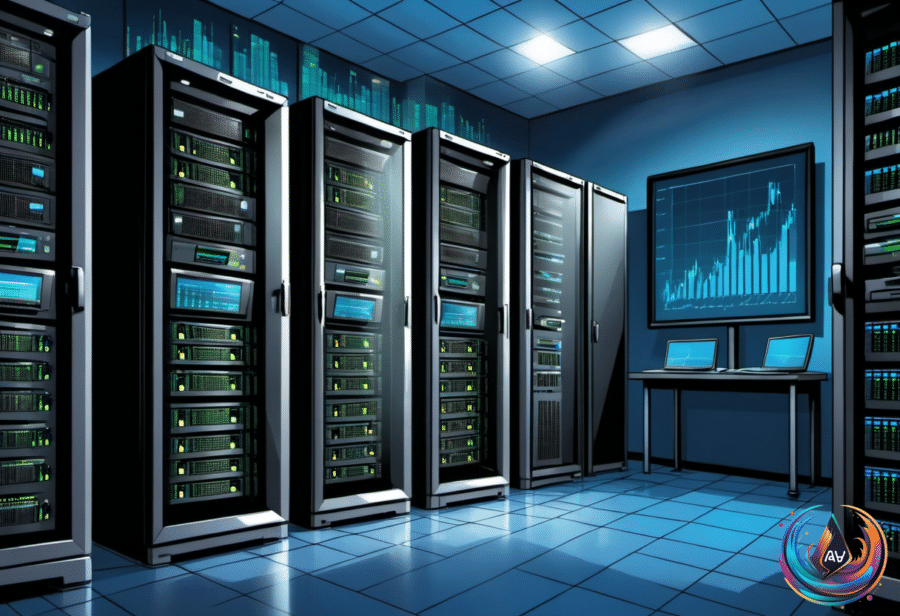
The spending behind the AI boom is not a small experiment. Current estimates for capital spending by five hyper-scalers — Amazon, Alphabet, Meta, Microsoft and Oracle — call for more than $800 billion this year and $1.1 trillion next year.
Stijn Van Nieuwerburgh, a professor at Columbia Business School, estimates that the pipeline of investments being contemplated would exceed $10 trillion from 2025 to 2032. That amount represents 3.6% of GDP per year, creating a powerful potential boost for construction, equipment and technology spending.
Yet the buildout increasingly depends on external sources of capital. More than half of the more than $3 trillion needed for AI infrastructure over 2025-2028 will come from outside capital, including debt financing and third-party equity.
- Wall Street estimates point to $250 billion of US dollar bond issuance by hyper-scalers in the United States as of year-end.
- Global bond issuance by hyper-scalers is estimated at $400 billion.
- The five companies have placed more than 40% of their bond issuance beyond 15 years.
That funding structure creates a financial risk alongside the growth opportunity. The biggest risk could be that return expectations for the AI buildout are too high. If the investments fail to produce the expected gains, companies and investors will still face the debt and equity commitments used to finance them.
Bond Yields Are Challenging the Growth Fantasy
The yield on the 10-year Treasury bond surged to its highest level in almost a quarter century last week. The rise in bond yields since late August has not been tied to higher inflation expectations; it has mainly reflected a rise in real yields.
Bond yields are back to more normal levels after US economic growth stayed abnormally low following the 2008 financial crisis. The more relevant comparison may be the internet boom of the late 1990s, when the telecom sector served as a key driver of growth.
Recent economic data show stronger manufacturing and service sectors, along with continued low unemployment. Bond investors surveyed by the Financial Times believe soaring yields are “not even close” to cooling the US economy.
That resilience gives the AI growth case room to run, but it also raises the question facing the Federal Reserve: Is the economy’s long-term potential growth rate above its current estimate of 1.8%?
The Federal Reserve Board of Governors finds a mixed picture in AI adoption. Some sectors show strong productivity impacts, while labor market impacts remain concentrated. AI may transform parts of the economy without lifting every sector at the same speed.
Donald Trump, Mark Zuckerberg and Dario Amodei met at the White House on 29 September 2026, placing AI at the center of the political and business conversation. The next phase will test whether that excitement can become broad productivity, durable growth and stronger public finances.
AI can help power a major investment cycle, but it cannot erase arithmetic. The economy must turn enormous spending into lasting gains before the promise of 3% growth can carry the weight of a $40 trillion debt burden.
Based on