Car software has split into two Google-backed systems. Android Automotive and Google Built-in sound interchangeable, but they occupy different layers of the vehicle experience—and that distinction matters when drivers expect apps, navigation, and voice controls to work without friction.
Google supports both Android Automotive and Google Built-in. Android Automotive is the full-stack software solution that car manufacturers integrate into their cars’ systems, allowing the platform to run much of the vehicle’s infotainment environment rather than serving as a simple phone connection.
Google Built-in is the branded experience available through manufacturers that license Google’s services. It debuted in 2020, and 16 brands have access to it, including Honda, Volvo, Chevy, Nissan, Ford, BYD, and Renault.
Android Automotive Provides the Foundation
The cleanest distinction is simple: Android Automotive supplies the underlying in-car software, while Google Built-in gives drivers access to Google applications and services within that system. One is a set of apps; the other can run almost everything inside a car. That is the difference between adding a destination and supplying the road beneath it.
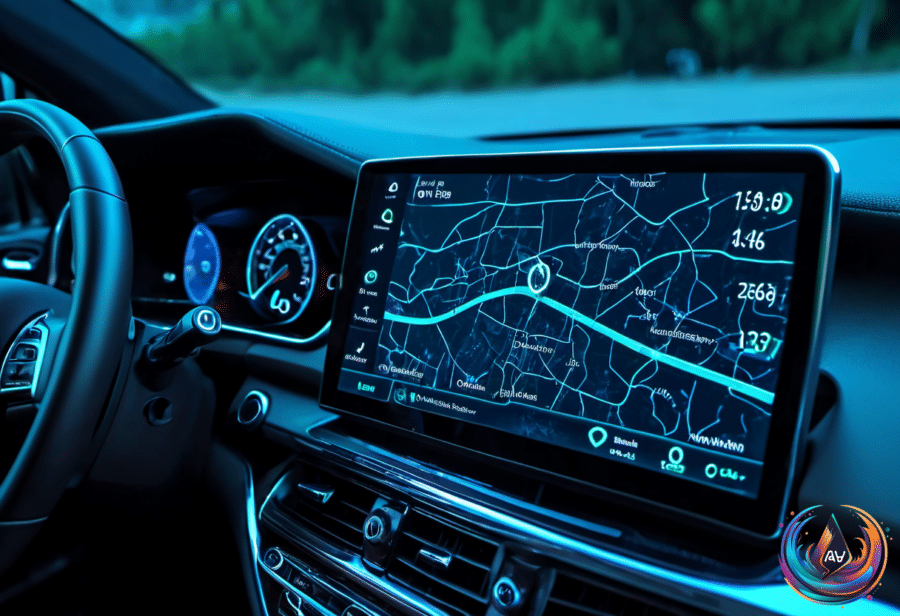
Manufacturers that license Google Built-in give customers access to the Google Play Store. That includes popular media applications such as Spotify, YouTube, and Google Play, alongside applications such as Google Maps and Gemini.
GM moved away from Android Auto in favor of a Google Built-in solution in 2023. Rivian, meanwhile, declines to include Google branding in its Android Automotive system, showing that manufacturers can use the underlying software without presenting the Google name as the headline feature.
Google’s current infotainment chatbot is Gemini, which replaces Google Assistant. Its voice-activated AI features include real-time traffic updates, EV-tailored routing, and smart navigations in Google Maps—assuming the vehicle and its licensed software support the relevant experience.
Drivers can also use Gemini to check email and messages, craft playlists, and order dinner. Gemini Live adds conversation about destinations and can tap into the car’s front-facing camera, giving the system another way to understand what is happening around the vehicle.
MapQuest Returns to the Dashboard
The separate Android Auto story belongs to MapQuest, the mapping service launched in 1996. MapQuest recently introduced Android Auto support, giving drivers access to its navigation tools through a connected smartphone rather than replacing the vehicle’s underlying infotainment software.
MapQuest’s Android Auto features include turn-by-turn navigation, real-time traffic updates, route optimization, location search, favorites, voice search, speedometer display, and incident reporting. That list covers the practical jobs drivers expect from a mapping app, even if the beta still has some dashboard drama left to resolve.
To use MapQuest with Android Auto, users must download or update the app, join the beta program, connect their smartphone to their car, and ensure MapQuest is enabled in Android Auto settings. The process is not mysterious, but it does require users to pass through several gates before the map reaches the vehicle screen.
Initial feedback on the Android Auto beta points to app crashes, delayed responses, and voice navigation cut-offs. Those problems matter because navigation software has one job: deliver the next instruction before the driver needs it, not after the turn has become a memory.
Interest in MapQuest surged after Android Auto support arrived. Usage grew to 50 times its normal rate, the app passed 1.5 million downloads, and MapQuest became the No. 1 mapping app on Apple’s App Store after the support was announced.
Doug Berger, MapQuest’s general manager, said, “Hundreds of thousands of people signaled to us this weekend that we got it right, by downloading our app.” The numbers certainly signal attention; the beta’s crashes and delayed responses will determine whether that attention lasts.
The larger picture is a car software market with overlapping names and different responsibilities. Android Automotive can form the vehicle’s software foundation, Google Built-in can package Google services for licensed manufacturers, and Android Auto can connect a smartphone app such as MapQuest to the dashboard. Same ecosystem, different jobs—and a reminder that automotive technology still enjoys making basic distinctions sound like product strategy.
Based on