For years, building a faster computer often meant pushing a processor beyond the clock speed promised by its manufacturer. That process, called overclocking, gave enthusiasts a way to gain more performance from the same CPU. Today, modern processors and motherboards handle much of that work on their own, leaving manual overclocking with a smaller role.
Modern CPUs can push their clock speeds beyond advertised capabilities when a workload demands it. Motherboards also include settings that raise performance without requiring users to tune every part of the system by hand. The result is a simpler experience, but it also means there is less unused performance waiting for someone to unlock.
Automatic tuning has replaced much of the old process
Many motherboard BIOS menus include a setting called Multi-Core Enhancement or Enhanced Turbo. These options use an algorithm to push clock speeds past their out-of-the-box defaults. Instead of setting a fixed speed and testing the result, users can activate a feature that lets the motherboard handle the changes.
Many AMD Ryzen CPUs offer a similar path through Precision Boost Overdrive, or PBO. PBO raises the processor’s power and current limits when it detects enough thermal headroom. In plain terms, the CPU can use more power when its temperature leaves room for higher clock speeds.
That does not remove every option for hands-on tuning. PBO2 includes an adjustable Curve Optimizer in the Ryzen Master utility, which lets users fine-tune the CPU’s voltage and frequency curve. It offers a more targeted approach than simply forcing the processor to run at one higher speed all the time.
On AMD platforms, PBO2 does not come enabled out of the box. That leaves room to overclock with little effort, even as automatic features take over much of the work that once required manual settings and repeated adjustments.
Newer chips leave less performance on the table
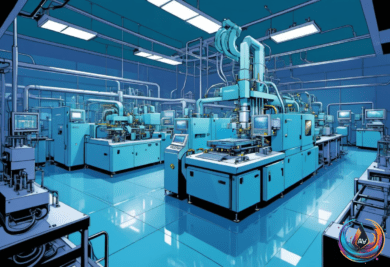
Chip fabrication has also changed the value of traditional overclocking. Modern CPUs are designed to leave less performance headroom on the table, so the gap between a processor’s advertised capability and its practical limit is smaller than it once was.
A chip’s maximum clock speed was once dictated by the worst-performing batches. Manufacturers had to account for chips that needed more limits to remain stable, which left stronger examples with room for users to explore. Now chips are produced more predictably and remain stable at scale, reducing that extra space.
Calvin Wankhede summed up the shift this way: “The performance gains you get with modern chips aren’t as noteworthy as they used to be.” That does not make overclocking pointless, but it explains why fewer users see it as an essential step after installing a CPU.
The tradeoff now includes heat and power
CPU overclocking remains safe, even if it is less popular than before. The tradeoff is that the performance uplift is smaller, while the cost in power and cooling can grow. A processor that already pushes its limits during demanding workloads has less room before extra voltage, current, or heat becomes part of the equation.
The cooler included with a processor can show how tight that margin is. The stock AMD Wraith Stealth cooler was just enough to cool a Ryzen 7600 CPU, with load temperatures between 85 and 90 degrees Celsius. That leaves a clear reason to consider stronger cooling before asking the processor to work harder.
A tower-style Peerless Assassin 120 cooler retails for less than $50 and performs better than most stock coolers. That price makes improved cooling accessible, but it also highlights the balance behind modern overclocking: the tuning itself may take little effort, while handling the extra heat can require another purchase.
Manual overclocking has not vanished. AMD’s PBO2 still gives users a simple way to adjust performance, and motherboard features can raise clock speeds with a setting in the BIOS. But modern CPUs already react to workload and thermal headroom, and improved chip production leaves less unused speed available. For many users, automatic boosting now delivers the main benefit that traditional overclocking once provided, with less hands-on work.