Amazon’s Echo Dot remains a staple in smart speakers, holding its place as one of the most popular options available. The current fifth-generation Echo Dot sells for $50 and delivers solid performance for most users.
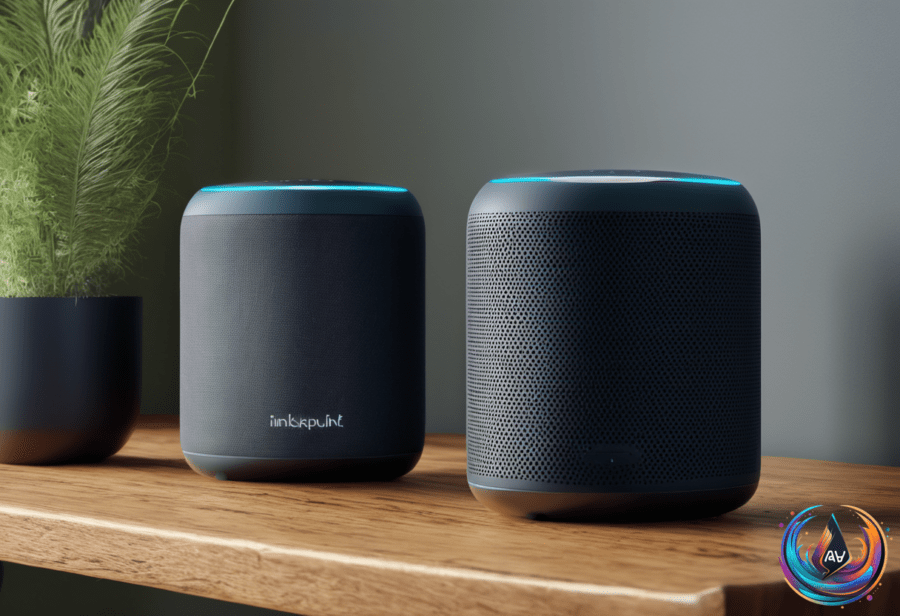
Enter the Echo Dot Max. This newer model doubles the price to $100 and aims to justify the premium with better performance and richer audio. Amazon boasts the Dot Max offers three times the bass of the standard Dot, thanks to a two-way speaker system designed to fill larger rooms more convincingly.
Size and weight also set the Dot Max apart. It is approximately 10 percent larger, measuring 3.9 by 4.4 by 4.9 inches and weighing 17.8 ounces. The regular Dot is more compact at 3.5 by 3.9 by 3.9 inches and lighter at 10.7 ounces.
Connectivity is another upgrade in the Dot Max. It supports Wi-Fi 6E, a step up from the Dot’s dual-band Wi-Fi. This means better network performance on compatible routers, a useful feature if you’re streaming music or managing multiple smart devices.
Still, the core smart speaker functions remain the same between the two. Voice control, smart home integration, and Alexa’s capabilities do not differ. As one tech analyst put it, “The biggest differences between the Echo Dot and the Echo Dot Max comes down to cost and specs.” The question is whether the improved audio and Wi-Fi justify paying twice as much for the Max.
In the same price-conscious vein, Amazon’s Fire TV Stick 4K Max retails for $34.99, offering double the internal storage at 16GB and Wi-Fi 6E support. The Fire TV Stick 4K Plus costs $24.99, supports Wi-Fi 6, and shares Dolby Vision, HDR10 Plus, and Dolby Atmos with the Max. Both models now support the Fire TV Ambient Experience, enhancing screensaver visuals when idle.
Meanwhile, Samsung’s foldable phone lineup offers a stark contrast in price and scale. The Galaxy Z Fold 8 starts at $1,899.99 and folds down to 123.9 x 81.9 x 9.7mm. The Ultra model demands $2,099.99 and folds to a larger 158.4 x 72.8 x 8.9mm footprint.
The Fold 8 sports a 4,800mAh battery with a 5.5-inch cover screen and a 7.6-inch main display. The Ultra ups the battery to 5,000mAh and boosts the cover display to 6.5 inches, with an 8-inch main screen. Both support 45W wired charging and 20W wireless, plus Wireless PowerShare.
Camera specs reveal the Ultra’s edge: a 200MP main rear camera and a 10MP telephoto lens with 3x optical and 30x digital zoom. The standard Fold sticks to a 50MP ultra-wide rear camera and 10MP front and cover cameras. Weight shifts slightly too — 215 grams for the Ultra versus 201 grams for the Fold 8.
Colors split online exclusives: Lavender and Pistachio for the Fold 8, Violet Shadow and Green Shadow for the Ultra. As one expert noted, “If you’re looking to invest in one of these new foldables, the choice comes down mainly to design and cost.”
The takeaway: Amazon’s Dot Max targets audiophiles and larger spaces but demands a premium. The Dot retains value for most users. Samsung’s foldables offer different sizes, batteries, and cameras to match budgets and preferences. In tech, there is always a trade-off between price and performance—decide what matters most to you.
Based on
- What’s the difference between Amazon’s Echo Dot and Echo Dot Max? — engadget.com
- These 3 Fire TV Sticks are on sale at Best Buy – here’s the one I recommend (and why) | ZDNET — zdnet.com
- Amazon’s best 4K streaming sticks are up to 40 percent off | The Verge — theverge.com
- Samsung Galaxy Z Fold 8 Vs Fold 8 Ultra: Which New Foldable Is Better For You? — engadget.com
- Samsung Galaxy Z Flip 8 vs. Moto Razr Ultra: I’ve spent time with both, here’s what I prefer | ZDNET — zdnet.com