The grid is getting smaller. Startups are placing batteries in stoves, air-conditioning units, delivery hubs, homes, and businesses instead of relying only on giant utility installations. The pitch is simple: storage becomes more useful when it sits close to the people and machines that need power.
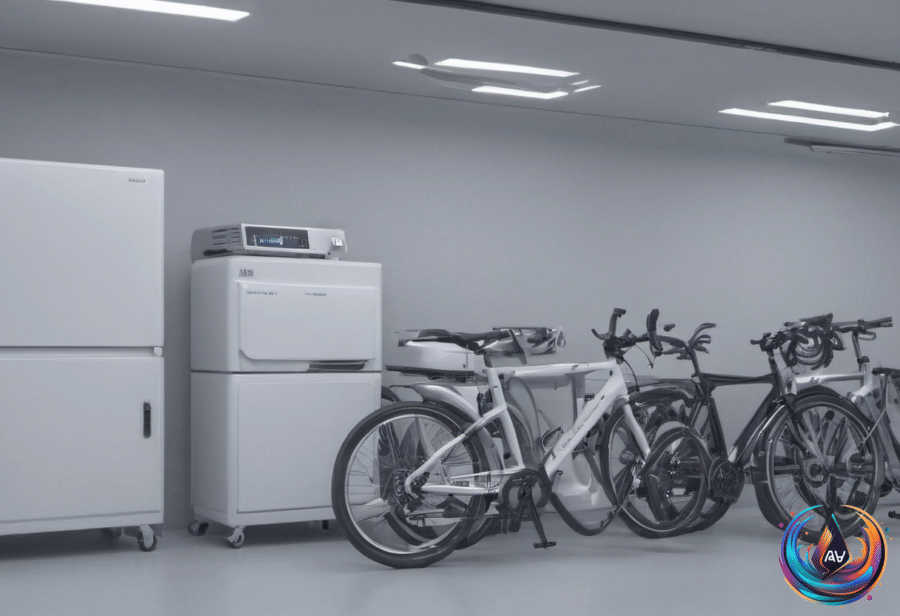
Popwheels built a battery-swapping system for delivery drivers using e-bikes in New York City, with about 50 cabinets and 2,500 batteries in circulation. The company recently started providing batteries to food cart operators, extending the same system beyond delivery work and into another business that depends on reliable mobile power.
Copper is taking a different route by building induction stoves with integrated batteries. Its appliances let residents cook if the power goes out and help homeowners avoid electrical upgrades, turning a kitchen appliance into a small resilience system rather than another device competing for limited electrical capacity.
Companies such as Every Electric and David Energy sell plug-in batteries for homes and businesses. Every Electric designs its battery to connect to an air-conditioning unit, while David Energy focuses on businesses including laundromats, parking garages, and gyms. About four of its batteries can supply five kilowatt-hours of electricity—a modest unit can still matter when enough of them work together.
“The number-one challenge that large-scale centralized energy storage providers have is the fact that their benefits are abstract and their costs are concrete,” said David Hammer. Distributed systems make the benefit easier to see: a stove that works during an outage, or a business that can keep equipment running without waiting for a distant project to solve the problem.
Small Batteries Could Add Up
Sam Calisch frames the argument in financial terms: “We’re not just selling a battery for resilience—we’re selling it for cost savings.” The larger opportunity is the sheer number of ordinary appliances already spread across homes and businesses.
“If every stove in America were shipped with a battery, it would add up to tens of gigawatts of power,” Calisch said. That does not make every integrated battery a replacement for utility-scale storage, but it shows why manufacturers are looking beyond standalone battery farms.
Large, utility-scale battery installations are coming online quickly around the world, yet communities have pushed back because of concerns about battery fires. Distributed systems do not erase those concerns; they change where the equipment sits and how its value reaches customers. The grid gets more flexible, but safety still gets the final vote.
Sodium Ion Offers A Different Trade-Off
Unigrid sells a nine-kilowatt-hour sodium ion battery for homes. It has shipped the first 100 units and expects to ship 1,000 before the end of the year, with pricing at roughly $100 per kilowatt-hour—higher than the $81 per kilowatt-hour at which lithium ion batteries were trading in December.
Sodium ion batteries may cost less and catch fire less easily than lithium ion batteries, but they are not as energy dense. Some companies suggest the technology might reach $30 per kilowatt-hour; analysts say those lower costs could remain many years away. Battery economics, as usual, arrive with an asterisk attached.
Unigrid’s device currently uses sodium ion cells made in China and contains chromium-3 in its cathode. Under certain conditions, chromium-3 may form chromium-6, which is toxic and cancer-causing. The battery has passed certification and safety tests for sale in Europe and is undergoing evaluations for the US market, while third-party tests have not been able to produce chromium-6 in the device.
“We’ve tried very hard to try and produce it, we’ve overcharged it as much as we can… We were unsuccessful in generating chromium-6,” said Darren Tan, Unigrid’s co-founder and CEO. Ivana Hasa, a researcher at the University of Warwick, said, “Safety tests reported on the cell chemistry are very promising,” and added, “I’m a strong believer in the technology.”
Unigrid is not alone. Emerald Battery Labs is developing sodium ion batteries and relies on China-sourced cells for its initial products. David Bell, the company’s CEO, said, “We think sodium ion […] is going to make up 80% of the market.”
Peak Energy announced a partnership with General Motors in June to develop a US supply chain for sodium ion batteries. Cameron Wiles, Peak Energy’s president and co-founder, said the company hopes to help GM launch a US-based production facility in Michigan by the end of 2028 and argued, “China does not have an insurmountable lead in sodium ion batteries.”
Alsym Energy makes sodium ion batteries in the US, while ESS Tech is working with Alsym and plans to ship hundreds of megawatt hours of US-made sodium ion batteries by 2027. Ivana Hasa also states that establishing mass production will be challenging, and sodium ion batteries do not carry zero fire risk despite being promoted as safer than lithium ion technology.
The emerging storage market is splitting into two bets: many small batteries embedded in familiar equipment, and new chemistries built for larger systems. Neither solves every grid problem, but both challenge the old assumption that storage must live in one enormous fenced-off installation.
Based on