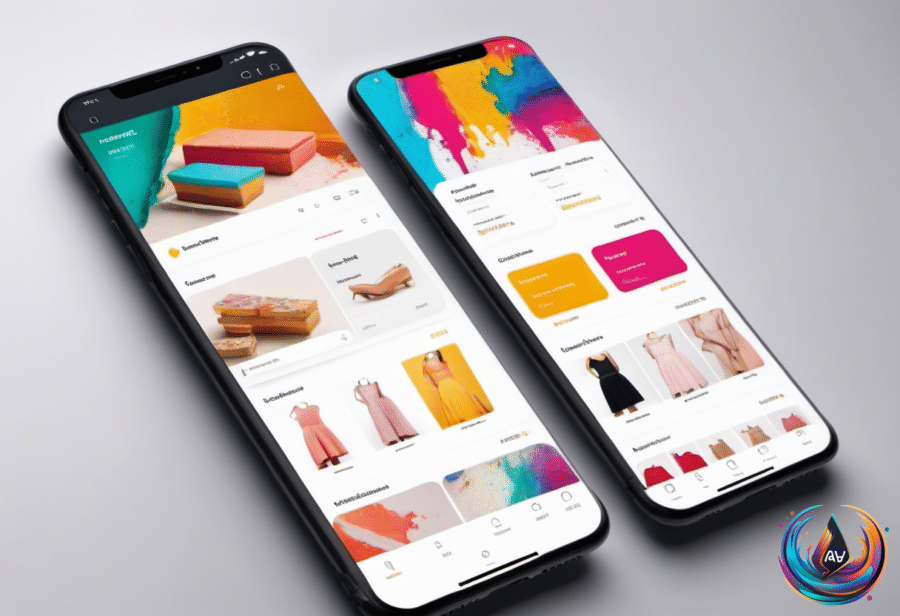
The ecommerce app is moving beyond its old role as a mobile storefront. AI is changing what shoppers experience inside an app, how businesses attract customers, and how development teams build the product in the first place.
That shift is showing up in both shopping behavior and business decisions. AI-referred traffic to Shopify stores reached eight times its level from a year earlier in the first quarter of 2026, while orders that began with AI-assisted searches grew nearly 13-fold during the same period. The numbers point to a new path between discovery and purchase, with AI becoming part of how shoppers find products and how stores receive demand.
From Storefront to Evolving System
Building an app still follows a familiar process in many organizations: design, develop, launch, and then hand the product off. That model treats the app as a finished object, but AI is changing both the development process and the work an app performs for customers.
Atul Poharkar, CEO of Appmaker, described the change in direct terms: “It’s time to stop treating the app as a mobile-friendly storefront, and start treating it as a constantly evolving system that shapes an intuitive, personalized, and responsive experience for shoppers.”
That idea connects the customer-facing side of ecommerce with the work happening behind the scenes. An app is no longer only the place where a shopper views products and completes an order. AI is becoming part of the creation layer, helping teams shape layouts, components, and experiences while the product is being developed.
AI systems can generate matching layouts and components based on a Figma frame. This gives development teams a way to move from a design reference toward working app elements, linking the design stage more closely to creation and delivery.
The change also affects the time spent early in development. Organizations with more than 50% AI adoption report higher time savings in early-stage development work. That matters because early decisions shape the rest of the app, from its structure to the way customers move through the shopping experience.
AI Is Also Changing How Shoppers Arrive
The growth in AI-referred traffic to Shopify stores adds another layer to the story. When traffic from AI systems reaches eight times its level from the previous year, the app becomes part of a wider journey that may start outside the store itself. The nearly 13-fold rise in orders from AI-assisted searches shows that this journey is also reaching the checkout stage.
That creates a stronger connection between discovery, decision-making, and commerce. AI can influence how shoppers find a store, while the app must respond with an experience that feels intuitive and personal. The app therefore becomes one part of a system rather than the entire starting point.
Business leaders are also bringing AI into their own decision processes. A report from Deloitte says, “60% of executives now regularly use AI to support their decisions.” That figure places AI inside management work as well as app development and customer shopping.
The result is a cycle that touches several parts of ecommerce. Executives use AI to support decisions, development teams use it to create app elements, and shoppers use AI-assisted searches to discover products. Those activities connect the business side of ecommerce with the customer side.
ShopX 2026 Shows the Industry’s Wider Conversation
These themes also shaped ShopX 2026, an ecommerce event held on September 17, 2026, at the New World Saigon Hotel in Ho Chi Minh City. More than 300 e-commerce leaders, Shopify partners, and technology experts attended the event, which featured five sessions.
GemPages, ShopOS, Pengu Studio, and EFE Network organized ShopX 2026. The event included people from across the ecommerce and technology landscape, including Alex Fedotoff, Adam Pearce, Xavier Lee, Son Le, and Namra Deka. Son Le is an OpenAI Ambassador, while Namra Deka represents Shopify.
The event also included companies working across different parts of the commerce system. AppLovin sponsored the event with an AI-powered advertising platform, while Easify represented the Shopify app ecosystem and FFOrder provided fulfillment services.
Those participants show why the app can no longer be viewed in isolation. Advertising, app tools, fulfillment, platform technology, design, development, and executive decisions all meet around the same customer journey. AI now touches each of those areas, from the first search to the final order.
Vikas Mittal, Principal Architect at Walmart Global Tech, published an article on October 7, 2026. An article about ShopX 2026 was published on October 9, and this article was published on October 13, 2026. Together, the timing reflects how quickly the conversation is moving from AI as a feature to AI as part of the full ecommerce system.
The central change is simple: an ecommerce app is no longer just something a company launches and hands off. AI is helping shape how it is made, how decisions support it, how shoppers discover products, and how the experience responds once they arrive.
Based on
- How the Ecommerce App Is Becoming a System, Not a Storefront — unite.ai
- The AI Shopping Agent Is Easy; The Commerce Platform Behind It Is Hard — forbes.com
- How To Design Websites And Apps For The Age Of AI Agents — forbes.com
- ShopX 2026 Brings E-Commerce Leaders Together to Address the Shift to Agentic Commerce | Currency News | Financial and Business News | Markets Insider — markets.businessinsider.com