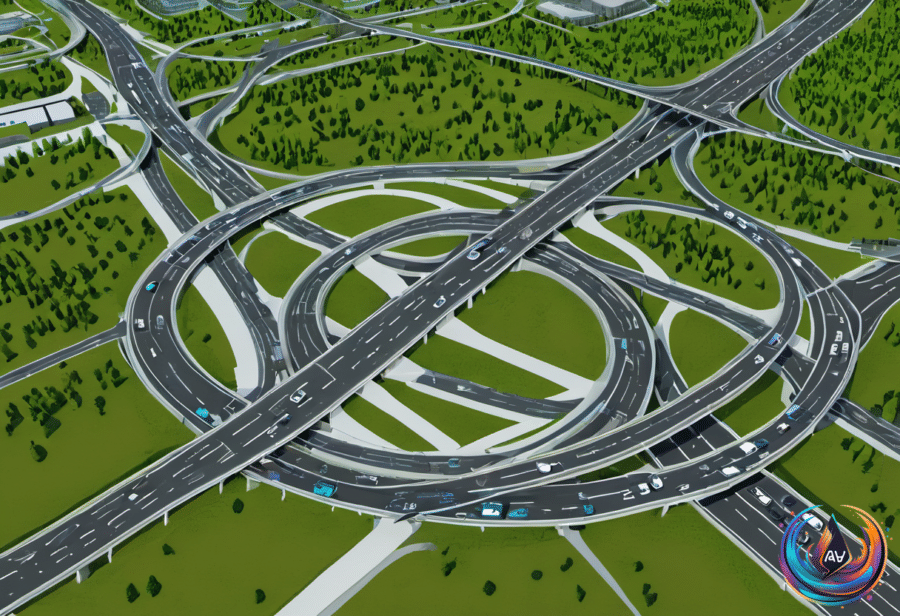
What if robots and autonomous vehicles could face their hardest moments before entering the physical world? Laplace Intelligence is building automated red-teaming for robotics and physical AI, creating simulations designed to expose dangerous corner cases before deployment.
The Ann Arbor startup will present its work on the Startup Battlefield stage when TechCrunch Disrupt 2026 opens its doors on October 13, 2026. Laplace is one of 20 startups competing in the event, and its approach targets a central challenge for physical AI: testing machines against the messy, unpredictable behavior they will encounter outside a lab.
A Virtual World Built for Real-World Problems
Laplace’s simulation environment is based on Nvidia’s Cosmos, an AI world simulation platform. The system reconstructs real-world environments and brings them to life with changing traffic, congestion, and the actions of other participants.
Laplace pulls real-time traffic and congestion information from navigation providers like TomTom. That data gives the simulations a changing foundation instead of a fixed track with predictable movements. Vehicles can react to test agents, and the simulated environment can model how one actor’s decision affects everyone around it.
“It’s truly an interactive simulation environment. Everyone is reacting to everything. …This is more like a world model with interactive participants,” said Howie Sun, CEO and co-founder of Laplace Intelligence.
That distinction matters for robotics and autonomous driving AI. A test agent does not face a collection of frozen objects; it enters a world where other vehicles respond to its actions. The simulation aims to make those interactions part of the test itself, giving companies a way to explore situations that are difficult, expensive, or unsafe to recreate in the physical world.
AI Agents Hunt for the Corner Cases
Laplace is also using AI agents to design corner cases. These agents can draw from sources such as news and police reports, turning real-world incidents into scenarios for simulation. The goal is to find the unusual moments that standard testing may miss before a system reaches deployment.
A sudden sequence of events can expose a weakness that an ordinary test plan never includes. Laplace’s agents are meant to search for those cases and place them inside an interactive environment where the behavior of other actors also matters.
Sun framed the challenge with a question: “Imagine if something like that happened in the physical world.” The question points to the stakes behind automated red-teaming. A simulated failure can reveal a problem before a robot or autonomous vehicle encounters the same situation outside the test environment.
Sun has spent the last eight years in academia researching autonomous driving AI in simulation. He and Henry Liu, chief scientist of Laplace Intelligence, published a paper in 2023 that made it onto the cover of Nature. Laplace was founded a year ago, bringing that research background into a startup focused on testing robotics and physical AI.
From Simulation Evidence to Safer Deployment
Laplace’s work centers on what happens before a system reaches the real world. Automated red-teaming can help companies search through more scenarios, identify failures, and fix problems while their AI systems remain in development.
“Our goal is to help companies discover and fix problems before deployment—and, over time, build a shared foundation of evidence that customers, insurers, and regulators can trust,” Sun said.
That vision extends beyond a single test run. A shared foundation of evidence could show how an AI system performed across simulated environments, traffic conditions, and interactions with other actors. Customers, insurers, and regulators could then use that evidence when evaluating physical AI systems.
The system’s purpose is not to separate simulation from reality, but to connect the two. Laplace uses real-world environments, real-time traffic and congestion information, and behavior from other actors to build tests that reflect changing conditions.
“We are essentially using simulation to predict the real world’s future,” Sun said.
That future-focused approach gives Laplace a clear role in the race to deploy physical AI. Robots and autonomous vehicles must operate around people, vehicles, and shifting conditions, so their testing must account for more than the behavior of the machine itself. Laplace’s interactive simulations aim to create that larger testing ground before deployment.
On October 13, 2026, the Startup Battlefield stage will put Laplace’s idea in front of the TechCrunch Disrupt 2026 audience. The Ann Arbor startup enters the competition as one of 20 companies, carrying a system built to ask a tough question early: what happens when the AI meets a situation nobody planned for?