Delivery work is changing fast. New technology and climate challenges are reshaping how orders reach customers. At the same time, safety concerns rise.
In 2026, India’s Meteorological Department began using AI to improve weather forecasts. This helps predict storms and floods more accurately. Delivery platforms like Zomato have used weather data even longer. Zomato relies on real-time reports from drivers and crowd-sourced info from Weather Union, a service launched in 2024.
Weather matters a lot for delivery workers. Between April and July 2026, Good Business Lab tracked 730 delivery workers around India’s capital. Most kept working despite extreme heat. Their pay depended on hitting performance targets, so stopping was not an option.
Heatwaves affect earnings too. A 2024 study of a Chinese delivery platform showed that orders rose during heat, but delivery delays caused pay to drop. In Italy, Glovo tried to add a heat bonus of 2% to 8% in 2025. The idea was scrapped.
In the U.S., DoorDash charges a temporary ‘Weather Impact Fee’ that goes entirely to workers. Still, many platforms use weather only to forecast demand and set prices. They rarely adjust workloads or safety rules based on weather risks.
Climate Risks and Worker Safety
Severe flooding or official weather warnings should close service areas automatically. Airlines do this when conditions are dangerous. Delivery platforms don’t have such rules yet, though risks are growing.
Antonio Aloisi, a labor law professor at IE University Law School, says climate volatility will make extreme weather the norm in Europe. Europe is now the fastest-warming continent after the Arctic. Since the 1990s, its temperatures have risen twice as fast as the global average.
Ying McGuire, CEO of Cascale, explains that heat is no longer a future risk. It is already a daily stress for workers. We need to design systems that protect delivery workers from this stress.
New Tech and Drone Deliveries
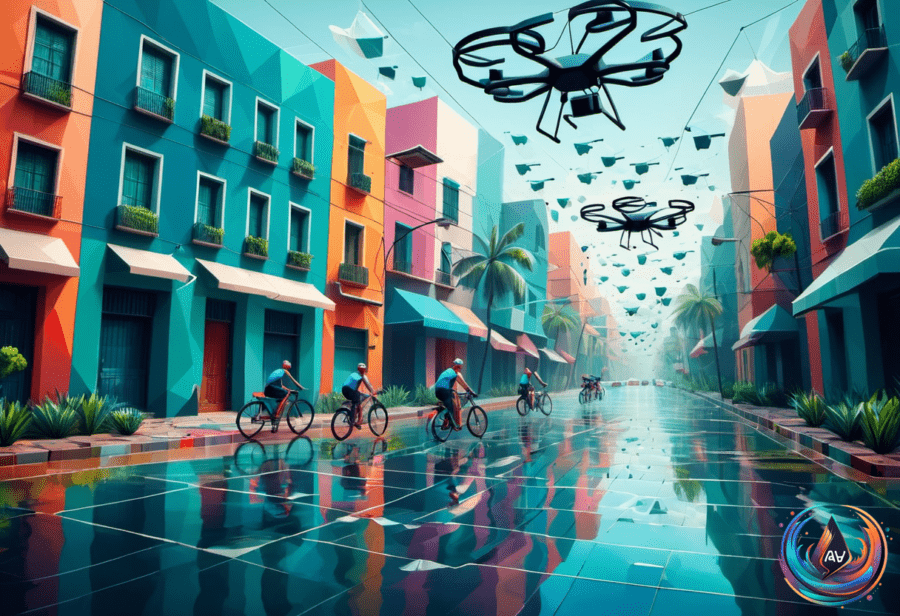
DoorDash is pushing innovation with drones. It announced DoorDash Air on July 29, 2026. This drone delivery service will start commercial flights in fall 2026.
DoorDash has FAA Part 135 air carrier certification. This lets it operate its own commercial drone service. So far, DoorDash has completed tens of thousands of drone deliveries through partners like Alphabet’s Wing and Flytrex.
In April 2026, DoorDash expanded its Wing partnership to metro Atlanta. DoorDash Air will run its own aircraft alongside partner drones. It is building the full system—from aircraft design to routing, safety, and handoff.
Harrison Shih, head of DoorDash Air, says, “We’re building the full stack to make that possible from the ground infrastructure to the drone itself, and the handoff systems that make it work together seamlessly.”
The goal is to cut delays on orders traveling 3 to 5 miles. These currently take nearly 25% longer than shorter trips. DoorDash’s autonomous platform will choose the best delivery option—drivers, drones, or other modes—based on many factors.
A DoorDash spokesperson adds, “DoorDash Air adds another delivery mode, and having multiple drone options builds resilience and grows the overall opportunity for local businesses, not split it.”
Fair Pay and Tipping Changes
Worker pay is also evolving. New York City cracked down on tipping practices starting January 2026. Delivery apps now must show a tip option at checkout. They must also recommend a minimum tip of 10%.
Zohran Mamdani, New York City’s mayor, says, “Uber Eats and DoorDash hid tip buttons and set default tips below 10%. As a result, tips for delivery workers fell 79%. In January, we made these corporations change their apps.”
Since then, tips increased by $104 million. About 70,000 delivery workers in New York City are on track to earn an extra $2,287 a year in tips. Mamdani adds, “This is only the beginning.”
As these changes take hold, delivery work faces two big challenges. Weather and climate will keep testing worker safety. Meanwhile, new technology like drones might ease some pressure and speed up service.
The key will be balancing speed with safety. Platforms need to protect workers from heat, floods, and other hazards. At the same time, innovations in AI and robotics offer tools to improve conditions and reduce delays.
The future of delivery is unfolding fast. It will be shaped by how well technology adapts to climate risks and worker needs.
Based on
- Can we train AI to choose safety over speed? — restofworld.org
- Zohran Mamdani hints he will continue taking on delivery apps like Uber Eats and DoorDash | Business Insider Africa — africa.businessinsider.com
- Europe’s employers face a new challenge—keeping workers safe during heatwaves | Fortune — fortune.com
- The Messi Test and how the Spaniards messed with it: what the World Cup final taught me about the jobs AI can’t touch | Fortune — fortune.com
- DoorDash is launching a competing drone delivery service | Business Insider Africa — africa.businessinsider.com