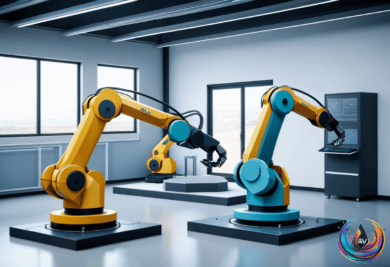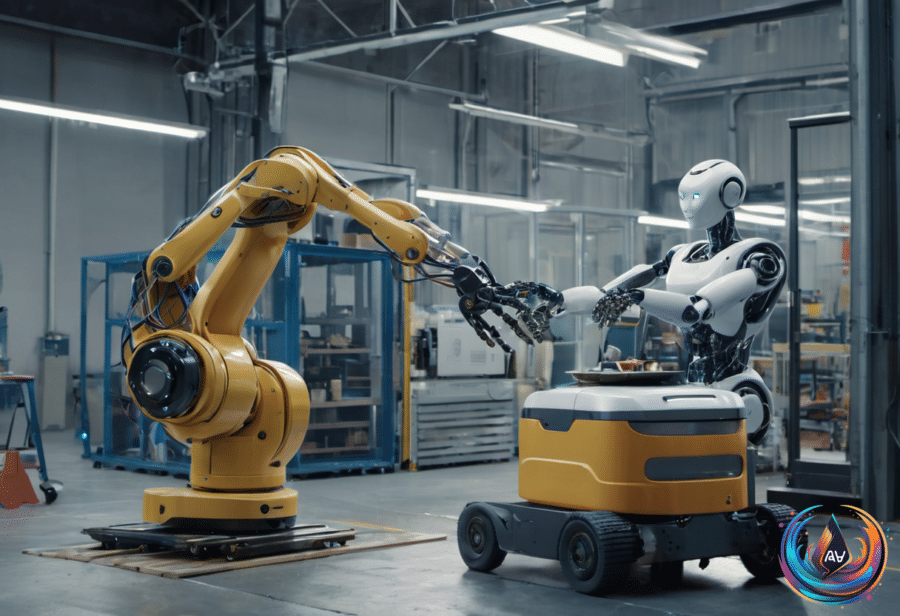
A robot shaped like a human has been popping up across video feeds, showing off a strange mix of promise and awkwardness. It can dance, pass popcorn, put trash in a bin, vacuum a room, and press buttons on a microwave. It can also fall backward while handing out water bottles and struggle to iron a shirt.
That contrast captures the current state of humanoid robotics. The machines can perform useful tasks, but demonstrations do not yet show that they can handle the endless surprises of homes, warehouses, factories, and hospitals. The technology is moving forward, but a major change to everyday life still has no clear arrival date.
Tesla’s Optimus sits at the center of the biggest predictions. Elon Musk has said the robot will be “not just Tesla’s biggest product ever, but probably the biggest product ever.” He has also predicted that Optimus could be on sale to the public by the end of 2027, with each robot produced for as little as $20,000.
At that price, the pitch reaches far beyond a household helper. Optimus robots could automate almost all human labor, from hauling sheet metal to folding laundry. Marc Andreessen has said robotics could become the “biggest industry in the history of the planet,” while Nvidia CEO Jensen Huang said humanoid robots would match human-level ability this year.
The numbers point to a huge market
Morgan Stanley expects the number of robots that “resemble and act like humans” to reach nearly 1 billion by 2050. The firm projects a market worth over $5 trillion, a figure that places humanoid machines alongside the world’s largest industries.
Those projections describe a possible long-term outcome, not a guarantee that homes and workplaces will soon fill with robot workers. A robot that completes a carefully prepared demonstration faces a much harder test when objects move without warning, instructions change, or its surroundings do not match earlier training.
Amit Goel described one challenge in blunt terms: “what the robots do is almost come to a halt before the turn, because they really don’t know what’s happening in all these factories, warehouses and hospitals—they’re unstructured environments and things can come from anywhere.” That problem helps explain why a robot may look capable in one clip and unreliable in the next.
Safety is becoming part of the robot itself
Nvidia has been building tools aimed at that gap. Its Halos system launched in 2025 with hardware and software tools that help developers add guardrails to self-driving cars and other autonomous vehicles. In June 2026, Nvidia expanded the safety architecture to physical AI technologies with Nvidia Halos for Robotics.
The system includes hardware such as the Nvidia IGX Thor computing module, which has an independent processor dedicated to safety-related workloads. Its operating system was designed to monitor hardware and software constantly, helping identify failures before they create a larger problem.
The Nvidia Holoscan Sensor Bridge connects sensor data with safety-related processing to identify corrupted data. Halos also includes simulations for testing robots in virtual environments and an inspection lab program that provides safety feedback. These tools focus on a practical question: how can a robot keep operating when its surroundings do not behave as expected?
Agility Robotics incorporated Nvidia Halos into its Digit 5 humanoid robot, allowing it to operate safely near people without isolated workstations or barriers. Amit Goel described the change this way: “Now the robot is literally unchained—the safety goes with the robot wherever it goes.”
He added, “Now they can operate everywhere in a factory or a warehouse without having to set up a brand new infrastructure every time they want to do a new task.” That flexibility matters because robots lose much of their value if every new job requires a separate protected area and new equipment.
There is a tradeoff, though. Goel also said, “Because giving flexibility can come at the cost of losing some control over the stack.” In plain terms, a robot that can work in more places must make more decisions in changing conditions, which raises the stakes for reliable safety systems.
Factories may see the first major impact
Boston Dynamics has been an early partner in Nvidia Halos, focusing on its Spot robot dogs, wheeled Stretch robots, and Atlas humanoid robots. Atlas could deploy in Hyundai factories by 2028. KION Group and LG are also working with Nvidia Halos, showing that the push includes more than one robot design or one company.
Nvidia CEO Jensen Huang said the physical AI business was already driving nearly $10 billion in annual revenue during an appearance on the All-In Podcast in March 2026. That figure shows the business is not waiting for a distant future to begin, even if the most ambitious humanoid predictions remain unproven.
The near-term story may be less dramatic than a robot in every home. Companies are working on machines that can move materials, handle repetitive tasks, and operate near people, while developers build systems to detect failures and corrupted sensor data. Those steps could make robots useful in controlled workplaces before they become dependable household helpers.
For now, the dancing robot and the robot struggling with an iron tell the same story. Humanoid machines can do impressive things, but practical intelligence requires more than completing a task once. It requires safe decisions in places where anything can happen, and that challenge will determine whether the bold promises become everyday reality.
Based on