Humanoid robots are moving into a new phase, with companies focusing not only on building machines but also on preparing factories, training sites, and data systems for them. XPENG, Boston Dynamics, and the Hubei Humanoid Robot Innovation Center are taking different routes toward the same goal: turning humanoid robots into products that can work outside the laboratory.
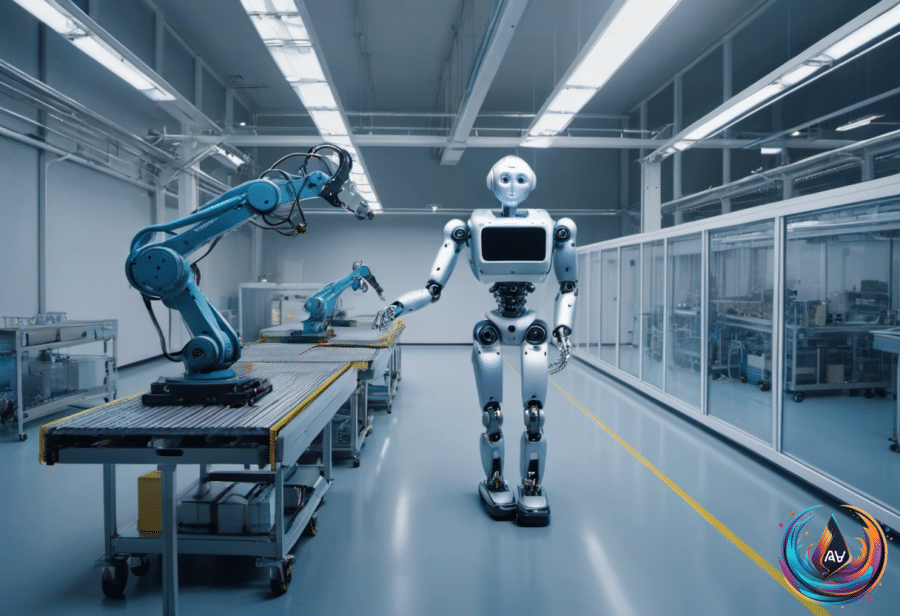
XPENG offered the clearest production-line demonstration on September 22, 2026. Its Iron humanoid robot walked autonomously off the production line after assembly, showing that the machine could leave the line under its own power once construction was complete.
XPENG Builds Iron Around Automated Production
XPENG announced on September 7, 2026, that over 80 percent of the line’s core processes are automated. That matters because the company is treating Iron as a product that needs a repeatable manufacturing system, not as a one-off demonstration machine.
“Today’s step is small, but XPENG is building the production lines for an entirely new product category,” said He Xiaopeng, XPENG’s chairman and CEO. The company plans to deploy robots in its stores and campuses first, then begin deliveries in China and overseas markets in 2027.
Iron has 76 degrees of freedom across its body, including 21 in each hand. Those figures describe how many separate ways the robot can move its body and hands. Three Turing AI chips provide up to 2,250 trillion operations per second, giving the robot a large amount of computing power for its movements and other tasks.
The production demonstration does not mean humanoid robots have reached the mass market. Zhang Cong, chief scientist at the Hubei Humanoid Robot Innovation Center, said, “It should be at least five years before the technology matures enough for mass market, commercially viable humanoid robots.”
Boston Dynamics Takes Atlas Into the Factory
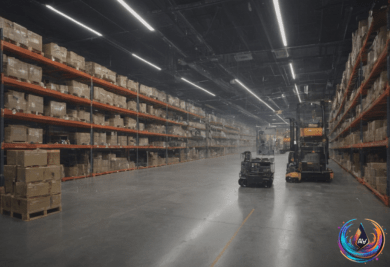
Boston Dynamics is preparing its Atlas humanoid robots in a working industrial setting. The company opened a facility inside a Hyundai Motor Group plant in Georgia, creating a training ground where robots can be prepared for factory use.
Hyundai plans to start with 25,000 robots at the Robotics Metaplant Application Center, or RMAC, before ramping up to 30,000 annually. A handful of Boston Dynamics employees from Waltham have moved to Georgia to support Atlas training, connecting the company’s development work with Hyundai’s manufacturing operations.
Boston Dynamics also plans to add a second Waltham property as part of a $100 million expansion. The project would create 1,250 new jobs by 2033. Atlas robots were unveiled earlier this year, and the new facility gives the machines a place to train as Hyundai develops its robotics plans.
Zack Jackowski, Boston Dynamics’ chief product and technology officer, described the purpose of the site this way: “The new training ground bolsters the companies’ interest in creating ‘a future where robots amplify human potential by making work safer and more productive.’”
The plans have also brought labor tensions. Hyundai’s union auto workers went on a partial strike in July to protest the Atlas acquisition plans. At the same time, Figure robots supported the production of more than 30,000 BMW X3s over ten months, another reported example of humanoid robots being connected to vehicle manufacturing.
Wuhan Builds an Ecosystem Around Humanoid Robots
China’s Hubei province is developing the wider support system that humanoid robots need, including training environments, component suppliers, and application testing. The Hubei Humanoid Robot Innovation Center has 23 application scenarios installed across 7000 square meters, and 41 companies have set up shop at the center.
In January 2026, the center signed an agreement to sell thousands of hours of training data to Zhiyuan Innovation (Shanghai) Technology. Training data helps robots learn how to respond to different environments and tasks, so the agreement links the center’s physical testing spaces with the software work needed to control machines.
Wuhan is also developing robots for homes. In May 2026, Hubei Jiji Vision Robotics launched Shiguang S1, China’s first general-purpose robot for home use. That launch gives the city a direct connection to both industrial robotics and consumer applications.
The city’s industry had six humanoid complete-machine companies, more than 80 core enterprises, and nearly 1,000 associated enterprises as of July 2025. Local coverage of key component categories reached 85%, showing that Wuhan’s network includes more than robot makers alone.
Zhang Cong said, “There is an overlap of approximately 60 to 70 percent between the embodied-intelligence robotics industry and the automotive industry.” That overlap helps explain why car manufacturers and robotics companies are working so closely: factories already offer structured spaces where robots can be tested, trained, and put to work.
XPENG’s production line, Hyundai’s Georgia training facility, and Wuhan’s robotics center point to the same challenge. Building a humanoid robot is only one step; companies also need automated factories, training data, specialized facilities, and enough suppliers to support large-scale use.
Based on