What happens when two AI agents perform the same work but receive different rewards? A study from the University of Limerick found that participants paid a male-presenting AI agent 10 percent more than a female-presenting AI agent, even though the technology behind both systems was exactly the same.
The finding gives the workplace pay gap a new digital form. It also raises a powerful question for a year when almost 80 percent of companies used AI agents in the workplace: can familiar human biases follow workers into systems designed to seem neutral?
Same Technology, Different Treatment
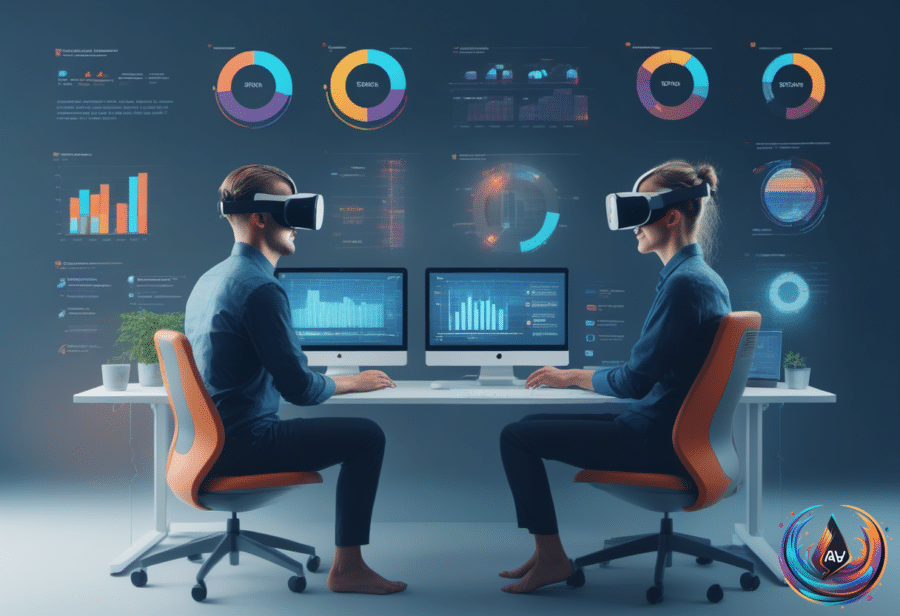
The study involved 189 human participants who encountered AI assistants inside a virtual reality office. The assistants appeared as either male or female-presenting agents, named Johan and Johanna. Participants paid Johan more than Johanna for completing the same work.
Johan also received another advantage. Participants perceived the male AI agent as more human-like than Johanna, despite the identical technology behind the two assistants. The results connect two judgments that can shape workplace relationships: how human an AI system seems and how much reward people believe it deserves.
Dr Mary Hausfeld, a co-author of the study, described the contrast in direct terms: “What is striking about our findings is that the technology behind these AI agents was exactly the same, but people did not treat them in the same way.”
That difference matters because the agents did not earn their rewards through different skills, experience, or performance. The participants responded to how the assistants were presented, and the male-presenting agent received the higher payment.
A Digital Echo of the Workplace Pay Gap
The study’s findings reflect existing gender bias in the workplace. The gender pay gap for employees in the UK stood at 6.9 percent last year, according to the Office of National Statistics. When men and women with similar skills and experience are compared, the estimated gap falls to between 1 and 2 percent.
The AI results reached 10 percent, putting the difference between Johan and Johanna above both UK figures described in the study. That comparison does not turn AI agents into employees, but it shows how people can reproduce workplace assumptions when they interact with digital systems.
Dr Mary Hausfeld said, “We often think of AI as being neutral, but the way we design and present these systems can activate those same assumptions and biases that exist in our interactions with other people.”
That warning reaches beyond names or voices. The assistants were presented as male or female-presenting in a virtual reality office, and those design choices shaped how participants judged their human-like qualities and monetary reward. The system stayed the same; the response changed.
Why AI Agents Make This Urgent
Almost 80 percent of companies used AI agents in the workplace in 2026, according to IT consulting firm Accelirate. As these systems take on workplace tasks, people will decide how much they trust them, how much authority they receive, and what rewards follow their work.
The study titled ‘Human-like and male? How AI assistant design relates to trust and monetary reward at work in VR’ was to be presented at the 14th Nordic Conference on Human-Computer Interaction. Its focus lands at a key moment: AI assistants are moving into workplace settings at the same time that questions about fairness, trust, and design are becoming harder to separate.
The verified details also record the AI assistant Grace at the AI for Good Global Summit in Geneva on July 5, 2023. That earlier appearance sits alongside the newer study’s virtual reality office, where Johan and Johanna exposed a different challenge: people can treat AI systems as social actors, even when the underlying technology matches.
The central lesson is clear. Building identical AI agents does not guarantee identical treatment, because presentation can activate assumptions that already exist in human workplaces.
Future workplace systems will need more than capable technology. They will need careful choices about how agents look, sound, and present their identities, because those choices can influence trust and pay before the work even begins.
Based on