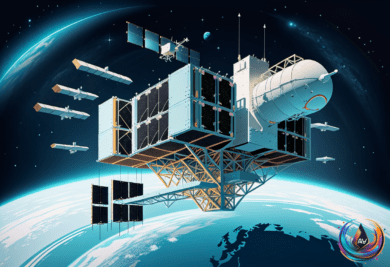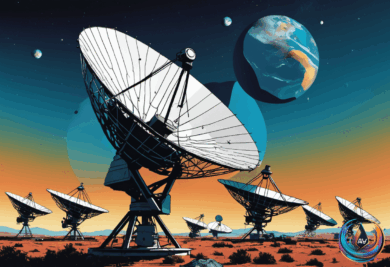
Intel has been working quietly on a new chip designed specifically for space use. The processor, called Starfire, aims to handle the harsh conditions found beyond Earth. It’s built to last on missions that could last more than ten years.
Sean O’Neill, deputy director of product development at Intel Government Technologies, says Starfire will be available to customers by the end of this year. The chip is still undergoing testing but shows promise as a resilient, high-power system-on-chip.
Starfire blends several computing functions into one package. It includes a CPU, graphics, neural networks, and image processing. Intel built it to resist radiation and thermal cycling, common challenges in space. Unlike most commercial chips, this one can survive those extremes.
Starfire adapts a modern commercial system-on-chip design but adds special features to handle space’s tough environment. Intel funded the development internally. O’Neill said, “We have skin in the game” and that Intel has most of the skills needed to build space-grade technology in-house.
Currently, satellites usually get replaced every five years. But with tens of thousands of satellites in orbit—both working and defunct—there’s a growing need for longer-lasting technology. Around 18,000 satellites orbit Earth today. Many will eventually burn up when they reenter the atmosphere.
Space debris is a growing concern. Each day, about 44 tonnes of space rock enter the atmosphere, mostly burning up harmlessly. But human-made debris, like old satellites, adds hundreds of tons yearly. These often contain aluminum and titanium, which can linger in the atmosphere after disintegration.
Researchers at the University of Stuttgart warn that aluminum oxide from debris can harm the ozone layer and reflect sunlight. Fabian Hufgard said the rising number of satellite reentries might start causing real consequences. Clemens Mueller added that while the risk of debris hitting people on the ground is low now, it will rise as more satellites return.
One recent incident made this risk real: in March 2024, a piece of a battery pallet from the International Space Station pierced a roof in Florida. Tests show that some materials, like inconel cylinders, can survive reentry heat that exceeds 1,600 degrees Celsius. Satellites reenter at speeds around 8 km per second, creating extreme heat.
AI and Satellites: A New Way to Process Data in Orbit
Alongside hardware advances, AI is changing how satellites operate. NASA’s Jet Propulsion Laboratory sent Google’s Gemma 3, a large language model, into space for an in-orbit demonstration. It runs on Nvidia’s Jetson Orin AGX, a small, low-power AI module using just 8 gigabytes of memory.
Gemma 3 can analyze satellite images and produce text descriptions and answers without extra training on those images. It classified images with 88 percent accuracy on a dataset of nearly 8,000 pictures. This AI model works right on the satellite, reducing reliance on slow data links to Earth.
Juan M. Delfa, a technical lead at NASA, calls this a “major shift.” Instead of sending raw images, satellites can send plain-text summaries. This “semantic compression” saves bandwidth and speeds up response times. For example, satellites could alert authorities to wildfires faster, cutting detection delays from 90 minutes to minutes.
Delfa and his team developed NAVI-Orbital, software that lets researchers interact with spacecraft using natural language prompts. Scientists can now write simple commands for the AI instead of complex codes. “Now, a scientist can write a prompt, upload it to the spacecraft, and that will be taken into account by the system,” Delfa said.
He also imagines AI companions for astronauts. These companions could understand natural language and assist in space missions. This would change how humans and machines work together beyond Earth.
Preparing for the Future of Space Operations
Intel’s Starfire chip and NASA’s AI experiments point to a new era for space technology. Satellites will become smarter and more durable. They will handle more tasks onboard and last longer in orbit.
With thousands of satellites already circling Earth, managing space debris and improving satellite capabilities is urgent. European regulations already require launch applicants to ensure reentering satellites pose minimal risk. This could become a global standard as satellite numbers grow.
Intel’s entry into space-grade chips shows a clear market opportunity. As O’Neill said, Intel “realized it has the majority of the capabilities necessary to develop space-grade technology in-house.” This means more advanced, reliable chips for space missions are coming.
The combination of powerful hardware and AI onboard satellites will reshape what’s possible in space. Faster image analysis, smarter data handling, and longer mission lifetimes will help governments and companies use space more effectively and safely.
Based on
- Intel debuts new chip for space computing — spacenews.com
- Melting Satellites Reveal Toxic Secrets Of Space Debris – IEEE Spectrum — spectrum.ieee.org
- NASA Uses AI to Analyze Satellite Images in Orbit – IEEE Spectrum — spectrum.ieee.org
- Intel foundry lands Fortinet as first customer for security chips — cnbc.com
- Intel’s turnaround under CEO Lip-Bu Tan gains steam with another strong quarter — cnbc.com