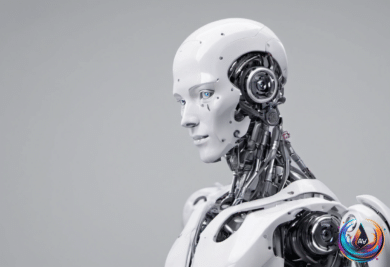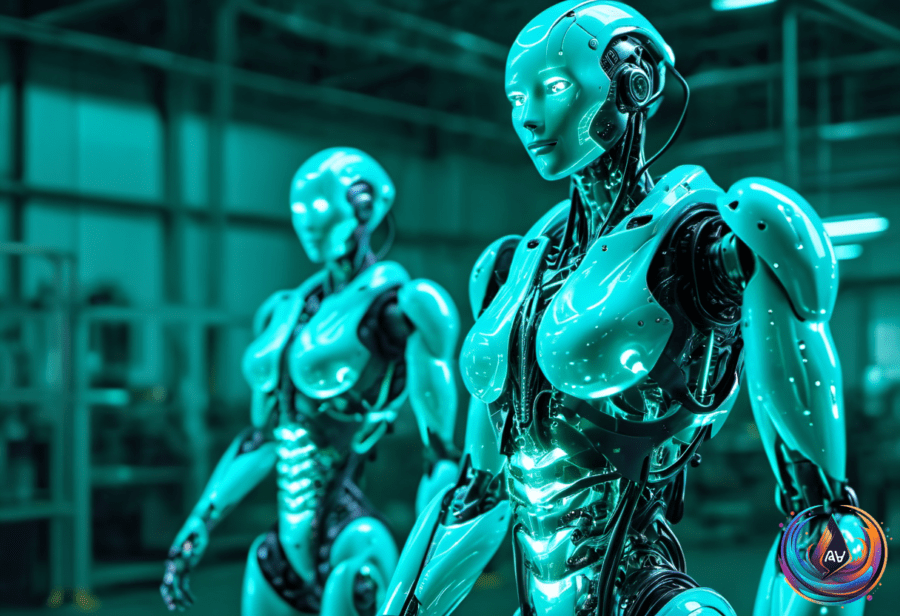
Robotics is leaping off the lab floors and into real factories across Europe. Two powerhouses, one from Barcelona and one from Germany, just rewrote the playbook for AI-driven robots. Together, they’re redefining how machines learn, adapt, and work alongside humans in manufacturing, logistics, and beyond.
Why does this matter? Because these aren’t your usual robots. They don’t just follow pre-set commands. They learn on the job. They adapt. They improve every day. And investors are pouring billions into making this future happen — right now.
Barcelona’s THEKER: Robots That Learn Like Humans
Barcelona’s THEKER just raised €73 million to scale a new breed of factory robots. These aren’t rigid machines stuck on repetitive tasks. THEKER’s robots are “AI-native.” That means they use advanced AI models and vision systems to handle mixed products, irregular shapes, and changing environments — all without manual reprogramming.
THEKER’s co-founder, Carla Gómez Cano, says, “We didn’t build THEKER to run pilots. We built it to ship robots that work the day they arrive and keep getting smarter.” Their robots already operate in live production environments across Europe, helping companies boost throughput and fight labor shortages.
- Deploy in days, not months
- Continuously learn during production
- Adapt to mixed SKUs and operational variability
- Reduce downtime and increase efficiency
THEKER’s funding round is a landmark for Spain. Samsung and LVMH made their first-ever investments in Spanish startups through this round. The lead investor, CRV, also made its debut in Spain, signaling growing confidence in THEKER’s vision.
Germany’s NEURA Robotics: The Humanoid AI Giant
Meanwhile, in Germany, NEURA Robotics secured a colossal $1.4 billion to turbocharge its humanoid robots and Physical AI platform. This makes NEURA Europe’s top-funded humanoid maker, competing head-to-head with US and Asian leaders.
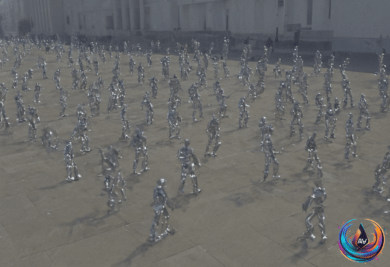
NEURA’s robots aren’t just automated arms. They’re full humanoid machines equipped with sensors, custom AI layers, and the ability to learn complex tasks on the fly. Their AI platform, called Neuraverse, lets robots share skills and improve collectively, like a cloud of smart machines.
The company plans to produce 5 million robots by 2030. Their order backlog exceeds €1 billion. NEURA is already working with giants like Amazon, NVIDIA, Bosch, and Schaeffler — blending cloud, edge computing, and manufacturing expertise.
- Unified AI, robotics, and sensor platform
- Real-world AI training gyms for robots
- Edge AI for real-time decision making
- Strategic partnerships with tech and industrial giants
CEO David Reger sums it up: “AI won’t just live on screens. It will move, learn, and work beside us.” NEURA’s vision pushes robotics beyond scripted automation to genuine autonomy.
Why Europe’s Robotics Surge Matters
Robotics funding is exploding worldwide. In 2026 alone, companies raised over $55 billion — nearly twice last year’s total. Most of that money flowed to the US and China. Now, Europe steps into the spotlight with bold bets and breakthrough tech.
THEKER and NEURA represent two sides of the same revolution. One builds agile, AI-native factory robots that learn on the fly. The other creates full-stack humanoid robots with AI brains and cloud-powered learning.
Both challenge the old robotics model: expensive, rigid machines stuck in fixed roles. Instead, these companies deliver flexible, scalable robots that handle complexity and unpredictability like humans.
- Address labor shortages with smarter automation
- Slash downtime by adapting in real-time
- Accelerate deployment from months to days
- Build platforms where robots share knowledge globally
Investors like Samsung, LVMH, Amazon, NVIDIA, Bosch, Qualcomm, and Tether are betting big. Their involvement signals a new industrial era where AI-powered robots become essential workers across sectors.
What’s Next? The Robots Take Over the Real World
The challenge ahead is scale and reliability. Both THEKER and NEURA must prove their robots deliver consistently across industries and continents. The robots must move from pilot programs to full commercial rollouts.
NEURA plans to start large-scale shipments in late 2026. THEKER is already live in European factories and aims to expand rapidly. Both are expanding teams and deepening AI capabilities.
The big question: How fast will factories, warehouses, and logistics hubs embrace these adaptable, learning robots? The answer will define the next decade of manufacturing and AI integration.
One thing is clear: the future of AI isn’t confined to screens or data centers. It’s physical, interactive, and right on the factory floor. Europe’s robotics revolution is here — and it’s just getting started.
Based on
- Barcelona’s THEKER raises €73M to deploy AI-native factory robots that learn on the job — thenextweb.com
- Amazon, NVIDIA and Tether back NEURA Robotics’ $1.4B raise to make it Europe’s top-funded humanoid maker — TFN — techfundingnews.com
- German NEURA lands $1.4B for humanoid robots | HODL FM NEWS — news.hodlfm.io
- Neura: German Robotics Unicorn Secures $1.4 Billion From Tether, Nvidia, Amazon — trendingtopics.eu
- Neura Robotics Raises $1.4B from Amazon, Nvidia for Physi… — headlinesbriefing.com