Memory chip makers are gearing up for a big boost in demand driven by AI. Nanya Technology, a Taiwanese DRAM maker, plans to spend about $6 billion in 2027 to expand its production. This comes as the industry faces a memory shortage fueled by AI growth.
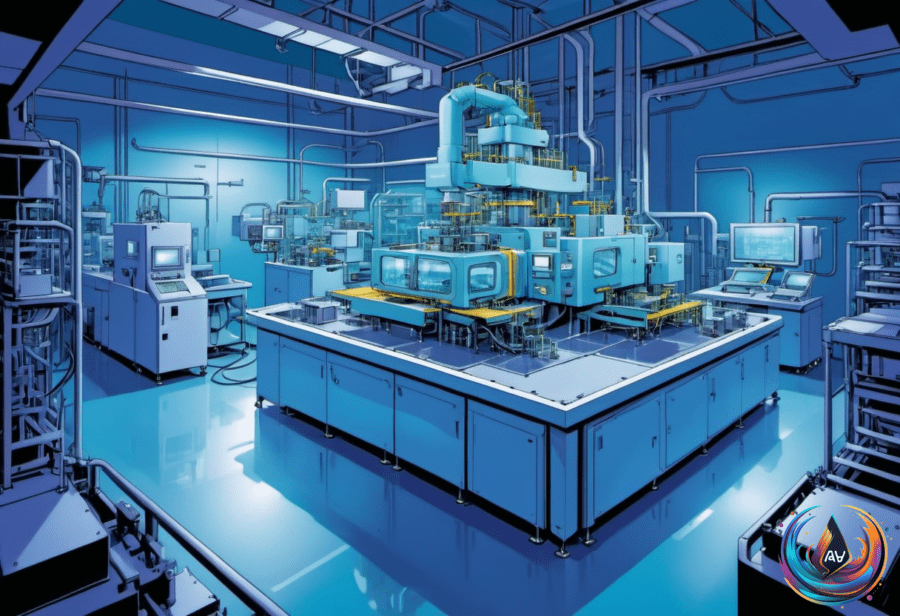
For 2026, Nanya set its capital expenditure at NT$52 billion, around $1.6 billion. The company’s new 5A fabrication plant will start moving in equipment in early 2027. This plant alone will roughly double Nanya’s total production capacity. The first phase will add more than 30,000 wafers per month.
Nanya expects the AI-driven memory shortage to last at least through 2027. Some in the industry believe it could extend into 2028. The company’s first-quarter revenue in 2026 surged over 580% compared to last year. Its gross margins also climbed to about 68%. Clearly, the AI boom is reshaping the memory market.
“The AI boom has changed the arithmetic,” Nanya said. The company is moving into the AI server supply chain with custom high-bandwidth memory. Server-related products are projected to make up more than 60% of Nanya’s sales by 2027.
To fund growth, Nanya raised NT$78.72 billion, roughly $2.5 billion, through a private placement. Key backers include SK Hynix’s Solidigm, Kioxia, Cisco, and SanDisk.
Big Moves Across the Memory Industry
Other memory giants are also expanding aggressively. SK Hynix is investing $51 billion in a new memory plant. Micron broke ground on a $9 billion expansion in Hiroshima. The company will spend an additional $50 billion on chipmaking through 2035. This will bring its total investment to $250 billion.
Micron’s stock jumped as much as 9% after announcing its plans. The company aims to produce 40% of its DRAM in the U.S. This push aligns with the Trump administration’s goals. “President Trump has made it clear that America is where you should build your business and the world is responding rapidly,” said Commerce Secretary Howard Lutnick.
Samsung is also riding the AI wave. It expects an 18-fold profit jump thanks to memory demand driven by AI workloads.
Meta’s AI Data Center Expansion
Tech giants are building out AI infrastructure alongside chipmakers. Meta is constructing a 1-gigawatt AI-optimized data center in Alberta, Canada. This will be Meta’s first data center in Canada and its 33rd worldwide. The company is investing $9 billion in the site and another $40 million in local infrastructure.
The Alberta center will support over 3,000 construction workers at peak and more than 300 operational jobs once complete. Meta said the facility will use a closed-loop, liquid-cooled system with dry cooling. This will improve efficiency and reduce environmental impact.
“This data center will be optimized for our AI workloads, helping bring to life the technologies that billions around the world use to connect, find communities, grow businesses, and experience the power of our wearables,” Meta said.
Alanna Hnatiw, mayor of Sturgeon County, welcomed the project. “We’re excited to work with our new neighbours as we continue to make that vision a reality,” she said.
Meta is also building a massive data center in Louisiana. This will be its largest facility ever, with 4 million square feet and over 2 gigawatts of compute capacity.
The AI boom has pushed memory makers and tech giants into high gear. With demand for AI servers soaring, expect more big investments and faster growth in the years ahead.
Based on
- Nanya plans a $6bn spending surge in 2027 to ride the AI memory boom — thenextweb.com
- Micron just showed that investors can still get excited about AI spending | Business Insider Africa — africa.businessinsider.com
- SK Hynix—Nvidia’s memory‑chip supplier—to test Wall Street’s appetite for the next wave of tech IPOs | Fortune — fortune.com
- Canada’s getting its first Meta data center, and it’s built for AI | Business Insider Africa — africa.businessinsider.com