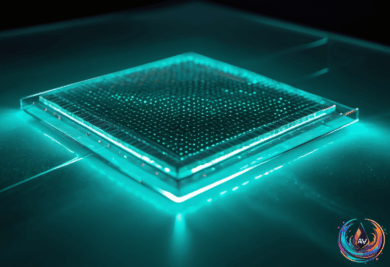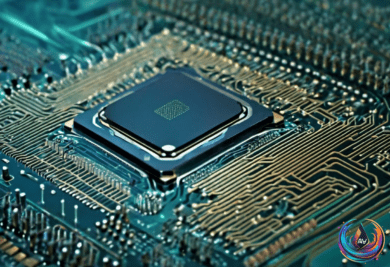
IBM just tore through a major tech milestone. They revealed a chip technology that squeezes transistors into a space smaller than one nanometer. That’s 0.7 nanometers, or 7 angstroms. It’s a huge leap beyond today’s best chips.
This new breakthrough uses a “nanostack” architecture. Imagine transistors stacked vertically, layered and staggered like tiny sheets piled up. This 3D approach pushes logic scaling beyond limits thought impossible just years ago.
Stacking Transistors to Shatter Limits
The secret lies in stacking transistors in a three-dimensional nanosheet-based structure. Each basic unit pairs two transistors stacked and bonded together. Each transistor is made of three nanosheets, only 5 nanometers thick, separated by a 9-nanometer gap.
This vertical stacking means IBM can cram nearly 100 billion transistors onto a chip about the size of a fingernail. That’s transistor density on a whole new scale—way beyond what current 2-nanometer chips offer.
Power and Performance Like Never Before
This nanostack chip doesn’t just pack more transistors. It delivers up to 50% higher performance or slashes power use by 70% compared to IBM’s own 2-nanometer chips. That’s a game changer for energy efficiency and processing speed.
The architecture also boosts SRAM scaling by 40%. This means memory bits can shrink further, making RAM faster and more compact. The improvements could supercharge AI hardware and future electronics, where both speed and energy matter.
The Path Ahead: From Lab to Fab
IBM’s breakthrough is a research milestone, not a finished product. Manufacturing these chips will require new advances in lithography and process control. High-NA EUV lithography tools are expected to handle the fine details needed for such tiny structures.
Challenges remain. Denser, stacked nanosheets are more sensitive to variability, heat, and signal delays. Engineers will need to solve these issues before mass production can begin.
Still, IBM sees a production path within five years. This could reshape the future of semiconductor design and AI hardware alike.
Revolutionizing Electronics, One Nanometer at a Time
IBM’s nanostack architecture is a bold step forward. It pushes transistor density, performance, and energy efficiency to new heights. Nearly 100 billion transistors on a tiny chip? That’s a mind-blowing scale.
As this technology matures, expect faster processors, smarter AI devices, and electronics that chew far less power. The chip industry is gearing up for a new era, and IBM just cracked open the door.
The future of computing is stacking up—literally—and it’s happening now.
Based on
- The Lab Mistake That Might Revolutionize Computing — spectrum.ieee.org
- Sub-1nm AI Chip Advancement – Electronics For You — electronicsforu.com
- Brain-Inspired Memory Device Boosts AI Energy Efficiency (2026) — assimnao.org
- IBM’s Revolutionary Sub-1 Nanometer Chip: Unlocking AI’s Future (2026) — aventuresbicycletales.org
- IBM pushes logic scaling below one nanometre | IN Electronics & Design — inelectronics.co.uk