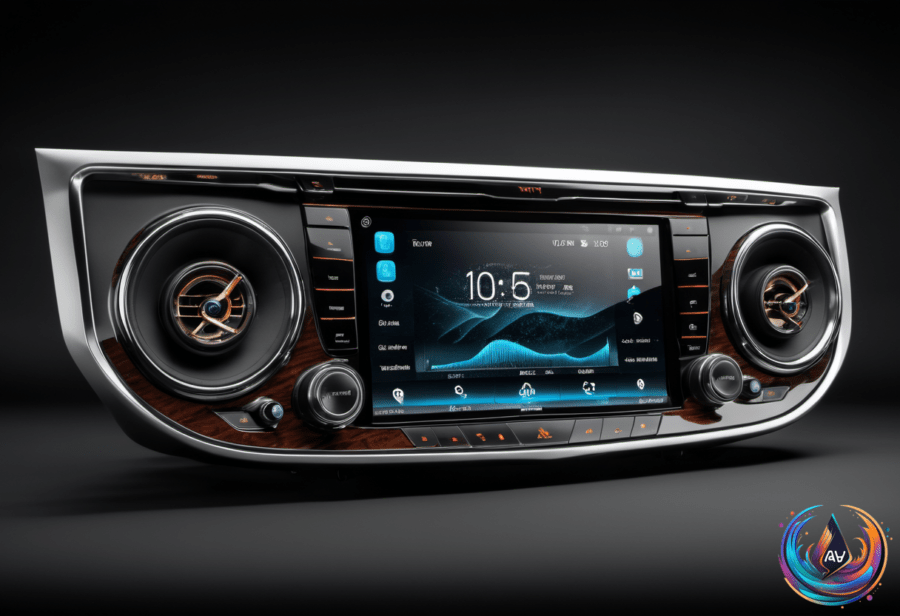
Your old stereo may need less than you expect. A car built before Bluetooth, CarPlay and Android Auto became common does not automatically need a completely new sound system. If the radio and speakers still sound fine, a small adapter may be enough to bring phone-based music and podcasts into the car.
The right upgrade depends on what is missing. If you only want wireless music or podcasts, start with the connection between your phone and the stereo. If you want maps, calls and messages on a screen, a portable CarPlay or Android Auto display is a bigger step; replacing the head unit makes more sense when those features should stay permanently installed.
Start With the Simplest Connection
Cars with a 3.5mm AUX input have the clearest upgrade path: a Bluetooth receiver is likely the simplest option. The receiver connects to the phone over Bluetooth, then sends audio into the stereo through the AUX connection, leaving the existing radio and speakers in place.
AUX also avoids the interference issues associated with FM transmitters. That makes the wired connection the less complicated choice for drivers who want wireless phone audio without adding a screen or replacing factory equipment.
Cars without AUX can use a Bluetooth FM transmitter instead. The transmitter usually plugs into the car’s 12-volt socket and connects to the phone over Bluetooth; you then tune the car radio to the same FM frequency to hear the audio.
This approach adds wireless audio without changing the factory stereo, but the signal still depends on the FM connection. For a driver who only wants music or podcasts, that may be enough. Spending more on a complete system would be an impressive way to solve a problem that did not exist.
When a Screen or New Head Unit Makes Sense
A portable CarPlay display can add a touch screen without replacing the factory radio. Many CarPlay displays also support Android Auto, and they mount on the dashboard or windshield before connecting to the phone.
Depending on the model, audio from the display can play through the car’s existing speakers using AUX, FM or another connection. This creates a bigger upgrade than a Bluetooth receiver because it can bring maps, calls and messages to a screen while keeping the factory stereo in place.
Wireless Android Auto or CarPlay adapters serve a narrower purpose. They only work with cars that already support wired versions, so they are not a solution for every older stereo. In the right car, though, an adapter can remove the need for a wired connection without requiring a replacement display or head unit.
Replacing the factory stereo with an aftermarket head unit can add a touchscreen, Bluetooth, CarPlay and Android Auto. It is the more permanent route for drivers who want those features built into the dashboard rather than supplied by a portable display.
The trade-off is that the original stereo may connect to steering-wheel buttons, a backup camera, a factory amplifier or vehicle settings. Keeping those features working can require vehicle-specific wiring harnesses or interface adapters, which turns a simple stereo swap into a more involved upgrade.
Upgrade the Sound When Sound Is the Problem
Not every weak system needs a new connection or display. If the phone already connects the way you want but the system sounds weak, the better investment is likely better speakers, an amplifier or a subwoofer.
Those components target audio quality instead of adding phone controls. Better speakers, an amplifier and a subwoofer can improve the sound, while there are also ways to improve CarPlay’s audio quality.
The sensible order is simple: identify what the current system lacks, then replace only that part. Use a Bluetooth receiver for an AUX-equipped car, an FM transmitter when AUX is absent, a portable display for maps and messages, or a head unit when the entire experience needs a permanent reset. Old hardware is not automatically obsolete—sometimes it is just missing one connection.