Norway is building tunnels like no other country. The Rogfast subsea tunnel will stretch 26.7 kilometers, plunging 390 meters below sea level. It will become the world’s longest and deepest subsea road tunnel when completed in 2033.
This project is a feat of precision engineering. Teams blast inward from both ends to speed progress. By 2029, the two tunnel ends will meet with less than a few centimeters’ deviation. Laser scans constantly check alignment during excavation. Implenia leads the southern efforts, while Skanska manages the north. The Norwegian Public Roads Administration oversees the entire operation.
Rogfast’s scale demands removing vast rock volumes under 40 atmospheres of pressure. The tunnel will erase two ferry routes and slice a five-hour coastal journey down dramatically. The total cost is 8.6 billion kroner—about $800 million. Still, this investment promises faster, safer travel.
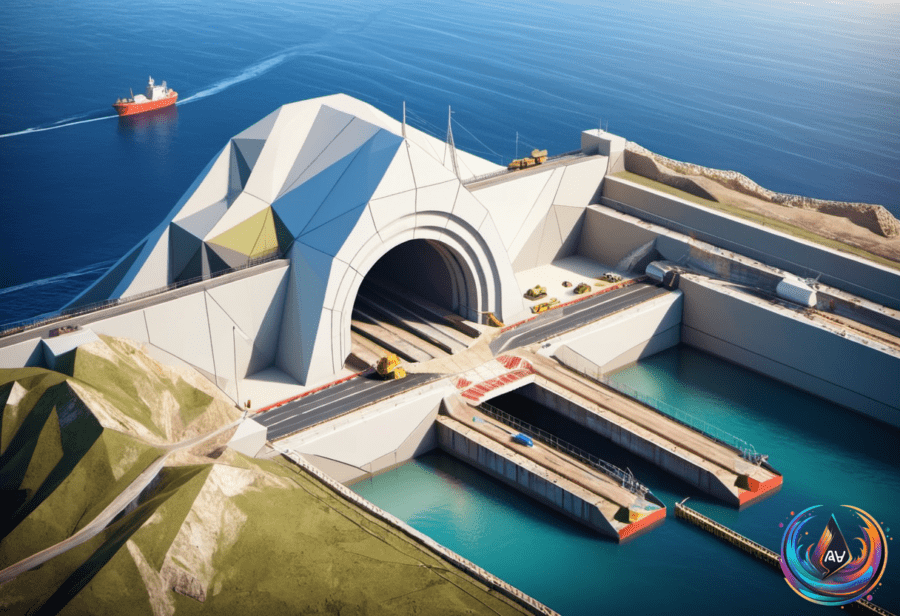
Meanwhile, the Stad Ship Tunnel will be Norway’s first full-scale ship tunnel for ocean-going vessels. It cuts through a coastal mountain, spanning 1.7 kilometers long, 50 meters tall, and 36 meters wide. Ships up to 12 meters draft and 16 meters beam can pass through. Cruise ships will take about 10 minutes to transit.
The Stad project’s budget ballooned from an initial 4.1 billion kroner to 9.6 billion. It nearly got scrapped twice in late 2025 and mid-2026 due to soaring costs. But Norway’s parliament finally greenlit the tunnel on June 19, 2026. Bjørn Arild Gram of the Centre Party declared, “Stad Ship Tunnel will be built.” The project breaks new ground in maritime navigation, promising safer, more efficient routes for the largest vessels.
Not far behind is the Røldal tunnel, a 10.7-kilometer stretch blasting through hard gneiss rock for the E134 highway upgrade. The first blast happened at Seljestad in September last year. It should open in 2031, becoming Norway’s third-longest road tunnel. Frosts as low as -25°C challenge construction crews. Frode Lykkebø, project manager at the Norwegian Public Roads Administration, is steering this one.
These projects reflect Norway’s tunnel obsession. The country boasts over a thousand kilometers of tunnels built over decades. Workers like Niclas Brusehed, a tunnel foreman at Implenia, call it a lifestyle. “You have to be a little bit crazy to work underground all the time,” he admits.
Geologists like Anne-Merete Gilje keep safety tight. Her dry humor surfaces in briefings: “Don’t worry—if you don’t make it, we’ll have your stuff sent back to your office.”
Norway’s underground megaprojects push engineering limits. They combine cutting-edge technology, political will, and sheer grit to remake travel and shipping along the coast. The Rogfast tunnel alone will transform a grueling five-hour ferry ride into a quick drive. The Stad Ship Tunnel will revolutionize maritime traffic through treacherous waters.
Expect more breakthroughs as these tunnels carve through rock and sea, setting new standards for subsea and mountain tunneling worldwide.
Based on
- Inside the world’s deepest and longest subsea road tunnel — technologyreview.com
- Rogfast Tunnel: Deepest Subsea Tunnel & BIM Technology — bimservices.net
- Norway just funded the world’s first tunnel of its kind, a 1.7-kilometer hole blasted 50 meters tall straight through a coastal mountain, so its boats can finally stop going around the roughest stretch of sea on the whole coast — autonocion.com
- Norway greenlights first full-scale ship tunnel – Tech Trend Trove — techtrendtrove.com
- Norway’s Metrostav completes first kilometer of Røldal tunnel excavation – Wedoany — en.wedoany.com