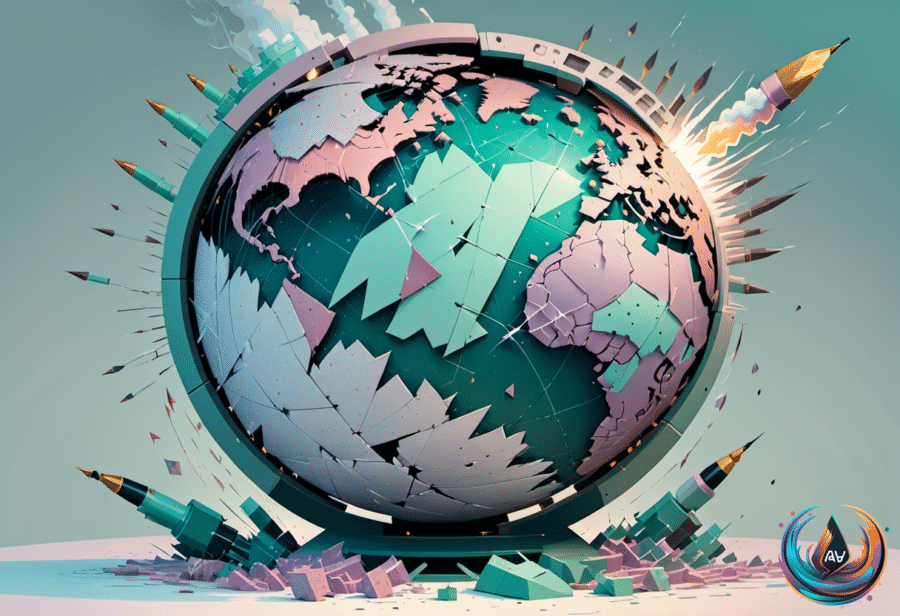
Humanity is being pulled toward two dangers that could end life on a global scale: nuclear conflict and the malicious use of artificial intelligence. The risks are moving closer at the same time, even as public attention stays fixed on AI’s promises and problems.
The accelerating spread of advanced nuclear weapons is bringing what feels like an end times closer by the day. The question is no longer only whether nuclear war might happen, but when limited or full-scale nuclear warfare will erupt.
Nuclear threats are moving from warning to possibility
Vladimir Putin has threatened to deploy Russia’s entire nuclear arsenal, comprising about 4,400 warheads, against Nato countries if they activated a supposed plan to invade Kaliningrad. Putin offered no evidence for that claim, but the threat still shows how quickly nuclear weapons can enter political arguments.
The Kremlin’s nuclear sabre-rattling since Russia’s invasion of Ukraine has diminished Moscow’s credibility. Repeated threats can lose force when they do not lead to action, yet that does not make them harmless. Putin’s inability to halt Ukraine’s drone and missile attacks may be edging him closer to pressing the nuclear button.
North Korea has also demonstrated the kind of nuclear danger that keeps spreading beyond established military powers. In April 2024, the country held a nuclear counterattack training exercise, adding to the sense that nuclear conflict is being treated as a possible battlefield action rather than an unthinkable last resort.
Donald Trump has offered his own justification for the US-Israel war on Iran: his claim that Tehran was weeks away from obtaining the bomb. He has claimed to be protecting the world from nuclear war, but his threat to “annihilate the Islamic Republic” implies a possible US nuclear attack.
“Trump’s hypocrisy is stunning,” Simon Tisdall wrote. The US is upgrading its nuclear arsenal of 3,700 warheads and may resume nuclear tests, a move that adds another layer to the nuclear competition already raising fears around Russia, Iran, North Korea, and Nato.
AI adds a second path to catastrophe
Nuclear weapons are not the only danger identified in the latest warning about humanity’s future. Humans could become extinct by the year 2100 through malicious use of AI or nuclear conflict, placing technology misuse beside the oldest and most destructive weapons ever created.
The Lancet Commission has identified 17 catastrophic threats to human health over the next 75 years. Its list includes nuclear war, malicious use of AI, cuts to aid spending by wealthy countries, the climate crisis, and childhood malnutrition.
That combination matters because these risks do not exist in separate boxes. Nuclear conflict can threaten human health on a vast scale, while malicious AI could create a different route to the same outcome. Both dangers involve systems that humans build, control, and may struggle to contain once a crisis begins.
AI also raises fears beyond weapons or deliberate attacks. Tisdall described a scenario in which a person’s downfall comes from “a disturbingly plausible cyber crash – a global digital and internet meltdown.” In that scenario, what destroys the person and almost everybody else is not a bomb but the collapse of the systems that connect modern life.
Why attention matters now
The danger is easy to misunderstand because nuclear threats and AI threats often arrive through dramatic statements, military exercises, or predictions about the future. The facts behind them are more basic: Russia holds about 4,400 warheads, the US holds 3,700, and leaders continue to discuss nuclear weapons as tools of policy.
At the same time, the risks from AI sit beside climate pressure, hunger among children, and reduced aid spending. The Lancet Commission’s 17-threat assessment presents a broad warning rather than a single prediction. Human extinction by 2100 could follow malicious AI use or nuclear conflict, while other threats place millions of lives at risk without producing one sudden explosion.
The central lesson is hard to miss. Focusing on AI alone can make nuclear danger fade into the background, while focusing only on nuclear weapons can hide the new risks created by digital systems. Both deserve attention because either one could push humanity into a crisis that no government can easily reverse.
“In the event, what destroys him and almost everybody else is a disturbingly plausible cyber crash – a global digital and internet meltdown,” Tisdall wrote. That warning sits beside the threat of nuclear annihilation, creating a stark picture of the century ahead: human survival depends on preventing both kinds of catastrophe.
Based on