Acer and ASUS showed off new AI-focused computers powered by NVIDIA RTX Spark in September 2026, bringing the technology to desktops, mini workstations, laptops, and a mini PC. The announcements highlight a push toward compact systems with serious AI performance, including up to a petaflop of computing power.
Acer introduced two different machines: the Acer SFF RTX Spark and the Acer Veriton RI110 AI Mini Workstation. ASUS presented the ProArt P16 and P14 laptops, the ProArt GR1X Mini PC, and details about the ASUS Zenbook 14.
Acer brings RTX Spark to compact desktops
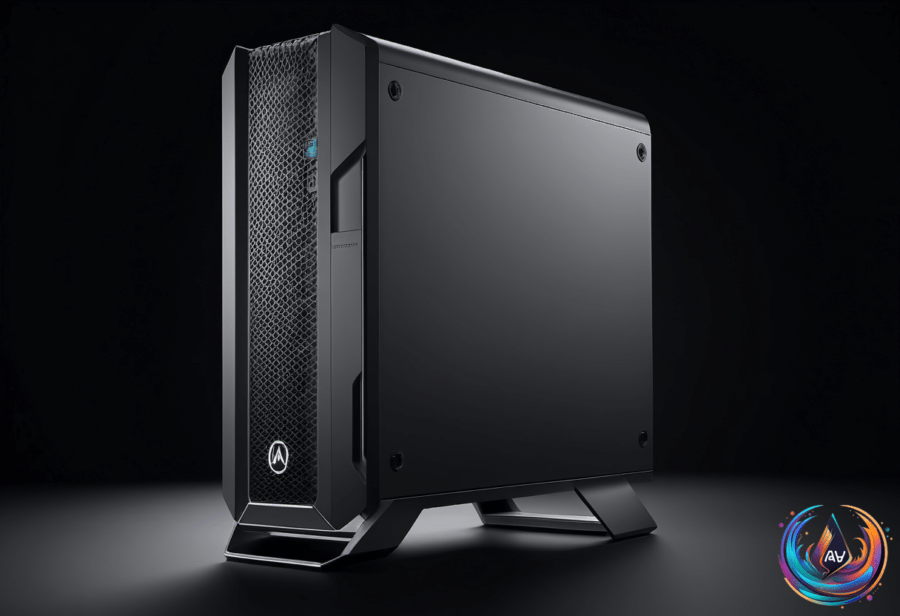
The Acer SFF RTX Spark is built around the NVIDIA RTX Spark superchip, which delivers up to a petaflop of computing power. Its hardware can include a 6,144-core Blackwell RTX GPU, a 20-core NVIDIA Grace CPU, and up to 128 GB of memory.
The RTX Spark superchip combines an NVIDIA Blackwell RTX GPU with 6,144 cores, an NVIDIA Grace CPU with up to 20 cores, and fifth-generation Tensor Cores with FP4 precision. It supports up to 128GB of high-bandwidth unified memory and can deliver up to 1 petaflop of AI performance.
That combination gives the Acer SFF RTX Spark a clear focus on demanding AI workloads in a small-form-factor desktop. Anna Washenko described the system simply: “It’s a showcase of NVIDIA’s latest chip tech.”
Acer’s second machine takes a different approach. The Acer Veriton RI110 AI Mini Workstation uses an Intel Core Ultra X7 processor 358H and an Intel Arc B390 graphics card. It is designed to support third-party agentic AI use and belongs to the Copilot+ PC program, with Microsoft’s chatbot baked into the system.
The Acer mini desktop should be available in North America in the final quarter of 2026. That gives Acer two distinct paths into AI computing: one system centered on NVIDIA’s RTX Spark platform and another mini workstation built around Intel hardware with agentic AI support.
ASUS expands the RTX Spark lineup
ASUS announced its ProArt P16 and P14 laptops, along with the ProArt GR1X Mini PC, powered by NVIDIA RTX Spark. The devices were part of the ASUS IFA Showroom in Berlin, which runs from September 2–5, 2026.
The ProArt P16 measures 12.9 mm in thickness and weighs 1.77 kg. It supports up to 4K 120Hz VRR visuals with NVIDIA G-SYNC®. The ProArt P14 is 13.9 mm thin and weighs 1.48 kg, with support for up to 3K resolution.
Those two laptops put the RTX Spark platform into portable computers while keeping their physical designs slim. The listed display specifications give the P16 a high-resolution, high-refresh option, while the P14 offers a lighter design with up to 3K resolution.
The ProArt GR1X takes the RTX Spark hardware into a mini PC measuring 150 × 150 × 51mm. ASUS designed it for sustained 24/7 operation, and its cooling system uses two fans with 218 fan blades, up to 1.6x greater thermal coverage, and seven-level fan control.
The mini PC supports up to four 4K displays, 10GbE wired networking, WiFi 7, and Bluetooth 5.4. Its display and networking features make the GR1X suited to setups that need several screens and fast wired connectivity, while the cooling system is built around long periods of operation.
Zenbook 14 adds more processor choices
ASUS also highlighted the Zenbook 14, which has a lightweight all-metal design and color options including Komodo Coral, Arctic Blue, and Zabriskie Beige. Unlike the RTX Spark-powered ProArt systems, the Zenbook 14 can use processors from several platforms.
The laptop can be powered by Snapdragon® X, Intel® Core™ Ultra Series 3, or AMD Ryzen™ AI 300 Series processors. ASUS lists a vivid OLED display, long battery life, and comprehensive connectivity among its features.
Taken together, the Acer and ASUS announcements cover a wide range of AI-enabled computers. Acer’s SFF RTX Spark targets compact desktop performance, while the Veriton RI110 focuses on third-party agentic AI and Microsoft’s Copilot+ PC program. ASUS extends NVIDIA RTX Spark across portable ProArt laptops and a mini PC designed for continuous operation.
Based on