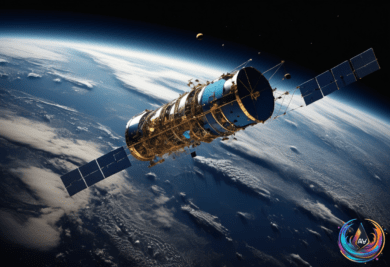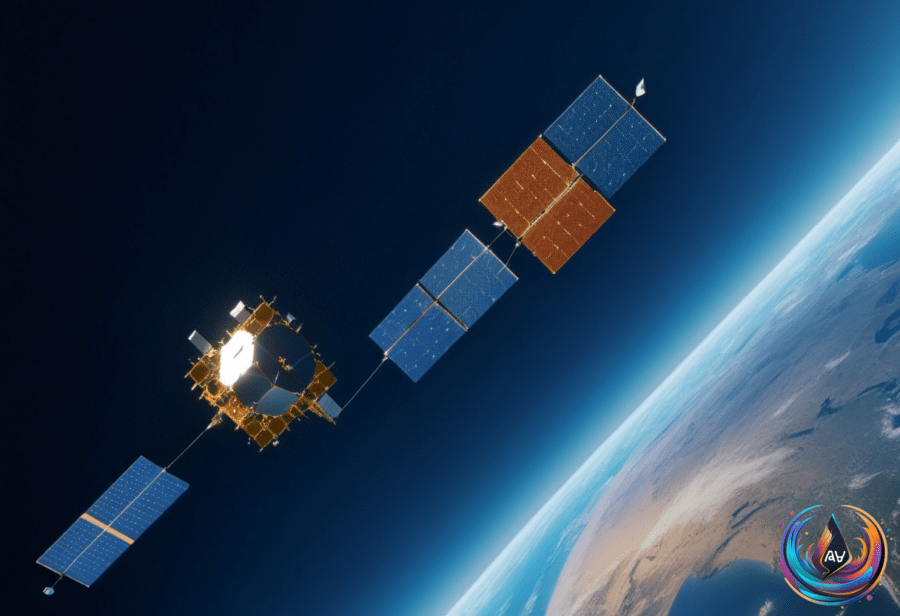
Russia’s Rassvet constellation is facing a powerful test before it can challenge Starlink. After 32 satellites launched in two batches, zero have reached the roughly 500-mile orbit they were designed to use, and at least three likely suffered outright failures.
The setbacks matter because Bureau 1440, the company developing Rassvet, aims to place roughly 300 spacecraft into orbit by the end of next year. A much larger plan calls for 924 satellites by 2035. The early launches now raise a central question: can Russia turn a small, troubled opening cluster into a working megaconstellation?
None of the First 32 Reached Their Target
The Rassvet satellites launched in March and July have reached a little more than 300 miles at most. That altitude sits far below the target orbit of roughly 500 miles, leaving every satellite short of the height planned for the system.
Twelve of the 16 satellites from the first launch in March settled into orbits at just above 300 miles. One satellite never made any significant maneuvers and reentered the atmosphere in June. The remaining two satellites from that launch have not raised their altitude in the last two months.
The July launch produced a mixed picture. Sixteen Rassvet-3 satellites launched on July 19, and 11 of them were “noticeably climbing” by early August. Yet two never maneuvered after launch and are heading for reentry, while three more stopped maneuvering after initial attempts to raise their orbits.
That pattern points to at least three outright failures among the first 32 satellites, although the full count may depend on what happens to the spacecraft that stopped climbing. None of the second group has climbed above 300 miles.
Lower Orbits May Signal a Change of Plan
Much of the first cluster seems to have settled into stable orbits, but stability at the wrong altitude leaves Rassvet at a crossroads. Russian officials may have decided to abandon plans to operate the satellites at 500 miles, or ground teams may be intentionally keeping some spacecraft lower for another reason.
One possible purpose is orbital-plane drift. By holding satellites at lower altitudes, Russian ground teams may allow their orbital planes to drift over many months before raising them. That approach could help arrange the constellation, but it would also delay the moment when Rassvet reaches its planned operating orbit.
Starlink satellites fly closer to 300 miles, so Rassvet’s current altitude does not automatically make the spacecraft unusable. The key difference is that Rassvet was designed to reach roughly 500 miles, and zero satellites have achieved that target after two launches.
The next moves will reveal whether the lower orbits represent a deliberate deployment strategy or a response to propulsion and spacecraft problems. Satellites that stopped maneuvering will provide one of the clearest signals, because their ability to climb determines whether the constellation can still be shaped as planned.
A Tough Opening for a Massive Ambition
Putting a megaconstellation into orbit is difficult even for companies with strong manufacturing and launch systems. Russia’s satellite manufacturing sector has produced just a few dozen spacecraft per year since the fall of the Soviet Union, yet Bureau 1440’s goals require a far larger production effort.
The early Rassvet results also invite comparison with Starlink’s own difficult beginning. About 5 percent of SpaceX’s first batch of Starlinks failed, followed by an approximately 13 percent failure rate among a group of 60 Starlink prototypes. The next 420 Starlink satellites recorded a failure rate of about 3 percent, while the current failure rate of Starlink Version 2 satellites stands at about 0.01 percent.
Those figures show how satellite constellations can improve through repeated launches, design changes, and manufacturing lessons. They also show the scale of the challenge facing Rassvet, where the first 32 spacecraft have not reached their target orbit and several have stopped responding to maneuver attempts.
Starlink did not avoid technical trouble altogether. The first 42 operational satellites of the US military’s Space Development Agency encountered thermal and propulsion problems, proving that even established space programs can face failures across a new orbital network.
Still, Rassvet’s opening cluster must overcome both spacecraft losses and a demanding production target. Yuri Borisov, former head of Russia’s space agency Roscosmos, captured the pressure in 2023: “It turned out we weren’t ready for this.”
The constellation now enters its most revealing phase. If more satellites climb, Rassvet may be following a slower deployment plan at lower altitude. If the spacecraft remain stuck near 300 miles, Russia may need to rethink how its rival to Starlink reaches the sky.
Based on