Almost every AI headline this year has focused on the digital layer of work. The conversation has centered on agents that write code, models that take notes during conference calls, and tools designed to help employees complete tasks faster.
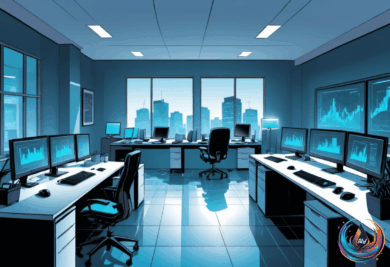
But another part of work remains difficult to manage: the physical office. Companies have treated office space like a fixed cost, yet the workplace is also a system that can be understood, measured, and improved.
That gap matters because modern flexible workplaces often have a mismatch between who is supposed to be in the office and who actually shows up. Employees may arrive and fail to find a meeting room, or wander across the floor looking for an open desk. The floor plan may have been drawn from someone’s best guess instead of evidence showing how people use the space.
Why workplace friction carries a high cost
Real estate is often a company’s second-largest expense, right behind people. That makes wasted space and lost employee time more than small annoyances. They can become a major operating problem, especially when a company manages its office through disconnected tools.
A survey conducted by The Collab Collective found that six in ten workplace operations professionals said workplace friction had gotten worse over the past year. Employees lose between two and four hours a week hunting for space, chasing colleagues, and working around separate office systems.
The cost adds up quickly. A company with a thousand employees can lose as much as $9 million a year to workplace friction alone. Those losses come from time spent navigating the office instead of doing the work employees came there to do.
The problem is not always a lack of space. In many cases, it is a lack of coordination.
AI could connect the pieces
AI can forecast demand, route support tickets, learn which desks and rooms employees use, notice failures in AV equipment, and identify spaces that sit unused. These tasks give companies a way to understand office activity instead of relying on assumptions about how the workplace should operate.
The need becomes clearer when daily demand is compared with the busiest day. Most organizations run at full capacity on their busiest day but use only about a third of that capacity on an average day. A floor built for Monday’s peak may sit mostly empty by Thursday.
That uneven use creates a difficult planning problem. Companies need enough rooms, desks, and workplace services for the busiest day, even when much of that capacity remains unused on other days. AI can help forecast demand and show where the gap exists, but the system must have access to the information needed to make those forecasts useful.
Today, most companies run booking, visitor check-in, space planning, meeting services, and analytics as separate systems. These systems do not communicate with each other, so important details remain divided across different tools.
From fixed cost to working system
When booking data sits apart from space planning, a company may not see how reservations match actual use. When meeting services are separate from equipment information, AV failures can remain a problem until someone reports them. When visitor check-in and workplace analytics do not connect, companies have less information about how the office operates day to day.
Connecting these functions gives AI more useful signals. It can compare demand with available space, identify rooms and desks that employees use, and flag areas that remain unused. It can also route support tickets and notice AV equipment failures, helping workplace teams respond to specific problems instead of managing the floor through guesses.
This is where the physical office becomes an overlooked frontier for AI. The goal is not only to make digital tasks faster. It is to make the place where people work easier to navigate and simpler to manage.
CBRE, a commercial real estate firm, sits within a business area where these questions matter. Real estate costs remain tied to workplace operations, while employee time is lost when separate systems create friction. The numbers from The Collab Collective’s survey show why the issue deserves attention: six in ten workplace operations professionals saw friction worsen, employees lose two to four hours each week, and a thousand-person company can lose as much as $9 million a year.
AI’s workplace story may end up being about more than code, conference calls, or digital assistants. It may also involve the desk that cannot be found, the meeting room that is already taken, and the empty floor that was built for a busier day.
Published September 16, 2026.
Based on